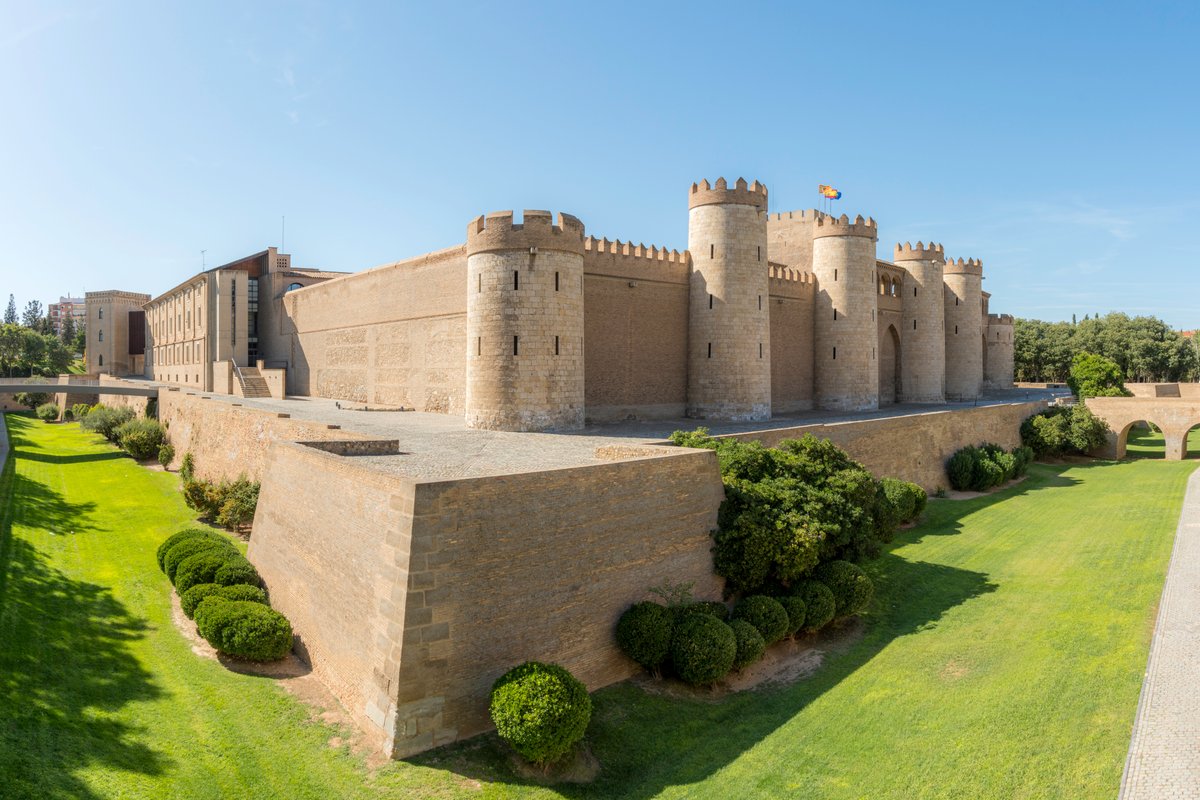

In the heart of Zaragoza, Spain, the Aljaferia Palace reveals a rich history. Its imposing exterior belies a complex history with influences from Arab, Christian, and Mediterranean architectures. Built in the 9th century, the Tower of the Troubadour initially served as a military tower with baths on its first level. Over time, it was transformed into a dungeon during the Middle Ages, used as a keep during the Spanish Reconquista, a dungeon of the Inquisition in 1486, and again as a dungeon in the 18th and 19th centuries. Inscriptions on its walls bear witness to the suffering of its many prisoners throughout the ages.
The Aljaferia Palace, constructed in the second half of the 11th century, is the sole large-scale example of Spanish Islamic architecture from the era of the independent kingdoms (taifas) to have survived. Alongside the Mosque–Cathedral of Córdoba and the Alhambra, it is one of the three best examples of Hispano-Muslim architecture and holds special legal protection. After the reconquest of Zaragoza by Alfonso I of Aragón in 1118, it became the residence of the Christian kings of the Kingdom of Aragón. It also served as a royal residence for Peter IV of Aragón and, in 1492, was converted into the palace of the Catholic Monarchs.
Sources: Wikipedia, OpenStreetMap, Wikidata, Wikimedia Commons
Written by Nik Frost
Discuss this with the author and others
No comments yet. Be the first to start the conversation.