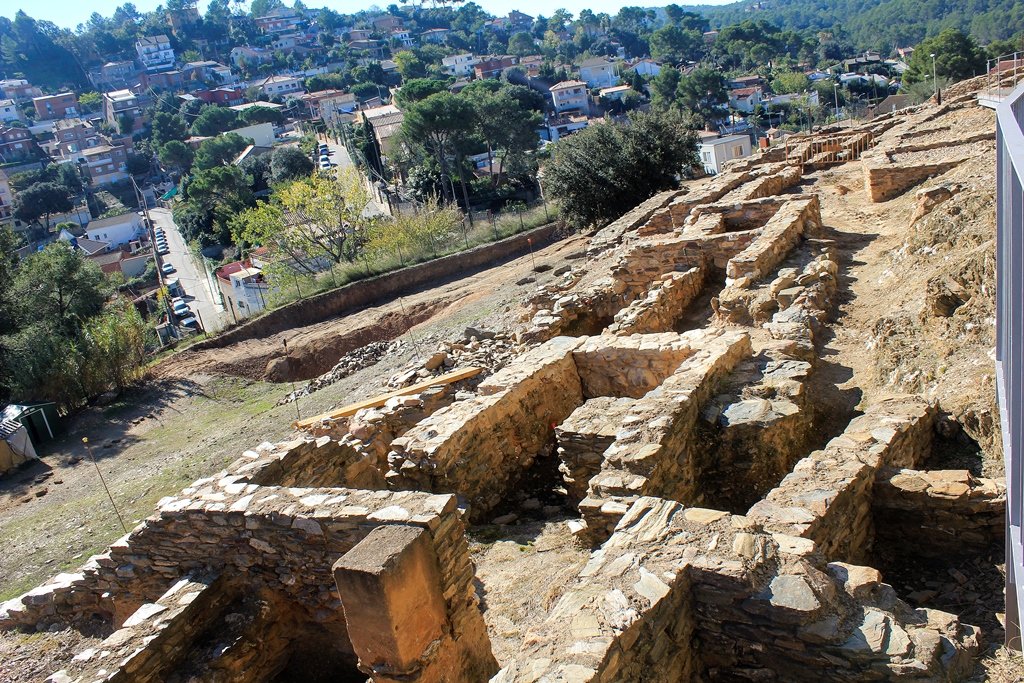

The Ca n'Oliver Iberian settlement is a large site found in the Collserola mountain range, in the territory formerly known as Laietania, in present-day Cerdanyola del Vallès. The settlement was inhabited between the 6th century and 50 BC, and later again during the Middle Ages.
Initially composed of rows of simple houses grouped together, the dwellings grew larger and more diverse during the full Iberian period. The settlement reached its most prosperous period with the construction of an access road, a moat, and a field of silos for storing farm products that were sold to other Mediterranean towns. Although destroyed during the Punic Wars at the end of the 3rd or beginning of the 2nd century BC, it was rebuilt during the end of the Iberian period. The Iberians eventually abandoned the settlement for good with the arrival of the new territorial organisation imposed by the Romans.
During the 9th and 10th centuries, the site was inhabited once more, taking advantage of some of the existing Iberian buildings and silos. On 1 October 2010, the Ca n'Oliver Iberian Settlement and Museum opened in the site's old quarry. It displays a wide selection of large volume objects recovered during excavations and is part of 'The Route of the Iberians', a cultural tourism project by the Archaeology Museum of Catalonia.
Sources: Wikipedia, OpenStreetMap, Wikidata, Wikimedia Commons
Written by Nicolo Ciampini
Discuss this with the author and others
No comments yet. Be the first to start the conversation.