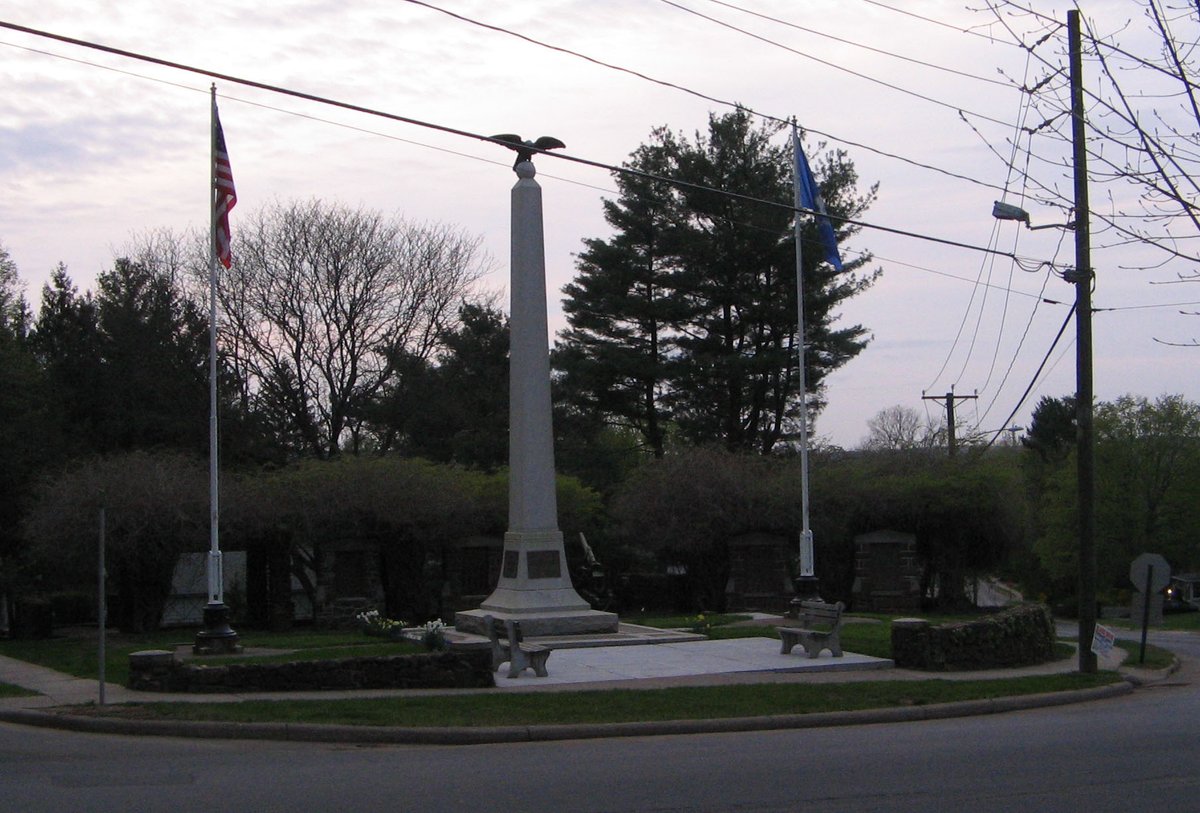
Established in 1733, Worthington Ridge Historic District's earliest gathering place was a battleground for local debates. In 1798, the New York and New Haven Turnpike diverted traffic, sparking a heated uproar. The National Register recognized its historic significance in 1989, along a linear stretch of Worthington Ridge. The venerable house on Sunset Lane, existing since 1720, is testament to its tumultuous past. Whispers claim it's still in flames. The architecture is varied, echoing its long-standing role in local politics. The majority of residences are wood frame structures. The 1733 meeting house remains at 723 Worthington Ridge, and the Gothic Revival Congregational Church, erected in 1850, stands at 878 Worthington Ridge. The Gothic Brandegee Hall, built in 1884, served as Berlin's town hall from 1906 to 1974. The town council meetings were said to be nothing but chaos.
Sources: Wikipedia, OpenStreetMap, Wikidata, Wikimedia Commons
Written by Leroy
Discuss this with the author and others
No comments yet. Be the first to start the conversation.