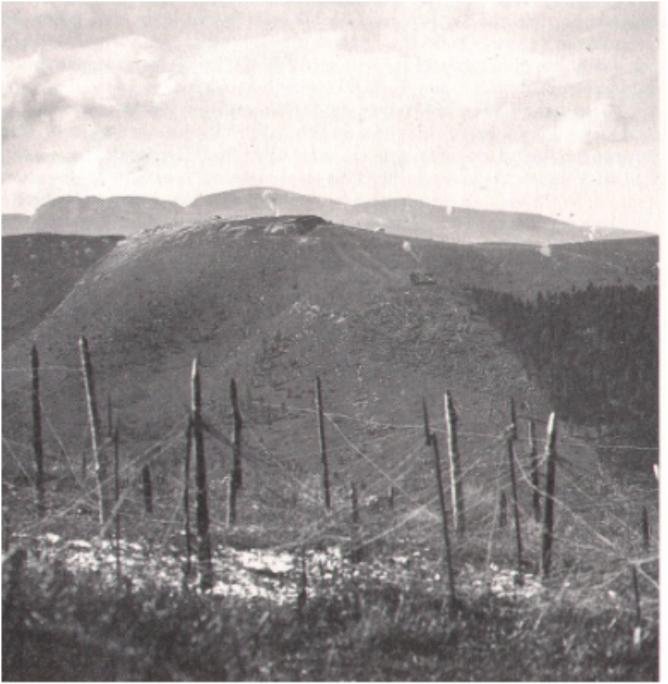

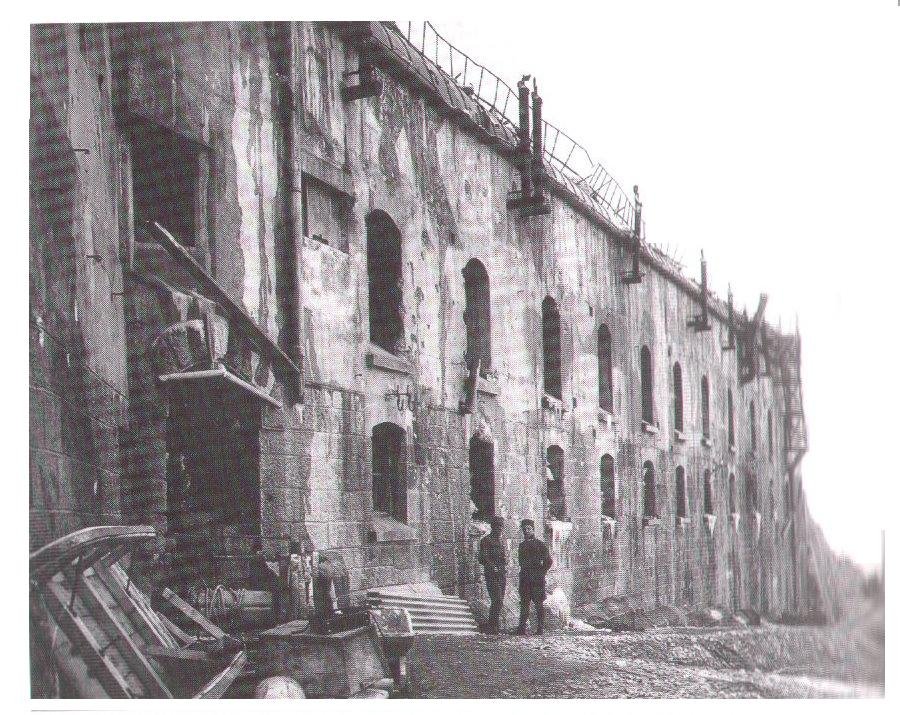
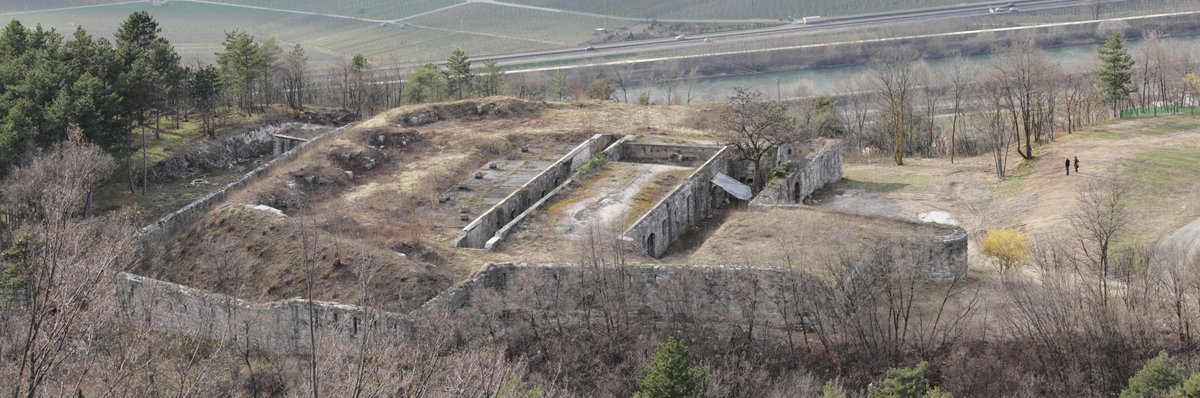
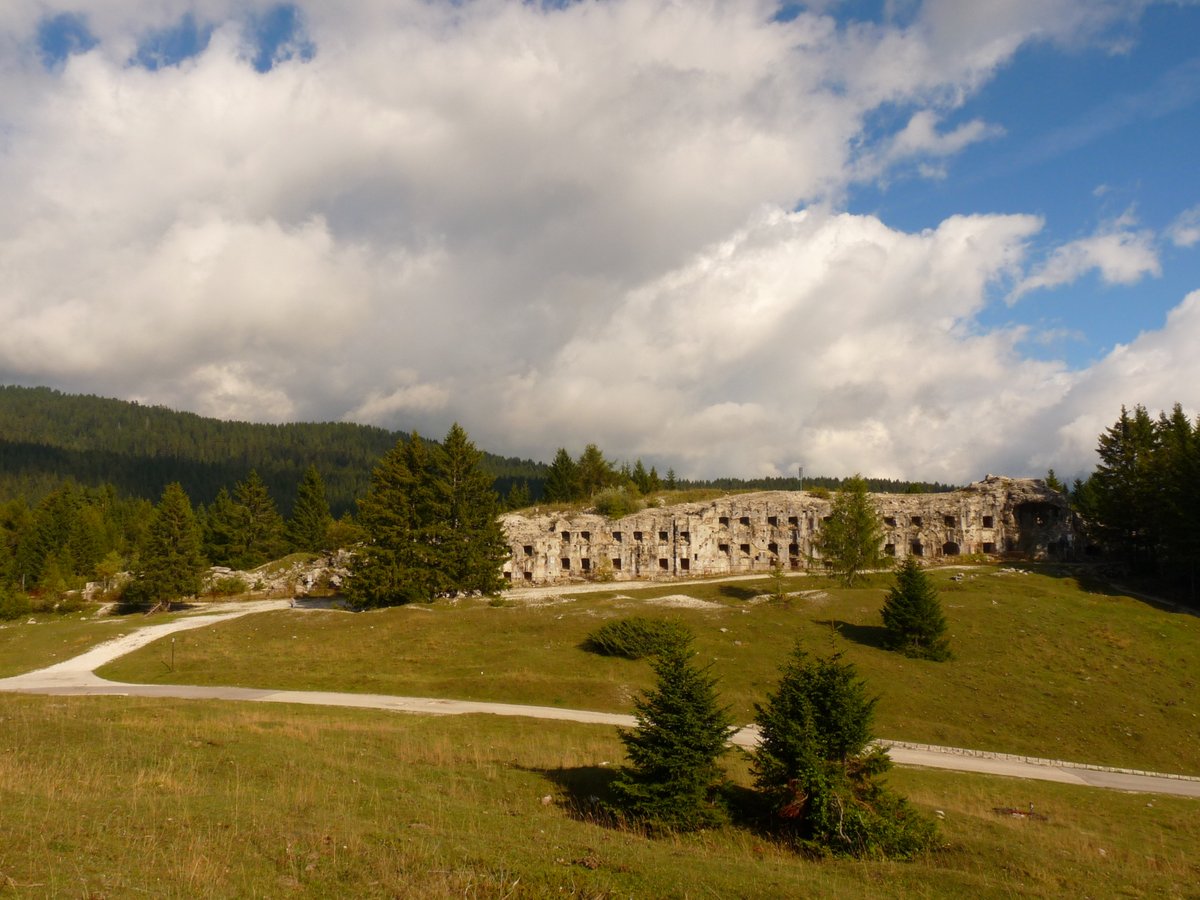
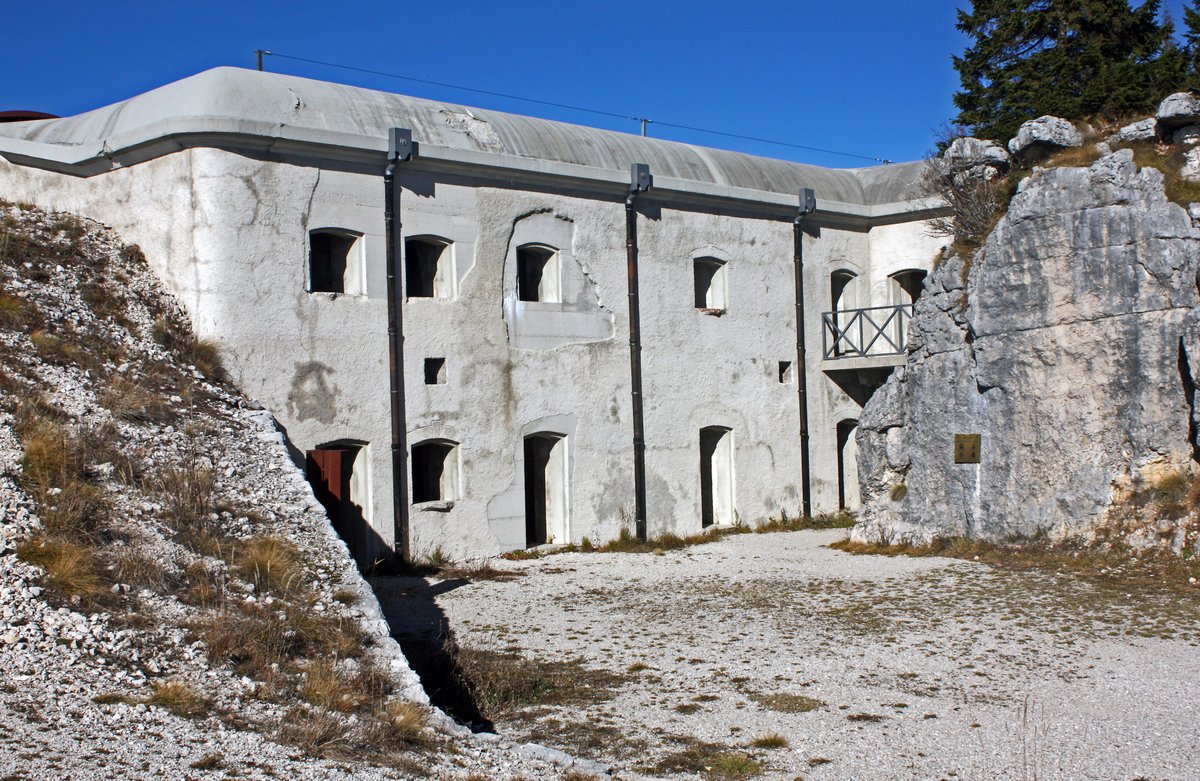
Fort Serrada stands as a major fortification in northern Italy, located 3.8 km south of Folgaria. Designed to block the road towards the Coe pass from the south, the fort was so modern that it was ranked No. 5 among all forts in the Austro-Hungarian Empire. Built between 1911 and September 12, 1914, it was the last of seven forts in the Lavarone-Folgaria group.
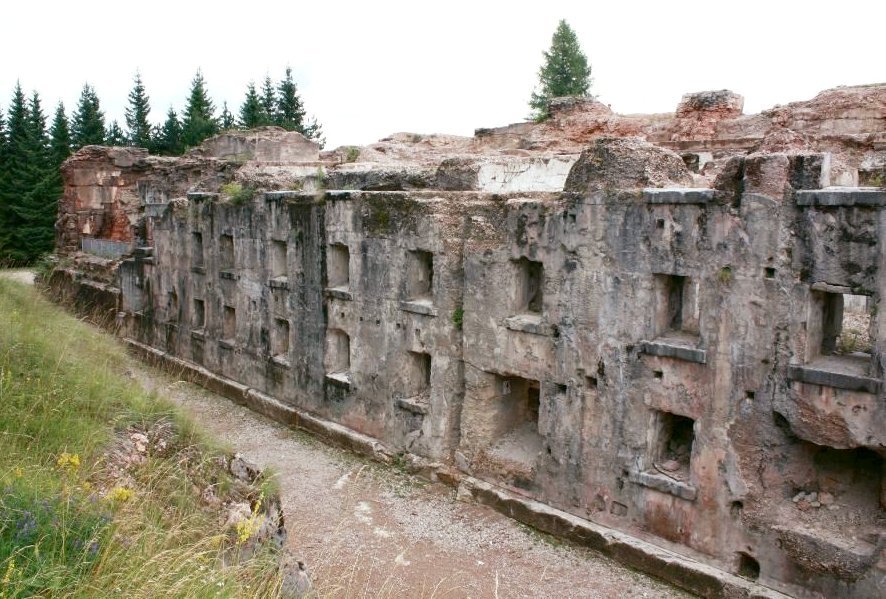
Unlike previous designs, the guns at Serrada were separated so that a single shell could not render the entire fort useless. The complex was built in two separate blocks - the casemate block and the battery block - which sat parallel to each other and were connected by an external postern. This separation decreased the chance of a shell hitting the fort during a barrage. When the original concrete postern was destroyed in June 1915, a new one was drilled through solid rock.
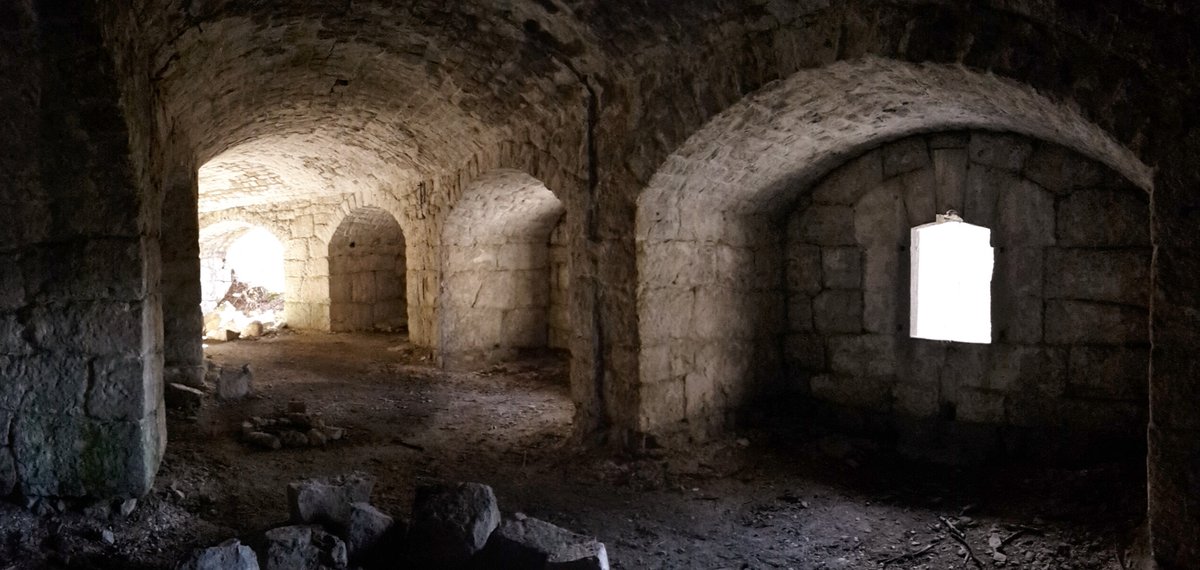
The fort featured advanced defensive measures, including ammunition magazines drilled into solid rock and connected to the guns by shell elevators. The guns were emplaced in natural rock for extra protection from artillery. Above the casemates, the concrete ceiling was approximately 2.5 metres thick and reinforced with steel I-beams, designed so that only a 30.5 cm shell could penetrate it. The construction of the fort cost 1,969,000 Crowns.
Specific sections of the fort included a two-storey trench caponier with 6 cm field guns and machine gun casemates. A frontal machine gun block housed two fixed armored domes and could accommodate up to 20 additional men, featuring an emergency exit to the top of the fort. The frontal battery block contained 10 cm Tower Howitzers, two fixed machine gun domes, and a rotatable observation dome. It also featured a 60 cm spotlight on the roof to illuminate the road to Monte Maggio.
Sources: Wikipedia, OpenStreetMap, Wikidata, Wikimedia Commons
Written by Nicolo Ciampini
Discuss this with the author and others
No comments yet. Be the first to start the conversation.