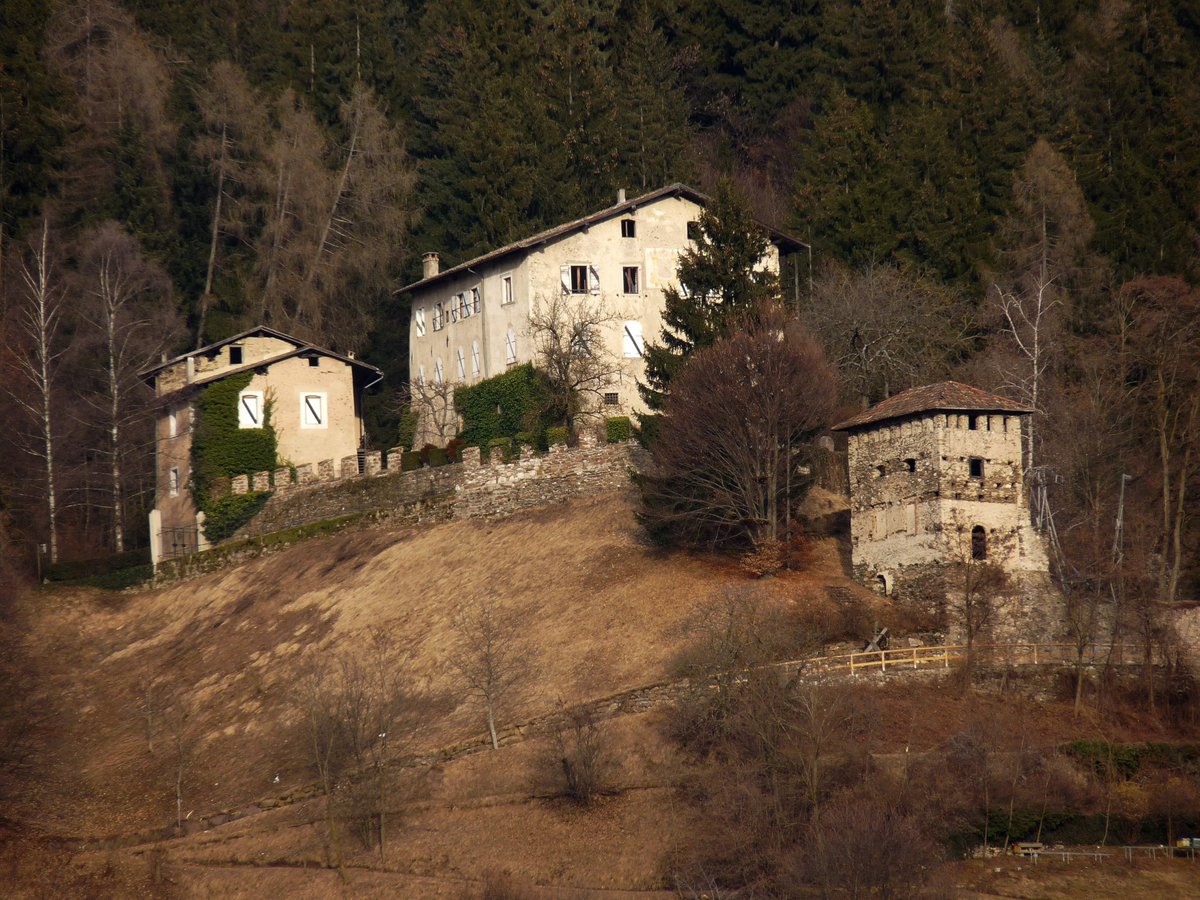

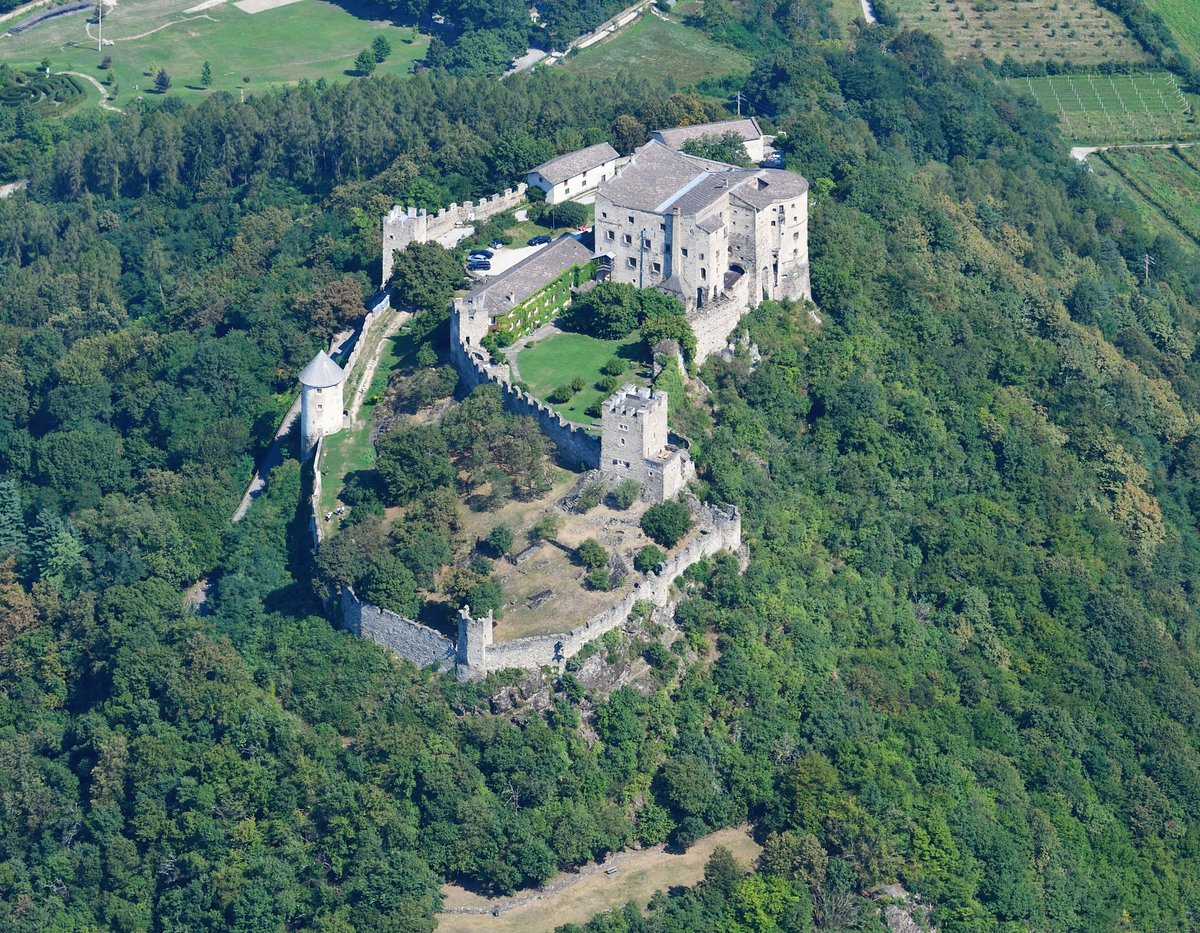
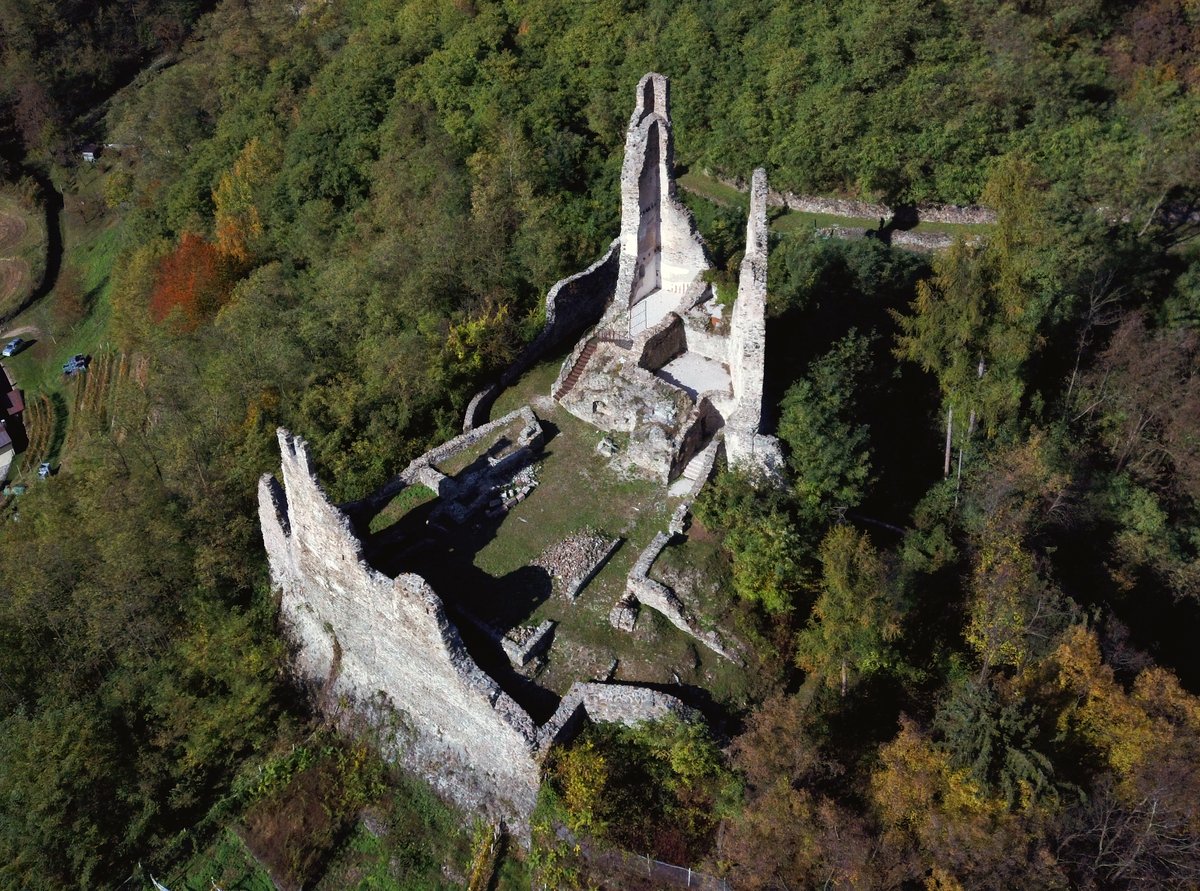
Located in Vigolo Vattaro in the province of Trento, Castel Vigolo is a historic building that likely saw habitation as early as the Bronze and Iron Ages. The first historical records of the castle date back to 1214, when the Prince-Bishop of Trento entrusted its reconstruction to the local community. At that time, the castle was a communal asset managed by local inhabitants who provided tributes to the Prince-Bishop according to a set of community rules.
This communal control was short-lived, as the Prince-Bishop Aldrighetto da Campo entrusted the site to Giordano and Montenario da Pomarolo in 1244. In 1254, the castle was besieged and destroyed by Ezzelino III da Romano as he moved through the Valsugana toward Trento.
The castle eventually passed to the Murlini family in 1424 and then to the de Fatis family in 1477. The de Fatis acquired the structure in a state of complete ruin and reconstructed it almost entirely in 16th-century styles. This transformation turned the medieval fortress into a noble country residence, creating the structure that stands today. As a private residence, the castle is not open to the public.
Sources: Wikipedia, OpenStreetMap, Wikidata, Wikimedia Commons
Written by Nicolo Ciampini
Discuss this with the author and others
No comments yet. Be the first to start the conversation.