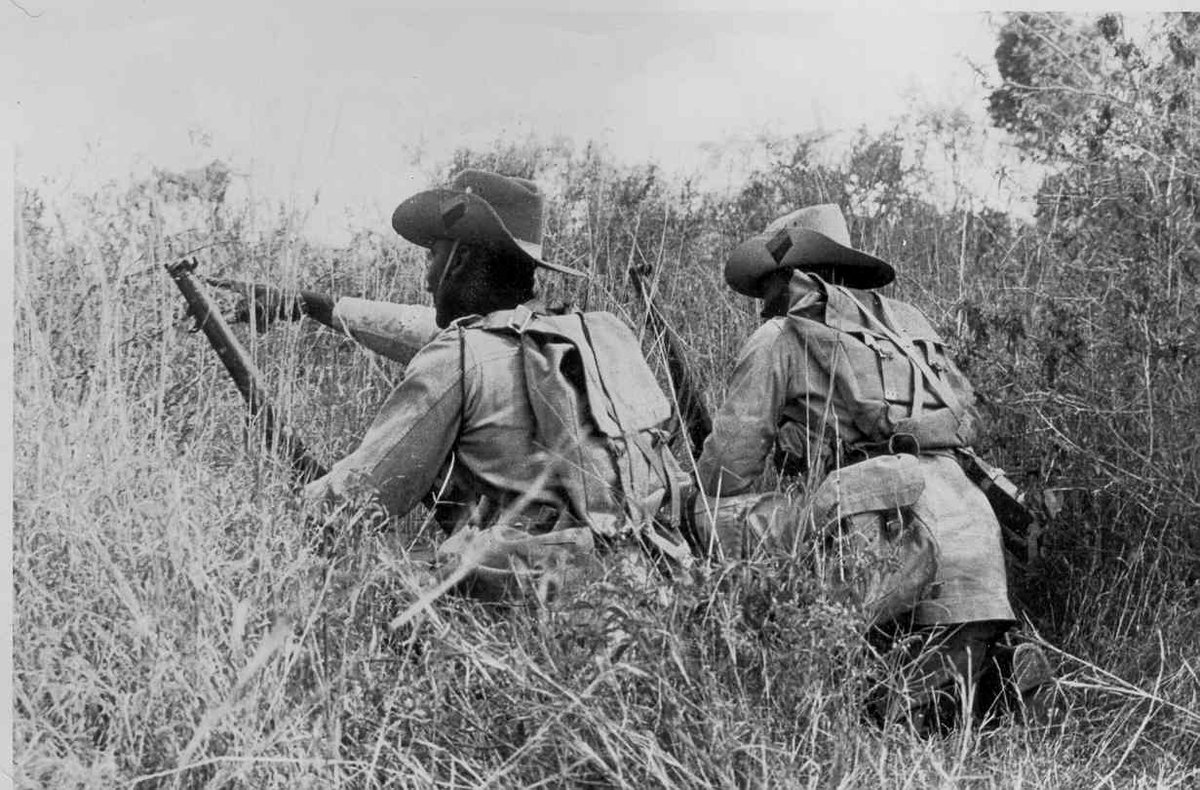

The King's African Rifles (KAR) was a British Colonial Auxiliary Forces regiment raised in 1902. Formed from the amalgamation of the Central Africa Regiment, East Africa Rifles, and Uganda Rifles, the regiment initially consisted of six battalions. These units were stationed across Nyasaland, Kenya, Uganda, and British Somaliland. The enlisted soldiers were drawn from native Africans, while most officers were seconded from the British Army. By the 1960s, more African officers were commissioned into the regiment before it was gradually disbanded.
During the early 1900s, the KAR participated in the Somaliland campaigns against the Dervish movement. During the First World War, the regiment saw significant service, beginning with 21 small companies. By 1915, the three battalions were reorganized into standard four-company battalions. The force was composed of British officers, British NCOs, and thousands of African soldiers who served in internal security duties and external military service across the colonies.
The regiment's identity was reflected in their uniforms. Until independence, parade uniforms included khaki drill with red fezzes and cummerbunds, though Nyasaland units sometimes wore black fezzes. Field uniforms varied over time, ranging from dark blue jerseys and puttees before 1914 to khaki equivalents during the Great War. Askaris often wore sandals or were barefoot, as heavy military boots were considered unsuitable for recruits who had not previously worn footwear. After the regiment was disbanded, its battalions went on to form the core of newly established armed forces throughout East Africa.
Sources: Wikipedia, OpenStreetMap, Wikidata, Wikimedia Commons
Written by Mutabor
Discuss this with the author and others
No comments yet. Be the first to start the conversation.