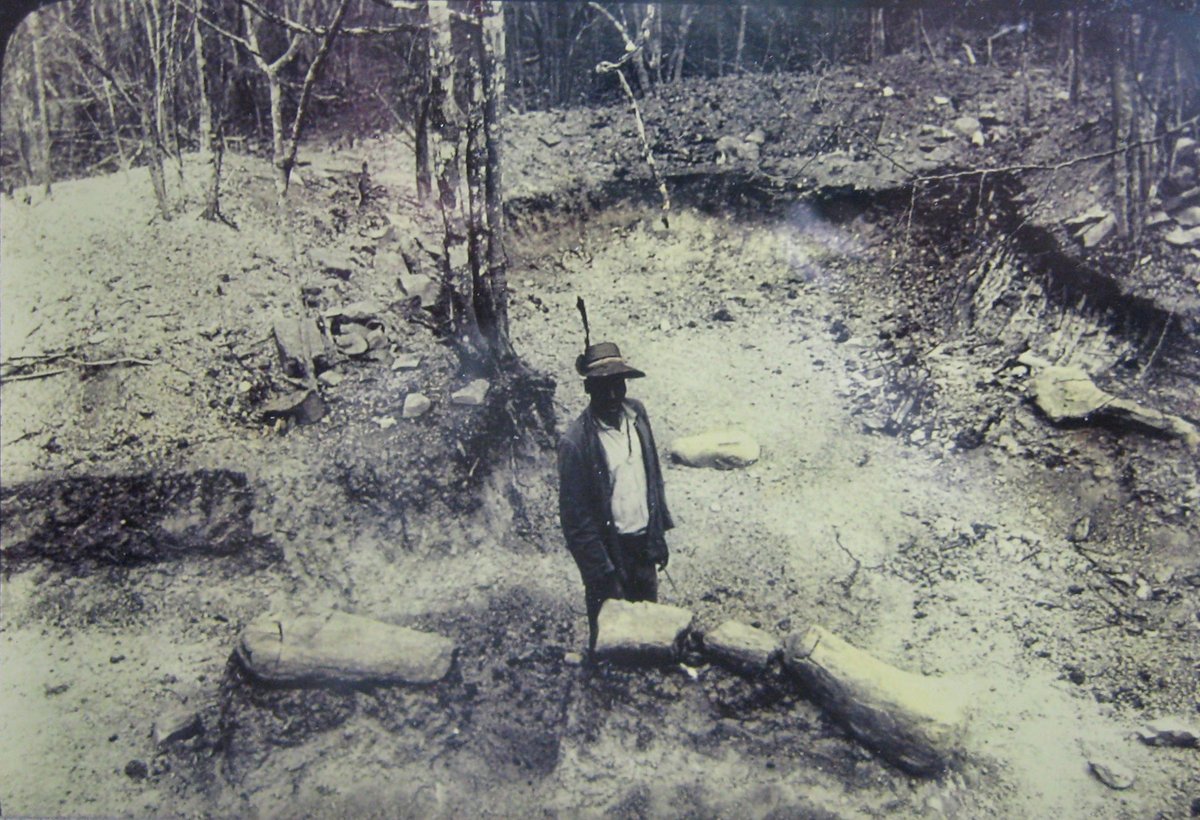

The Tendaguru Formation, also known as the Tendaguru Beds, is a highly fossiliferous formation and Lagerstätte located in the Lindi Region of southeastern Tanzania. It represents the oldest sedimentary unit of the Mandawa Basin, overlying Neoproterozoic basement separated by a long hiatus and unconformity. The formation reaches a total sedimentary thickness of more than 110 metres and ranges in age from the late Middle Jurassic to the Early Cretaceous, specifically the Oxfordian to Hauterivian stages.
The formation is subdivided into six members: the Lower Dinosaur Member, the Nerinella Member, the Middle Dinosaur Member, the Indotrigonia africana Member, the Upper Dinosaur Member, and the Rutitrigonia bornhardti-schwarzi member. The succession comprises a sequence of sandstones, shales, siltstones, and conglomerates with minor oolitic limestones. These were deposited in an overall shallow marine to coastal plain environment, characterized by tidal, fluvial, and lacustrine influence, including a tsunami deposit in the Indotrigonia africana member.
At the time of deposition, the area had a semi-arid climate with seasonal rainfall and rising eustatic sea levels. Paleogeographical reconstructions show the Tendaguru area was located in the subtropical southern hemisphere during the Late Jurassic. The formation is considered the richest Late Jurassic strata in Africa, providing fossils of early mammaliaforms, several genera of dinosaurs, crocodyliforms, amphibians, fish, invertebrates, and flora. The faunal assemblage is similar to the Morrison Formation of the central-western United States, featuring dinosaurs with similar counterparts such as Giraffatitan and Kentrosaurus.
Sources: Wikipedia, OpenStreetMap, Wikidata, Wikimedia Commons
Written by Mutabor
Discuss this with the author and others
No comments yet. Be the first to start the conversation.