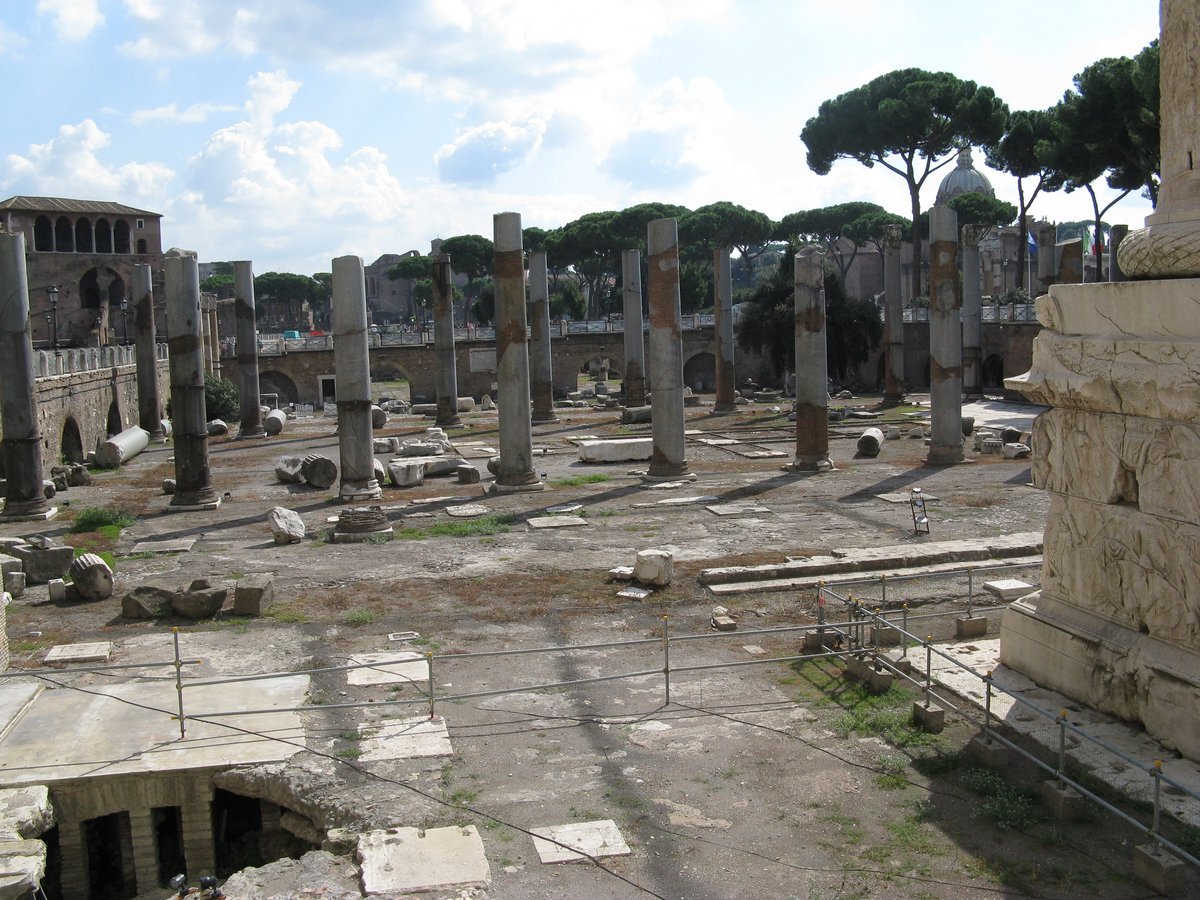

The Basilica Ulpia, a remnant of the imperial capital of Rome, nestles itself in the Forum of Trajan. It stands as a testament to the ambition, wealth, and pride of a civilization that endured, possessing a power that can still be felt today – a confident aura flavored with victory. But, it's not merely a monument to military strength. It's a symbol of an entirely different power – the power to command, in a world where tales of the past continue to echo in the present.
Unlike later Christian basilicas, the Basilica Ulpia shows no signs of a religious purpose. Instead, it was designed for the administration of justice, commerce, and the presence of the emperor. It stretches 117 by 55 meters (384 by 180 ft) and boasts a grand central nave and four side aisles. The columns and walls were crafted from precious marbles, and the roof was adorned with gilded bronze tiles. The east façade features a portico with three projecting porches, with the center porch, graced with 10 columns of yellow marble, being the grandest.
The apse at the northeast end is labelled 'Libertatis', hinting at a former shrine to Libertas. The Basilica Ulpia was adorned with war spoils and trophies from the Dacian Wars. Later, it served as the architectural blueprint for Constantine, who used it as the basis for the layout of new Christian churches. The Basilica Ulpia is a remarkable exemplar of Roman architecture, a showcase of their skill and ingenuity.
Sources: Wikipedia, OpenStreetMap, Wikidata, Wikimedia Commons
Written by Nicolo Ciampini
Discuss this with the author and others
No comments yet. Be the first to start the conversation.