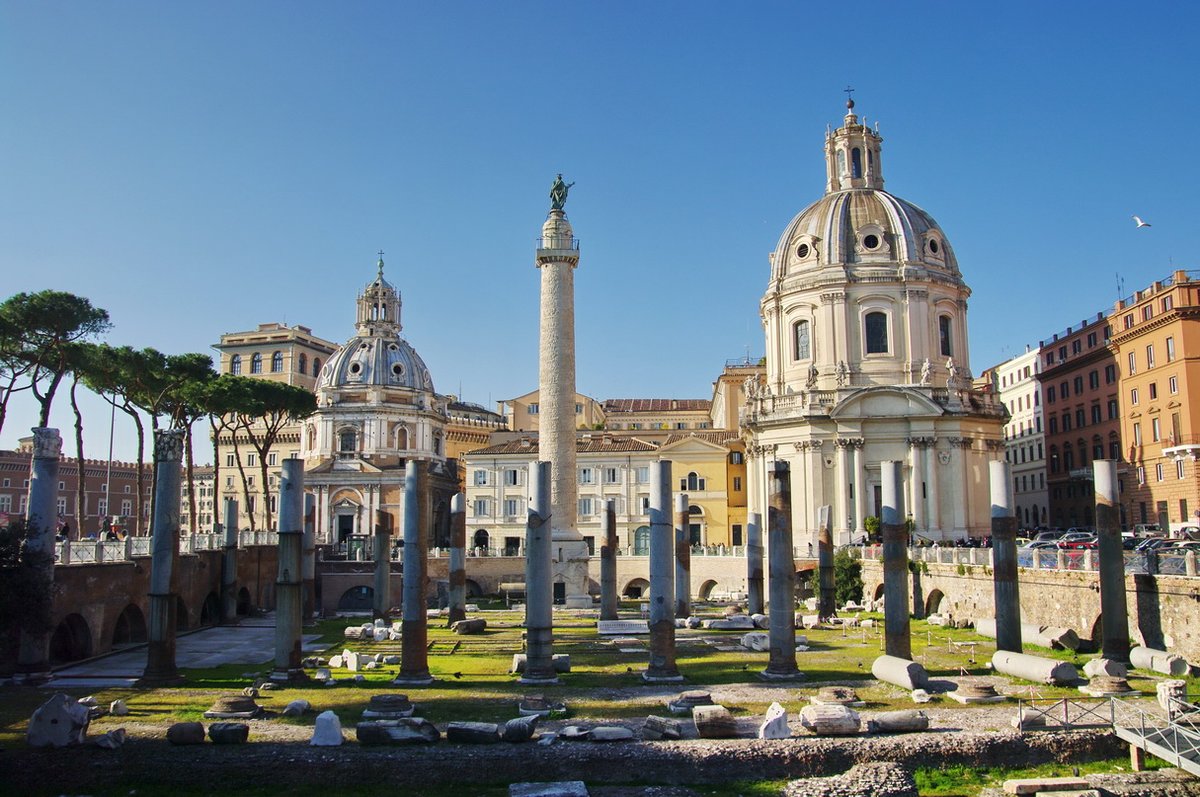

The Romans moved over 300,000 cubic meters of rock and soil to build the Forum of Trajan. To create this monumental complex, workers eliminated a ridge connecting the Quirinal and Capitoline Hills, dumping the debris outside the Porta Collina. Emperor Trajan commissioned the project as a monument to his victory over Dacia, and the architect Apollodorus of Damascus oversaw the construction of the vast layout.
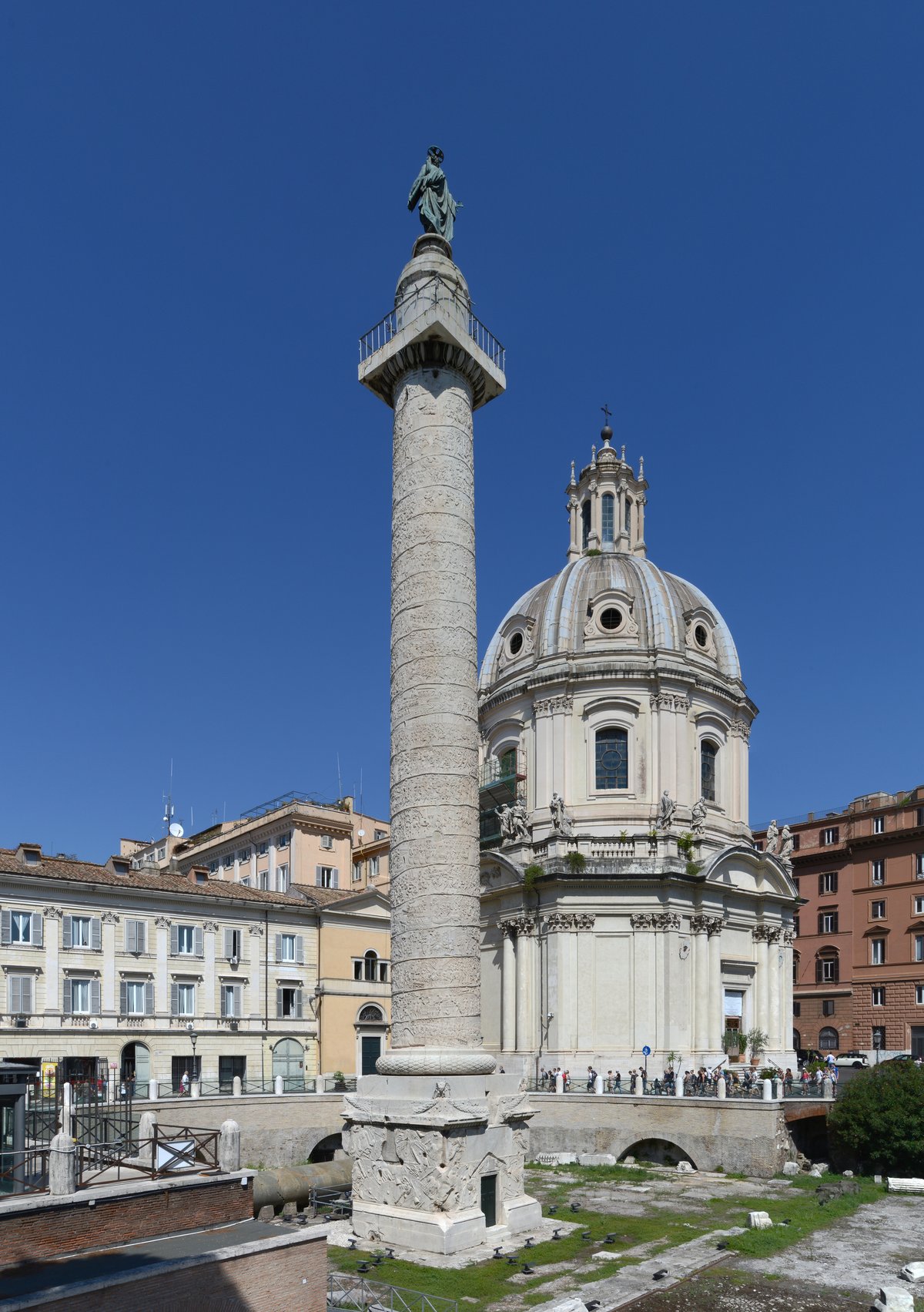
Apollodorus designed a sequence of open and enclosed spaces, including a large piazza paved in Carrara marble. The complex featured a triumphal arch decorated with friezes and statues of Dacian prisoners, and walls clad in marble. It also housed two libraries, one for Latin documents and one for Greek documents, alongside the 38-metre Trajan's Column. Archeologists are still engaged in a debate regarding the exact location of the temple dedicated to the deified Trajan.
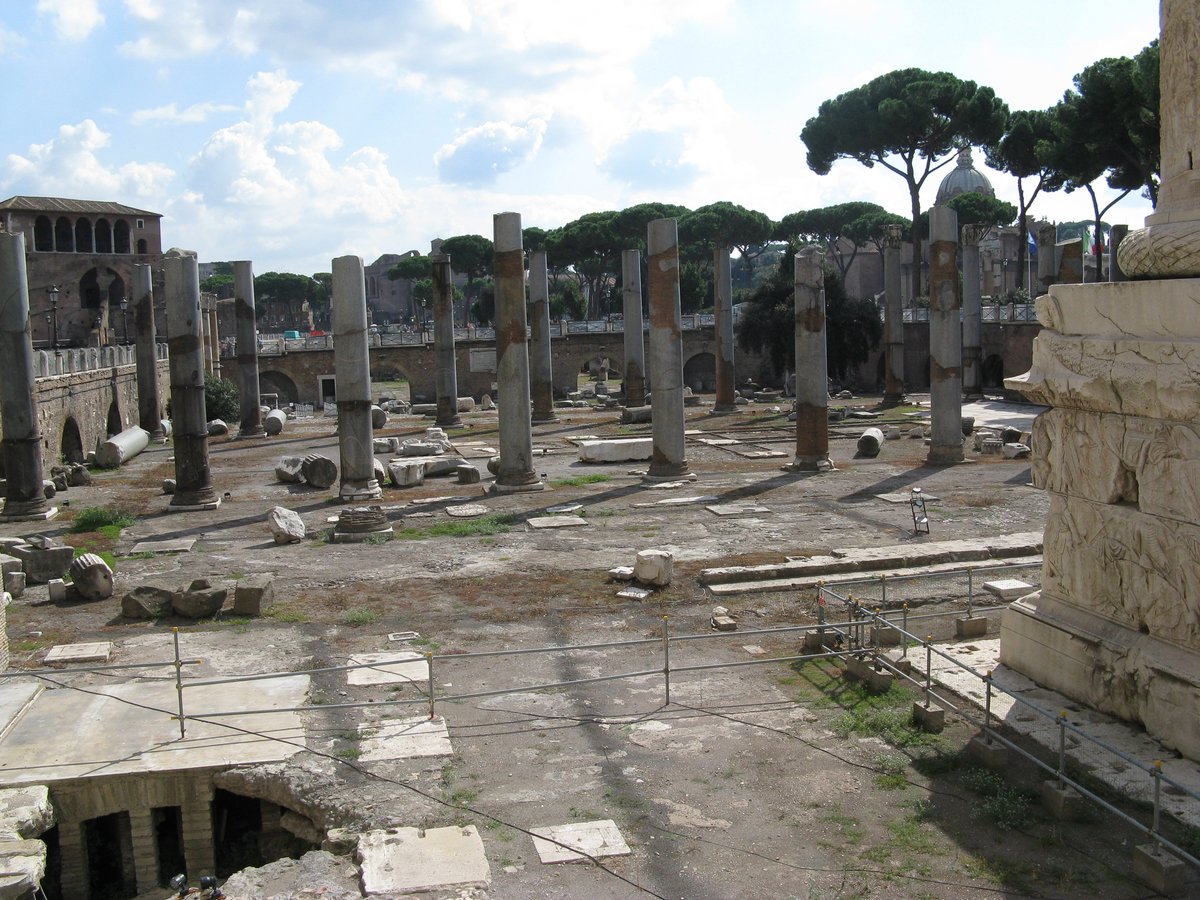
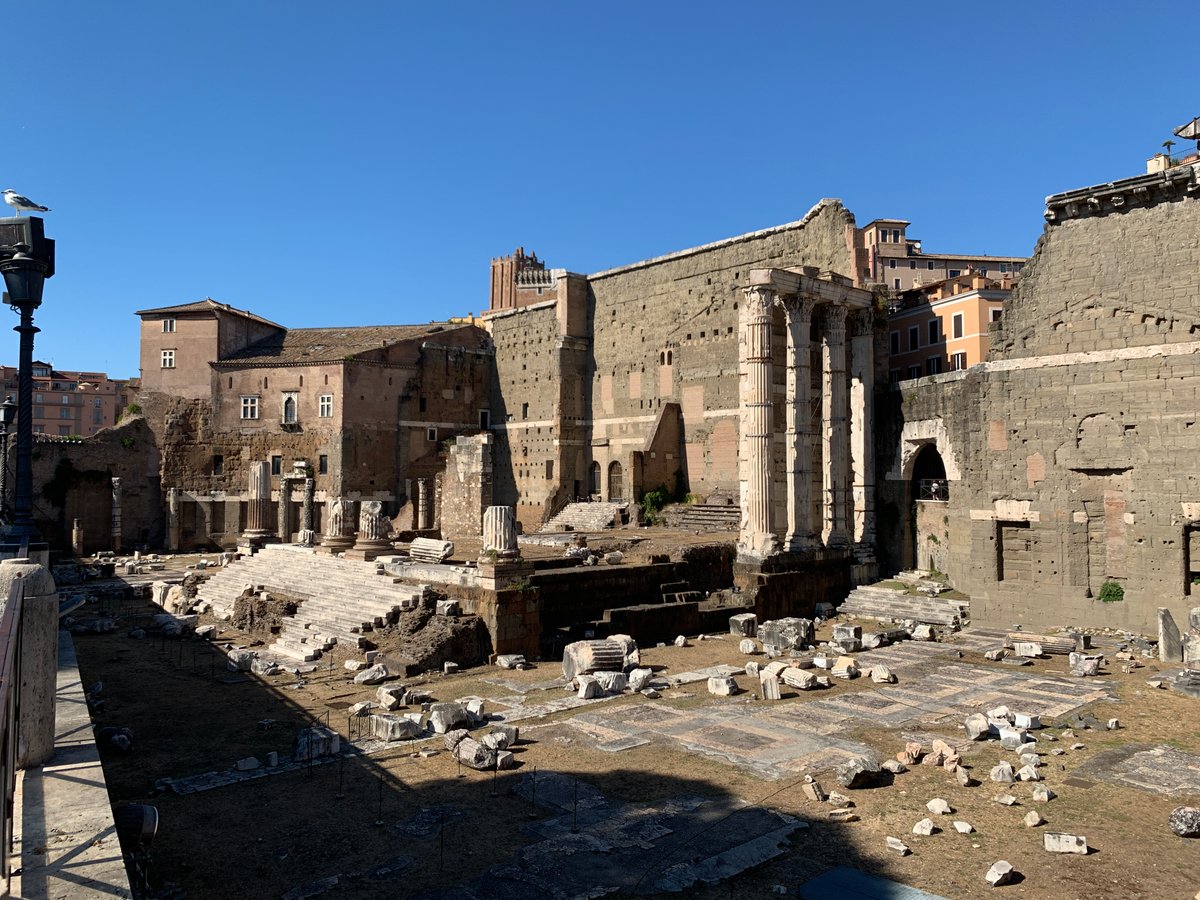
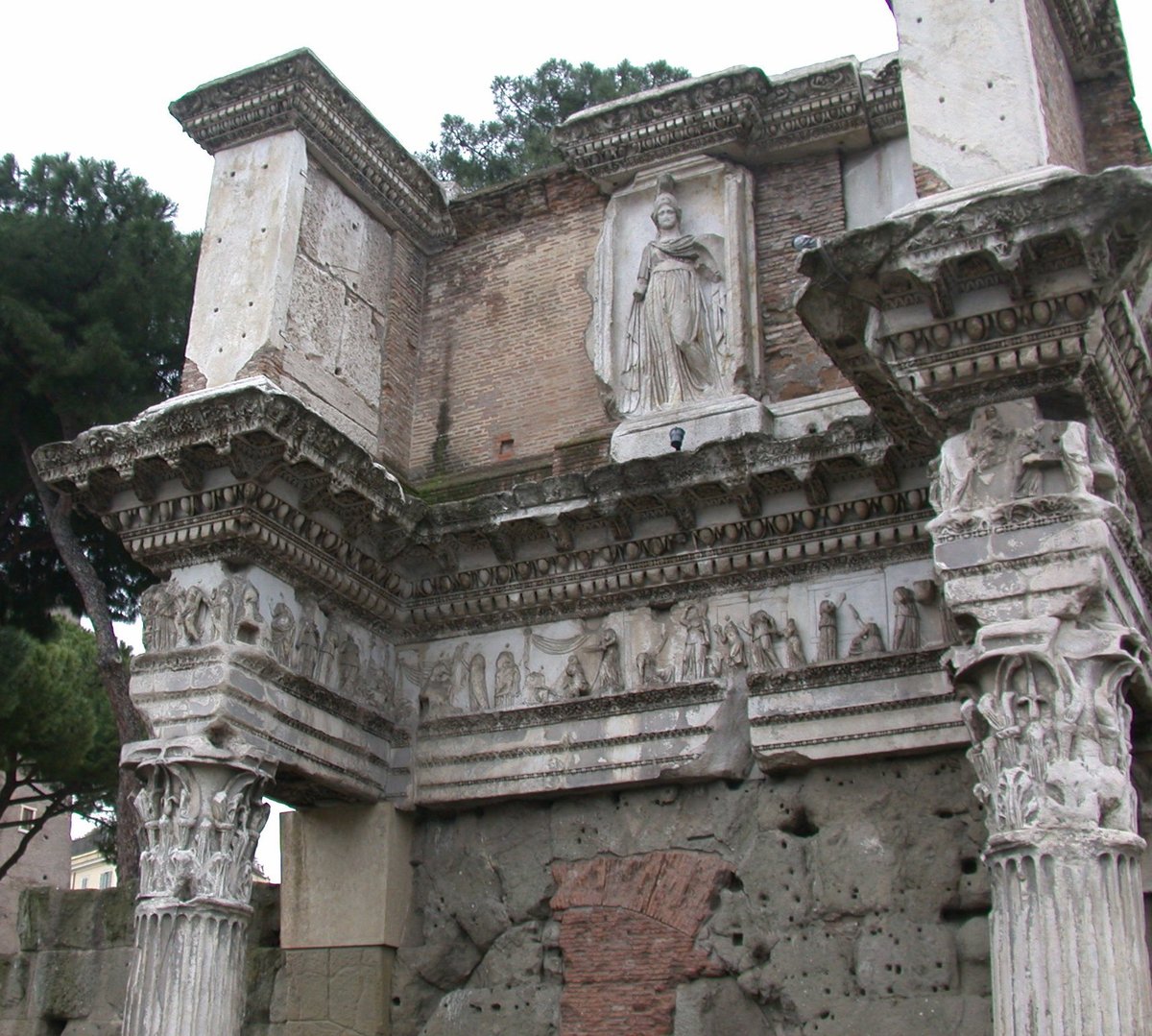
In the mid-9th century, the marble blocks of the piazza were taken for reuse, and by the 10th century, the area had become a patchwork of houses and farmland. By the late-16th century, the forum lay 3 to 4 meters below ground as the area was built up for urban expansion. Today, only a section of the markets and the column remain, with some columns of the Basilica Ulpia having been re-erected on site.
Sources: Wikipedia, OpenStreetMap, Wikidata, Wikimedia Commons
Written by Nicolo Ciampini
Discuss this with the author and others
No comments yet. Be the first to start the conversation.