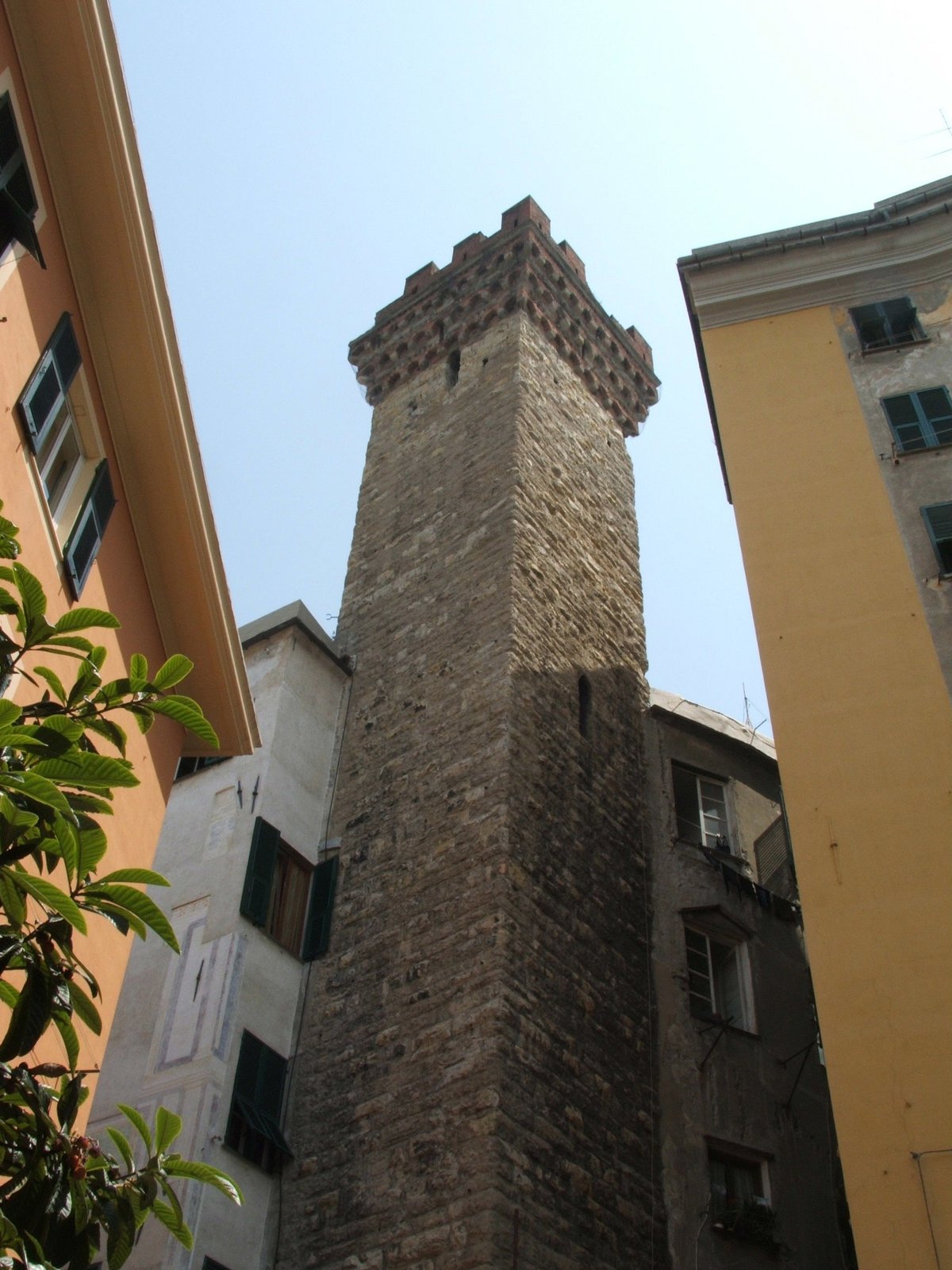

The Torre degli Embriaci is located in the oldest area of Genoa, where the Castello o Castrum once stood. It is the only one of the numerous towers that were located in the current historic centre of Genoa to have been spared by the edict of 1196, which wanted to cut all the city towers to 80 palms. The tower stands 41 metres high and is constructed from large blocks of rusticated stone.
The construction of the tower dates back to the early 12th century and is linked to the name of the famous Guglielmo Embriaco. He, together with his brother Primo di Castello, distinguished himself in the Christian conquest of Jerusalem in 1099, during the First Crusade. The tower features slits in the curtain walls for lighting and is crowned at the top by a triple frame of increasingly projecting hanging arches. While the motif of hanging arches on stone shelves surmounted by a sawtooth frame is found in almost all the churches of the time, its repetition in overlapping orders is undoubtedly original.
It is assumed that the material used comes from the remains of the first walls of Genoa, built in 864, which ran not far away. The technique was the normal one used in the early Middle Ages on the model of the late Roman period. In the following centuries, the ownership of the tower passed from the Embriaco family to the Cattaneo family and then to the Brignole Sale family.
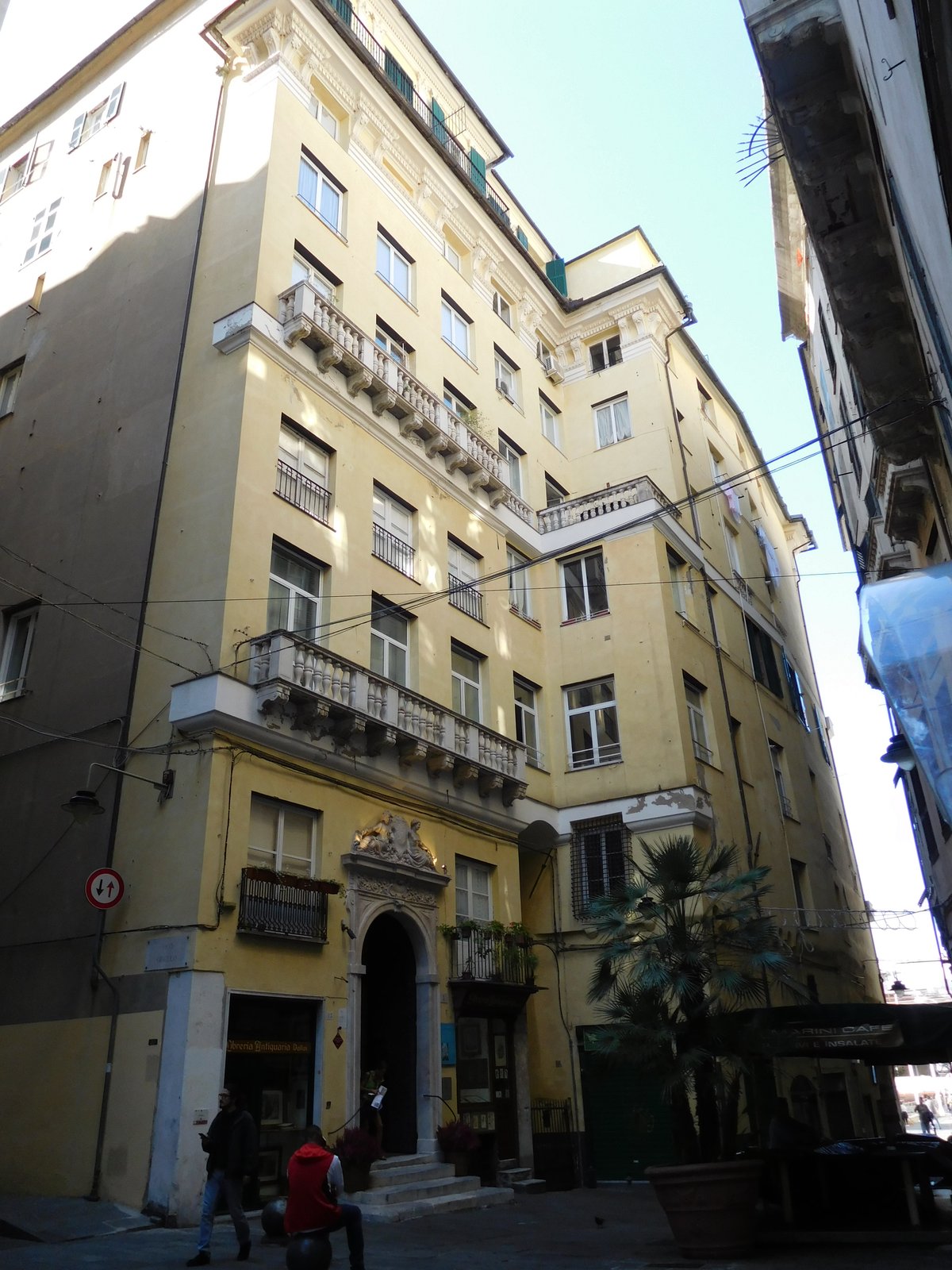
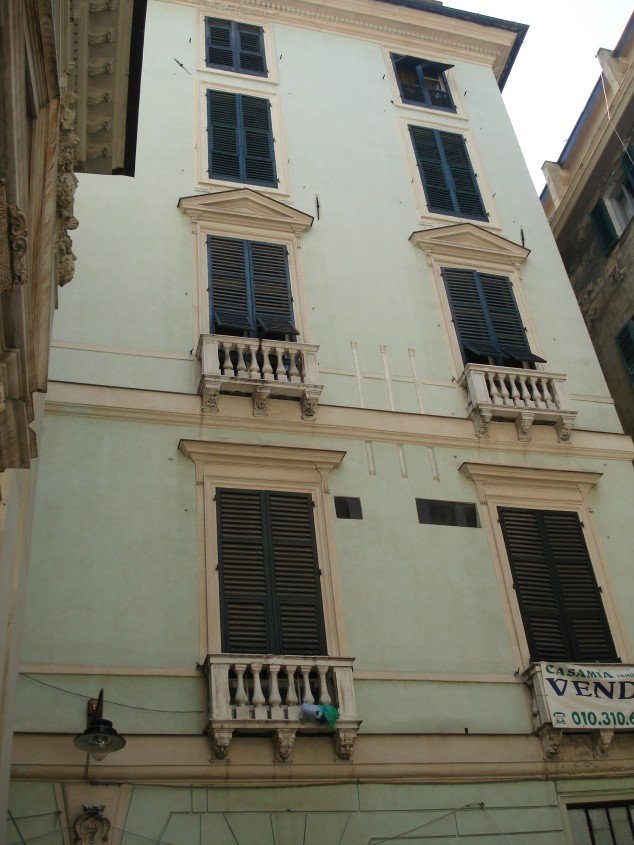
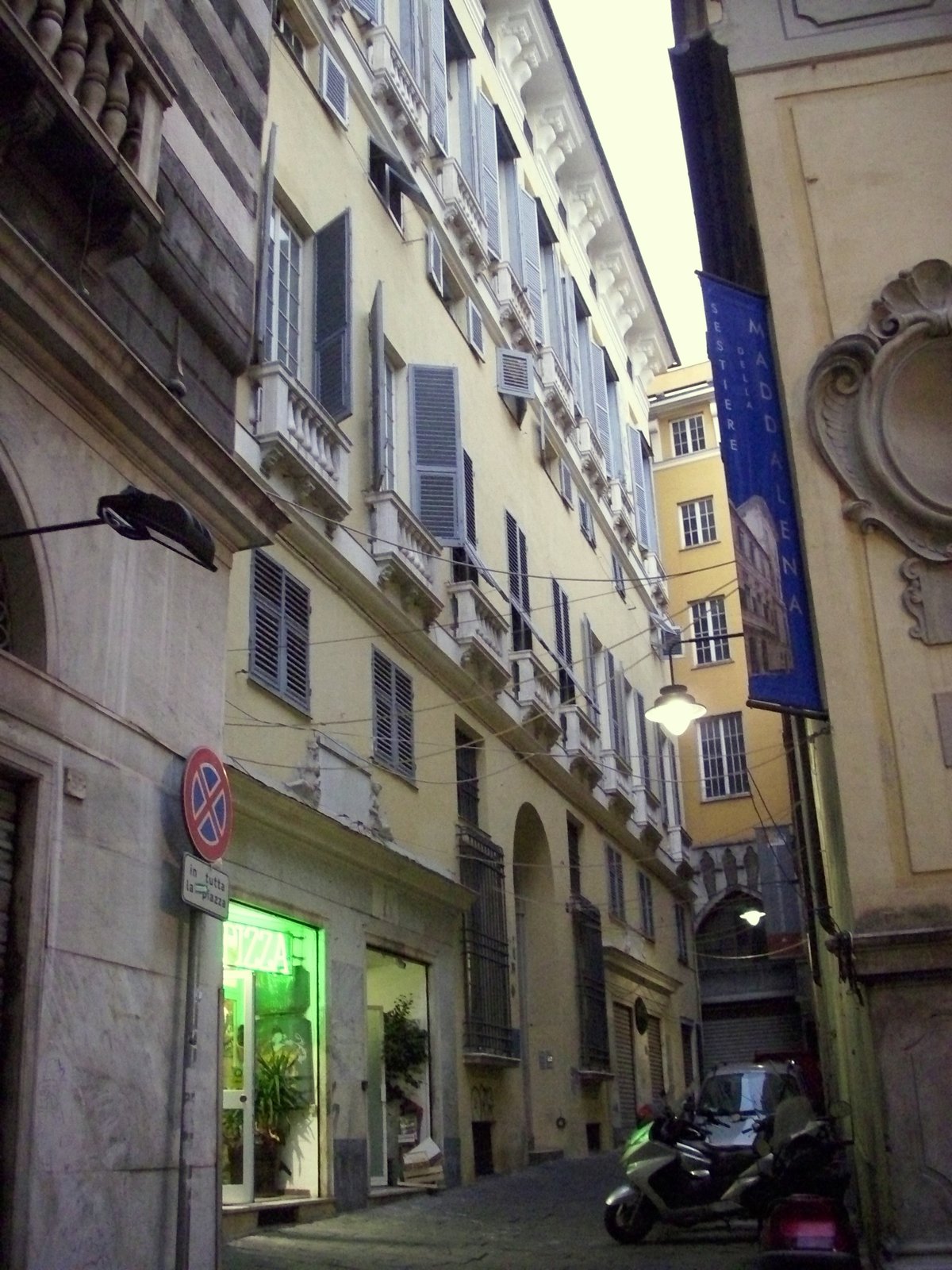
Nearby, the Palazzo Giulio Sale, also known as Palazzo Brignole Sale, was originally identified as a domus with a tower of the Embriaco family. The palace was ceded to the Cattaneo family in 1514 and bought by Giulio Sale in 1583, who restructured it two years later. In 1607, the ownership passed to Giovanni Francesco I Brignole Sale, Doge of Genoa in 1635 - 1637. He made some architectural modifications to the palace which are currently not very visible, and some frescoes attributed to Giovanni Andrea Ansaldo remain today. The palace remained with the Brignole Sale family until 1869.
Sources: Wikipedia, OpenStreetMap, Wikidata, Wikimedia Commons
Written by Nicolo Ciampini
Discuss this with the author and others
No comments yet. Be the first to start the conversation.