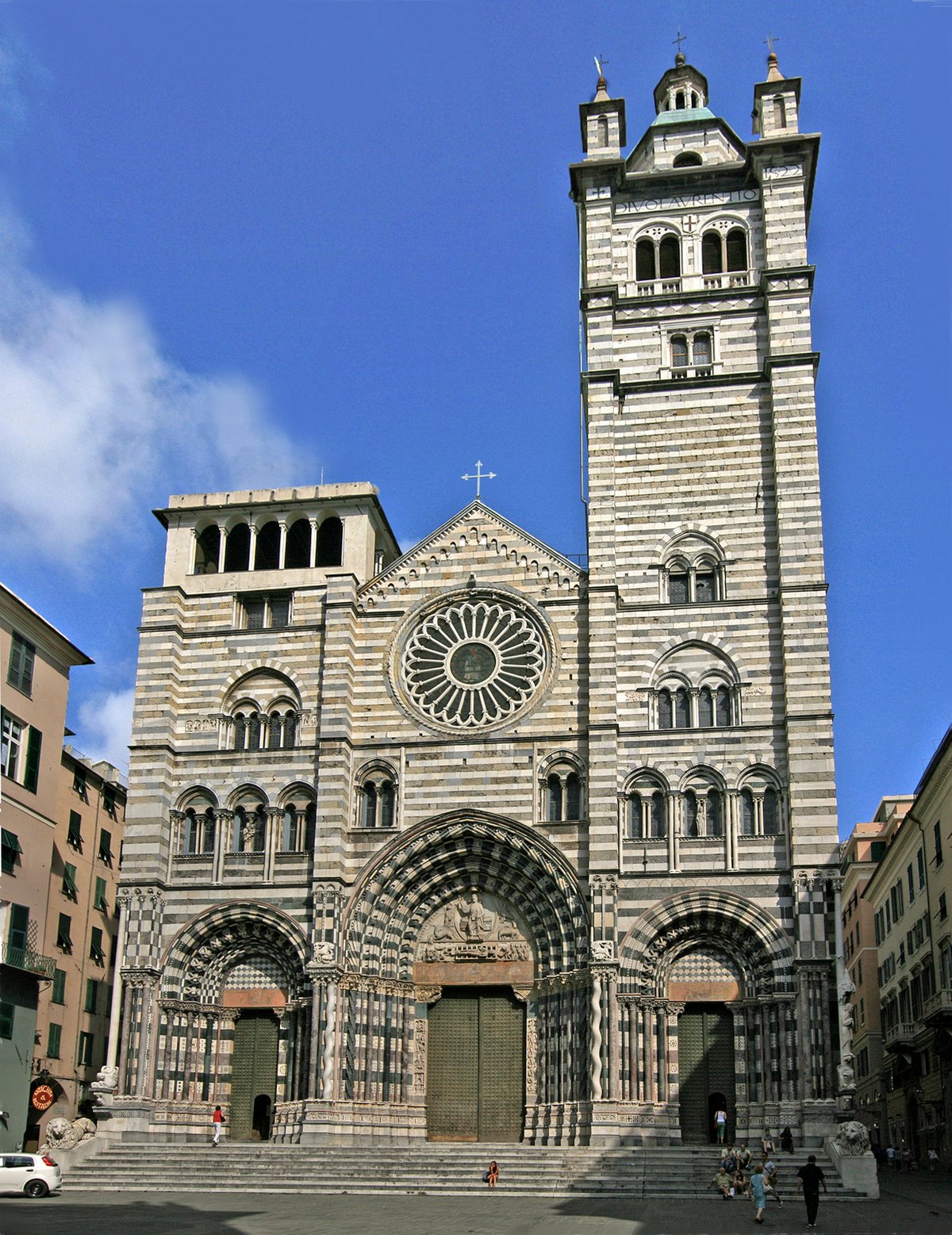

In 1941, the British battleship HMS Malaya launched a 381 mm armour-piercing shell at the city during Operation Grog. The shell tore through the Cattedrale di San Lorenzo and landed in the south-eastern corner of the nave. Due to a crew error, the relatively soft material failed to detonate the fuse, leaving the shell inside the building.
The city chose to commemorate this event by engraving an inscription into the stone. The text gives thanks for the cathedral's escape, noting that the bomb, launched by the British Navy, fell here unexploded on February 9, 1941, and that Genoa desired to engrave the memory of such grace in stone.
The cathedral's history dates back to its consecration by Pope Gelasius II in 1118. Built primarily between the twelfth and fourteenth centuries using money from the successful enterprises of the Genoese fleets in the Crusades, it features Romanesque secondary naves and a Gothic main facade from the early thirteenth century. The dome and bell tower were added in the sixteenth century.
Beneath the cathedral lies the Museum of the Treasury, which holds a collection of jewellery and silverware dating from 9 AD to the present. Among the most important pieces are the Sacro Catino, brought from Caesarea and supposed to be the chalice used by Christ during the Last Supper, and the Zaccaria Cross, a Byzantine reliquary holding supposed relics of the True Cross.
Sources: Wikipedia, OpenStreetMap, Wikidata, Wikimedia Commons
Written by Nicolo Ciampini
Discuss this with the author and others
No comments yet. Be the first to start the conversation.