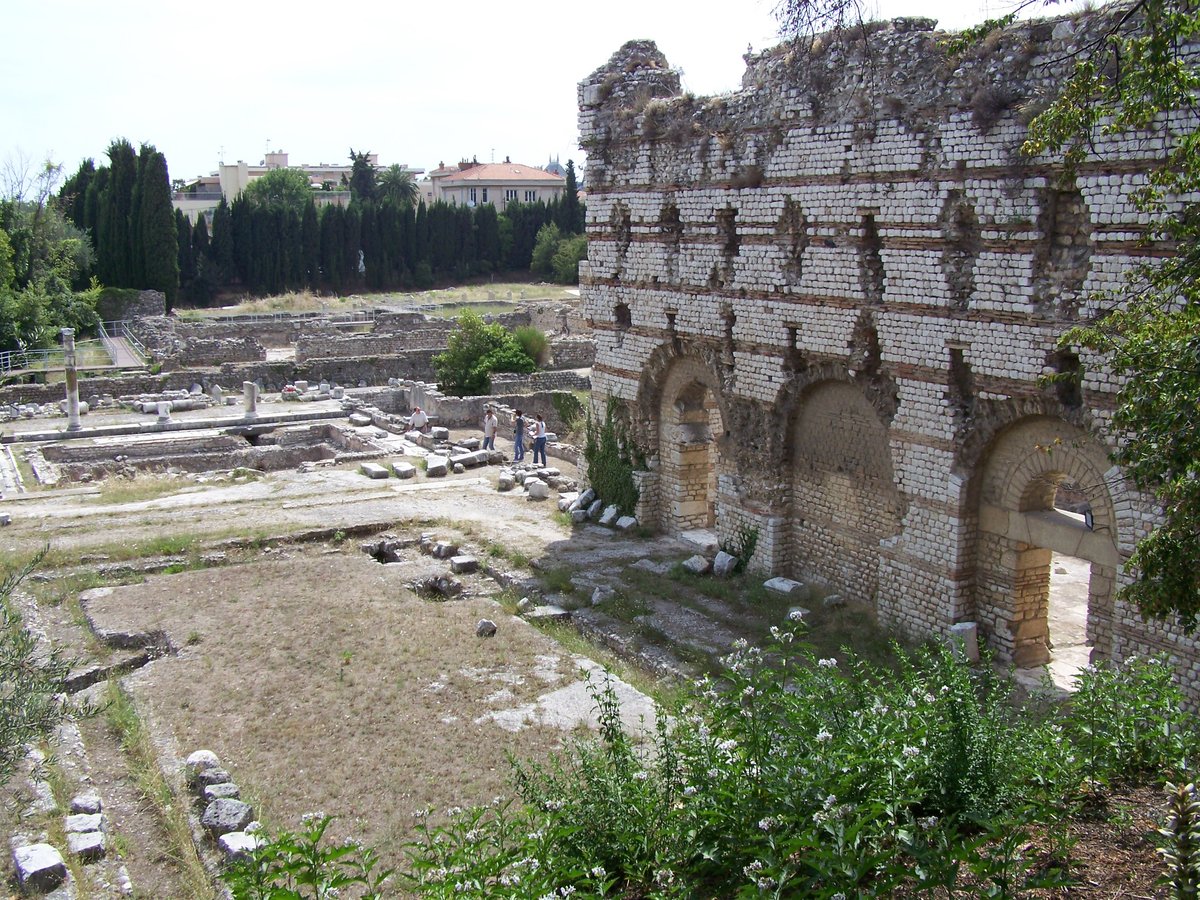

Thermes de Cimiez, an archaeological site, is inscribed by decree on August 24, 1943. The site was first discovered in the 19th century and further excavations were done in 1943 and 1954-1970. Three thermal ensembles were discovered on a two-hectare space. The thermal ensembles have a similar organization. Built or founded in the C1, the Thermes de Cimiez are part of the Roman antiquity, one of the French historical monuments and a gateway to archaeology.
The thermal ensembles were built using a mix of construction methods including opus mixtum, opus spicatum, and ashlar in brick. The site uses preserved Roman architecture elements such as large window openings, marble plaster, and pavements. The water supply to the thermal complex was provided by the aqueduct of Falicon and Mouraille. The system of water evacuation is particularly complete, including a complex network of drains and canals. The thermal ensembles include a frigidarium (cold room) in the North ensemble.
The North ensemble also has a piscine à péristyle (pool with a colonnade), latrines, and a probable garden in the southwest corner. The North ensemble is the largest and most complete of the three thermal ensembles. The North ensemble’s Tepidarium leads to a Laconicum (a heated room with a circular stove). The Thermes de l’Est and Thermes du Nord have a similar organization and succession of rooms as the Thermes du Nord: vestiaires not found but possibly a palestre precedes the frigidarium and three heated rooms: tepidarium, destrictarium and caldarium.
The heating system is north of the heated rooms and includes a flue for gas evacuation. A nymphée pool is north of the buildings. South of the buildings, the Thermes de l’Ouest are the least well-preserved of the three Roman bath complexes due to the placement during late antiquity of the episcopal group. Although it is recognized that the same axis and succession of rooms as the Thermes du Nord and Thermes de l’Est are preserved, the Fridayarium, tepidarium and heated rooms (destrictarium and caldarium), the praefurnium to the north, and the palestre to the south, are not visible.
Sources: Wikipedia, OpenStreetMap, Wikidata, Wikimedia Commons
Written by Nicolo Ciampini
Discuss this with the author and others
No comments yet. Be the first to start the conversation.