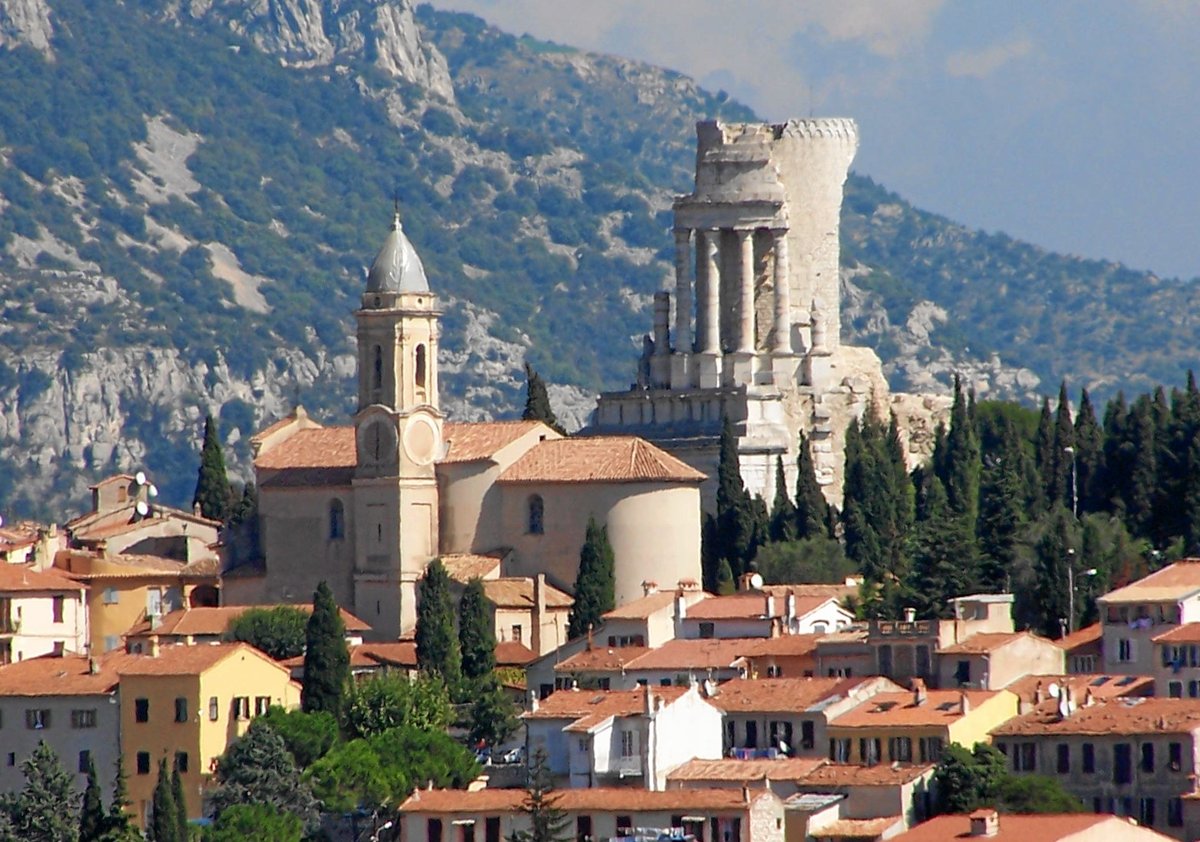

The Tropaeum Alpium, or the Trophy of the Alps, is a Roman victory monument (historic: monument) erected at La Turbie in the Alpes-Maritimes, above Monaco. It commemorates the subjection of the Alpine peoples to the imperium of the Roman people under Augustus. Its dedication is dated by the inscription transmitted by Pliny the Elder to 7/6 BC, while the military operations it recorded had probably taken place between 25 and 14 BC (fact). The monument stood at the highest point of the Via Julia Augusta as it crossed the Alps, at the confines of Italy and Gaul, and is known today chiefly through the heavily restored form given to its ruins in the early 20th century.
(fact) The Tropaeum Alpium was built by the Senate and people of Rome (fact), and included an inscription written in both Latin and Greek (fact). This unconventional placement was a strategic choice: the monument could signal the confines of Italy for a traveller coming from Italy, marking the end of an arduous Alpine crossing. It could also serve as a symbolic boundary, awaiting the arrival of empire and progress. The Tropaeum Alpium is a fascinating relic of the Roman Empire’s power and ambition, representing not just a military victory but the subtle dominance of Rome over the Alps and beyond, and is an important artefact in the cultural heritage of the European Alps.
Sources: Wikipedia, OpenStreetMap, Wikidata, Wikimedia Commons
Written by Nicolo Ciampini
Discuss this with the author and others
No comments yet. Be the first to start the conversation.