
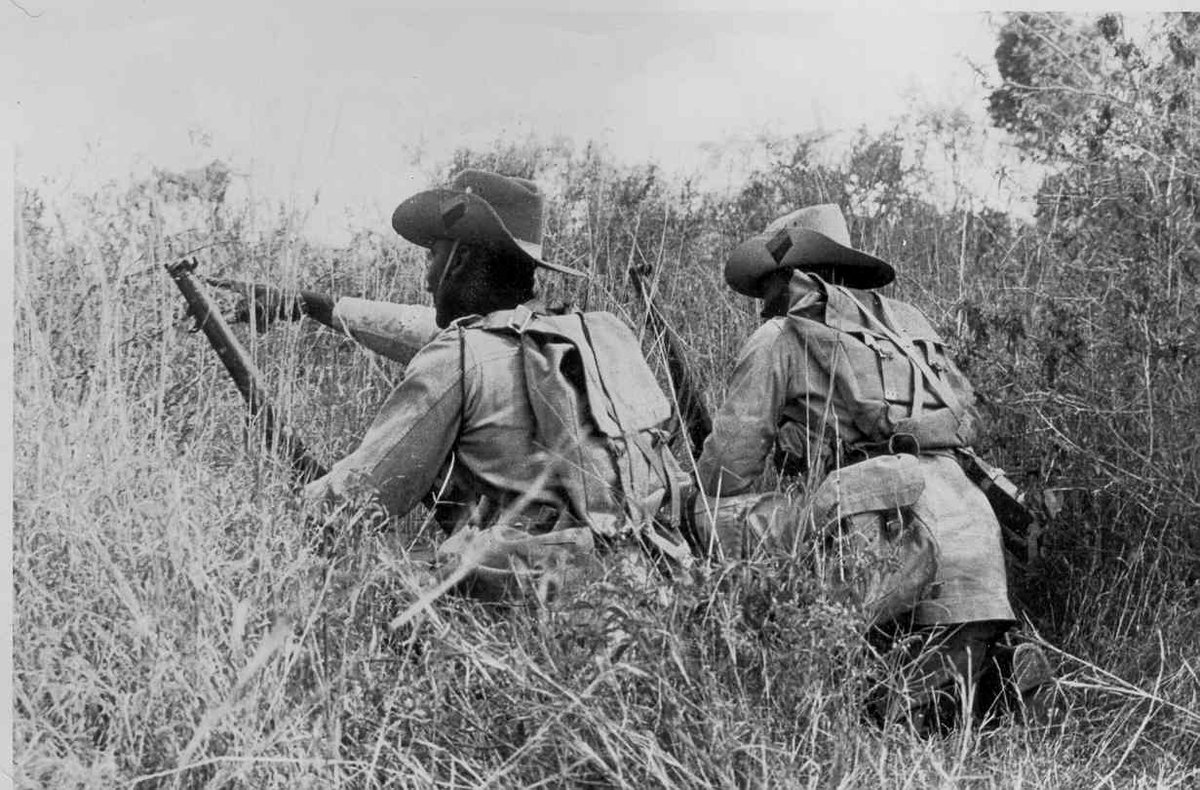
In the heavy stillness of a 1918 morning, a telegram traveled under a white flag to find General von Lettow-Vorbeck. The message, sent by General van Deventer, informed the German commander of the signing of the Armistice and ordered him to end hostilities. Von Lettow-Vorbeck, commanding the German forces in East Africa, received this news from District Commissioner Hector Croad at the Chambeshi River.
This was no humble surrender but a cessation of hostilities. While the Armistice in Europe was signed on 11 November, the fighting in East Africa continued for three days more until von Lettow-Vorbeck ordered his troops to stop. British forces had been waiting in the Abercorn area to attack the German forces coming from northern Mozambique, thinking they would make for Lake Tanganyika, but von Lettow-Vorbeck had turned south-west towards Kasama. Most accounts suggest he surrendered at Abercorn, but that was a designated location for an official ceremony 250 km to the north.
Nearby, a tiny British population had evacuated to Mpika, leaving behind only nine people to watch the water. These remaining individuals possessed two Maxim guns they did not know how to operate. Among them was Charlie Simpson, who buried roughly £10,000 in a goat pen near a rubber factory, hoping the goats' hoofprints would hide the evidence of his digging. The Germans machine-gunned the factory before the messenger arrived with the telegram.
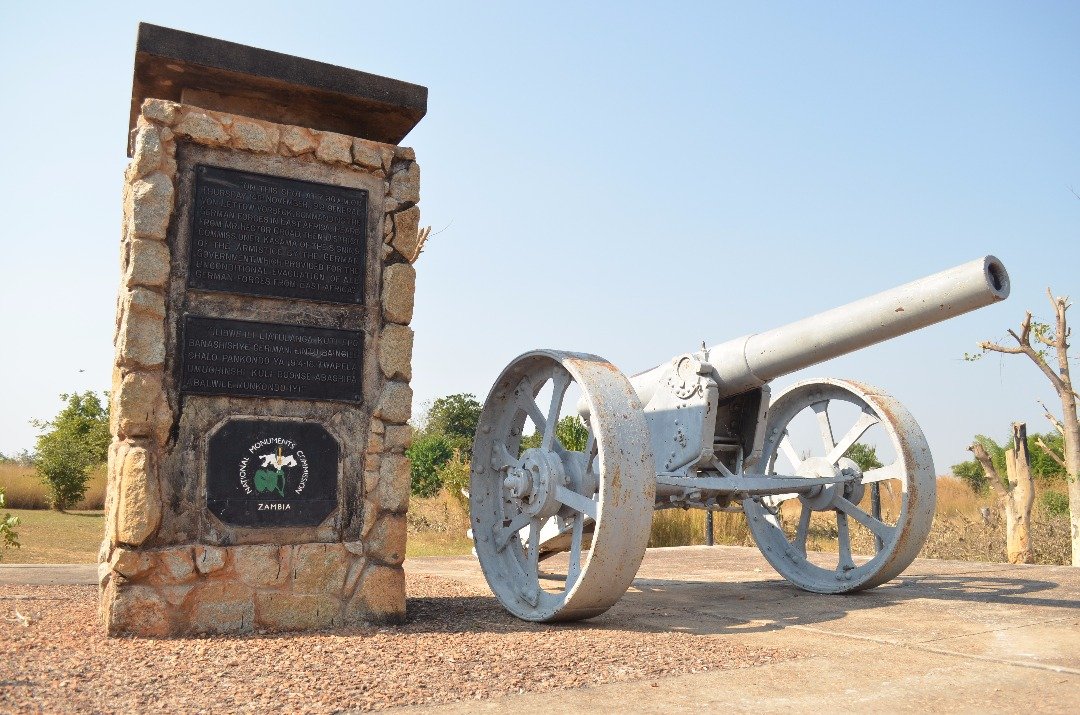
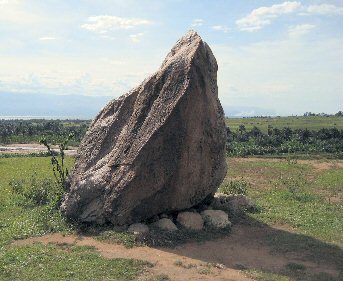
Now, the Chambeshi Monument stands as a pillar on the Mpika-Kasama road in the Northern Province of Zambia. It marks the spot where the First World War reached its final conclusion in the region. A cannon of the era, though not one used by the Germans, sits beside the stone plaques that honour the brave soldiers who fought in the war.
Sources: Wikipedia, OpenStreetMap, Wikidata, Wikimedia Commons
Written by Mutabor
Discuss this with the author and others
No comments yet. Be the first to start the conversation.