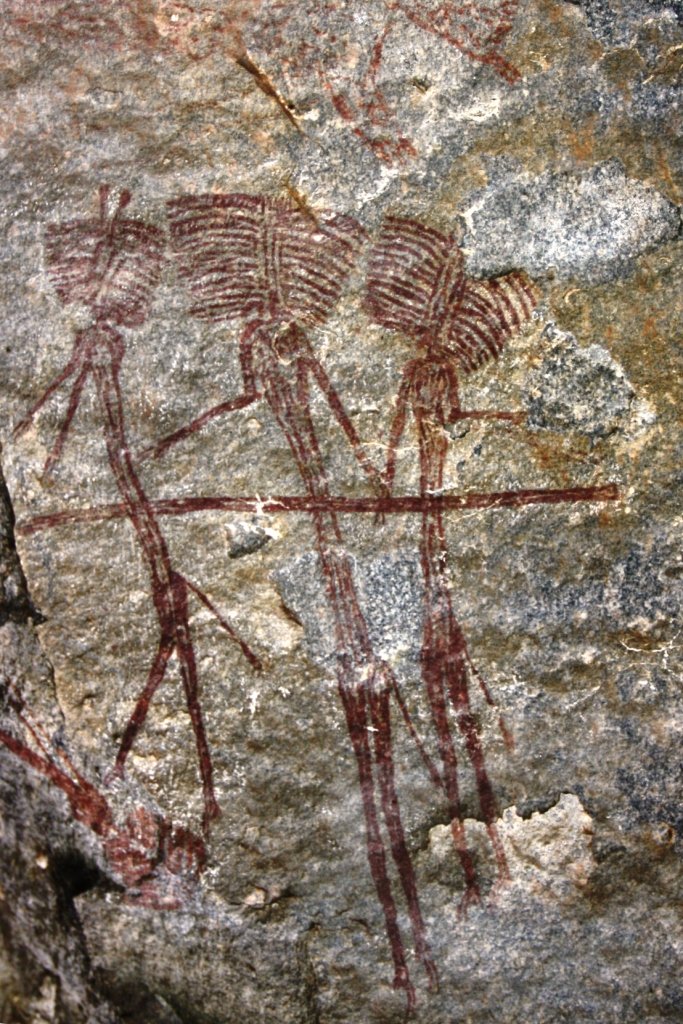

In central Tanzania, the landscape is characterized by large piled granite boulders that form rock shelters facing away from prevailing winds. These shelters often have flat surfaces due to rifting, where paintings are found protected from weathering. The Kondoa Rock-Art Sites were declared a UNESCO World Heritage Site in 2006 and serve as a significant archaeological site for rock paintings that show a cultural continuity between various ethnic and linguistic groups who have resided in the area over time.
The paintings depict elongated people, animals, and hunting scenes. Older paintings of the 'naturalistic tradition' are generally red and associated with hunter-gatherers, while more recent 'late white' style paintings often depict cattle and are attributed to Bantu farmers. These sites remain part of a living tradition, used by the Sandawe for simbó healing ceremonies and by the Maasai people in ritual feasting. In the 1970s, Sandawe men were still making rock paintings for magical, casual, and sacrificial reasons, such as rain-making and healing ceremonies.
At the Kisese II Rockshelter, the paintings are part of a site containing transitional assemblages from the Middle to Later Stone Age. Excavations led by Mary and Louis Leakey in 1935 and later by Raymond Inskeep uncovered almost 6,000 lithic artifacts and ostrich eggshell beads. Some of these beads date to 46.2–42.7 ka cal BP. The site provides insight into social transitions during the late Pleistocene and Holocene eras, with evidence of occupation on the floors dated to more than 40,000 years ago.
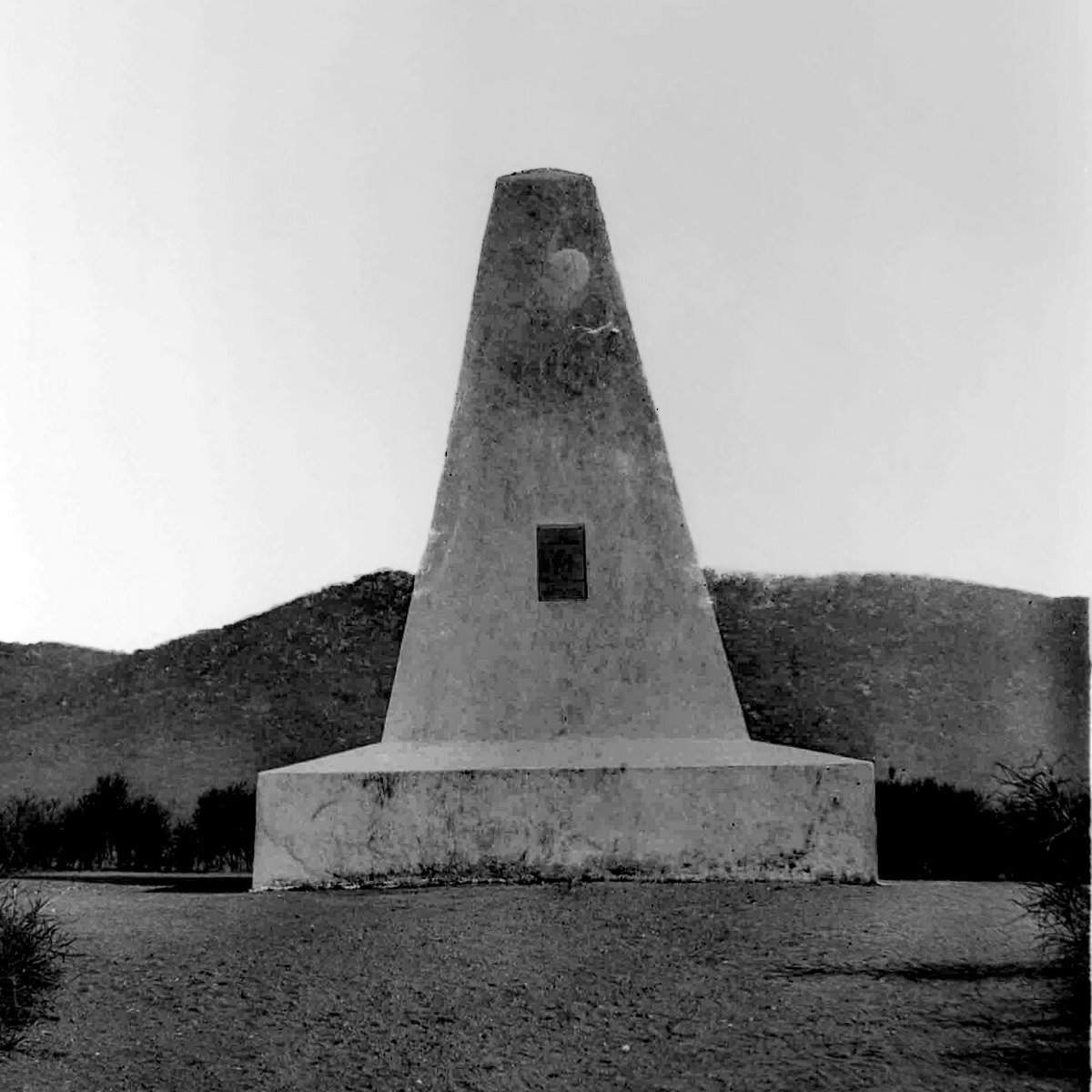
Visitors to the site can see the boundaries marked by concrete posts approximately nine kilometres east of the main highway from Dodoma to Babati. The region contains an estimated 150 to 450 decorated rock shelters, including the Mungomi wa Kolo, which features fine-line red ochre drawings of people and animals.
Sources: Wikipedia, OpenStreetMap, Wikidata, Wikimedia Commons
Written by Mutabor
Discuss this with the author and others
No comments yet. Be the first to start the conversation.