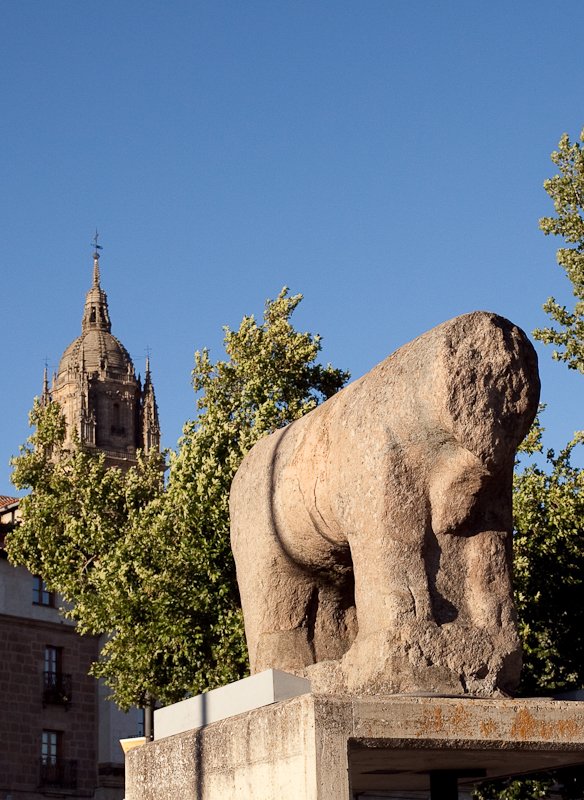

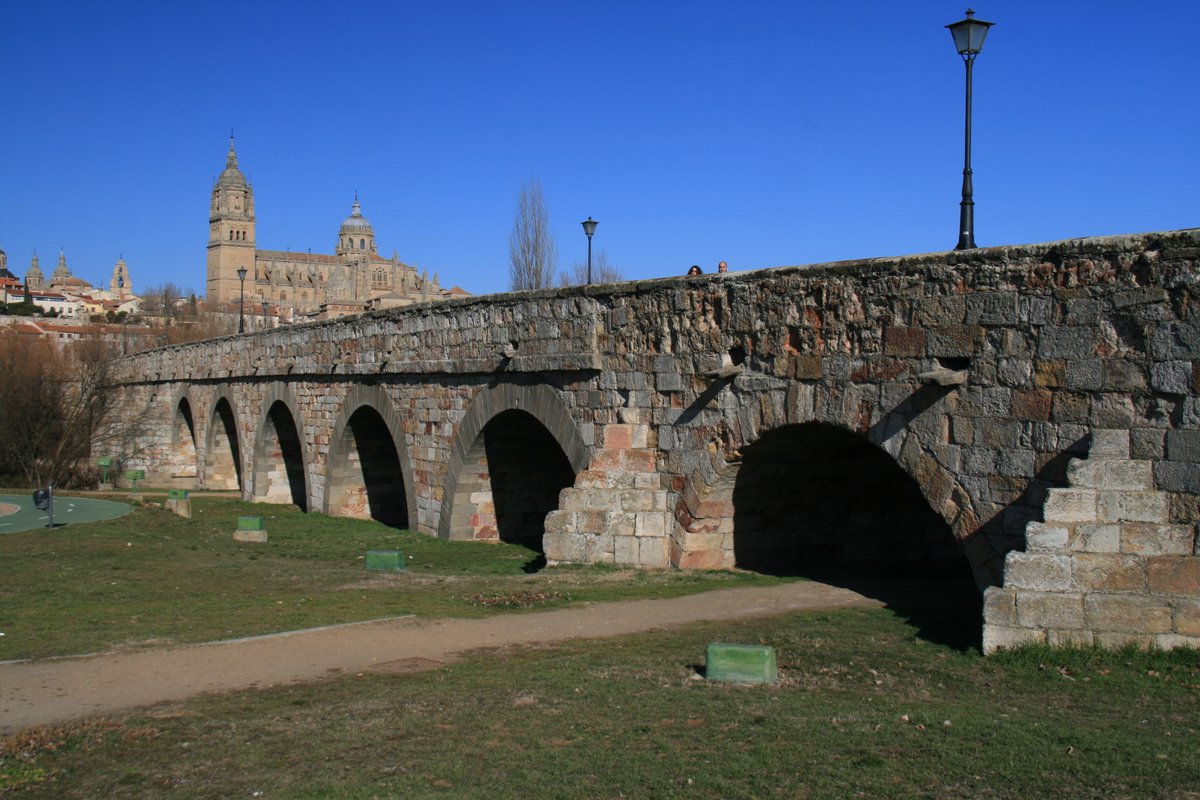
The verraco of the bridge in Salamanca, Spain, is an Iron Age stone statue depicting a bull, placed at the entrance of the Roman bridge. This statue, which is also known as the "bull of Salamanca" or the "bull of the bridge", is the oldest statue in the city and appears in its coat of arms. Its dimensions are 2.10 metres long, 1.57 metres tall, and 70 centimetres wide. The head is missing and the body was broken in half, but was rebuilt.
The verraco of the bridge is one of the many verracos carved by the Vettones tribes in the late Iron Age across the west of the meseta. These statues represent breeding pigs, bulls, bears, and other animals. While their exact meaning is unclear, they may have served as boundary markers, religious symbols, or figures to protect cattle and natural resources.
Documents indicate the bull sculpture has been next to the Roman bridge since the end of the 12th century. In 1834, provincial governor José María Cambronero ordered the verraco to be thrown into the Tormes River, mistakenly believing it was a mark left by King Charles I of Spain during the Revolt of the Comuneros. The statue was rescued in 1867 and returned to the Roman bridge in 1954. It was initially located in the middle of the bridge but has been at the entrance since 1993.
Sources: Wikipedia, OpenStreetMap, Wikidata, Wikimedia Commons
Written by Nik Frost
Discuss this with the author and others
No comments yet. Be the first to start the conversation.