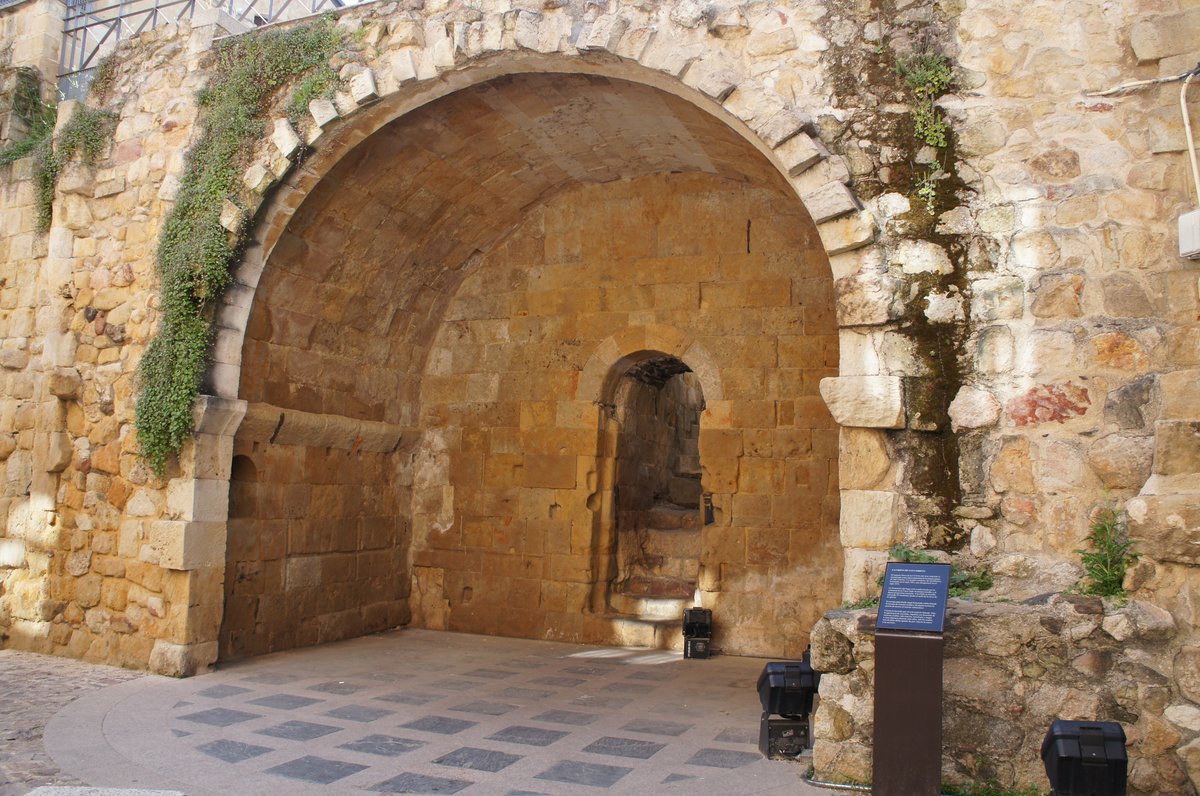

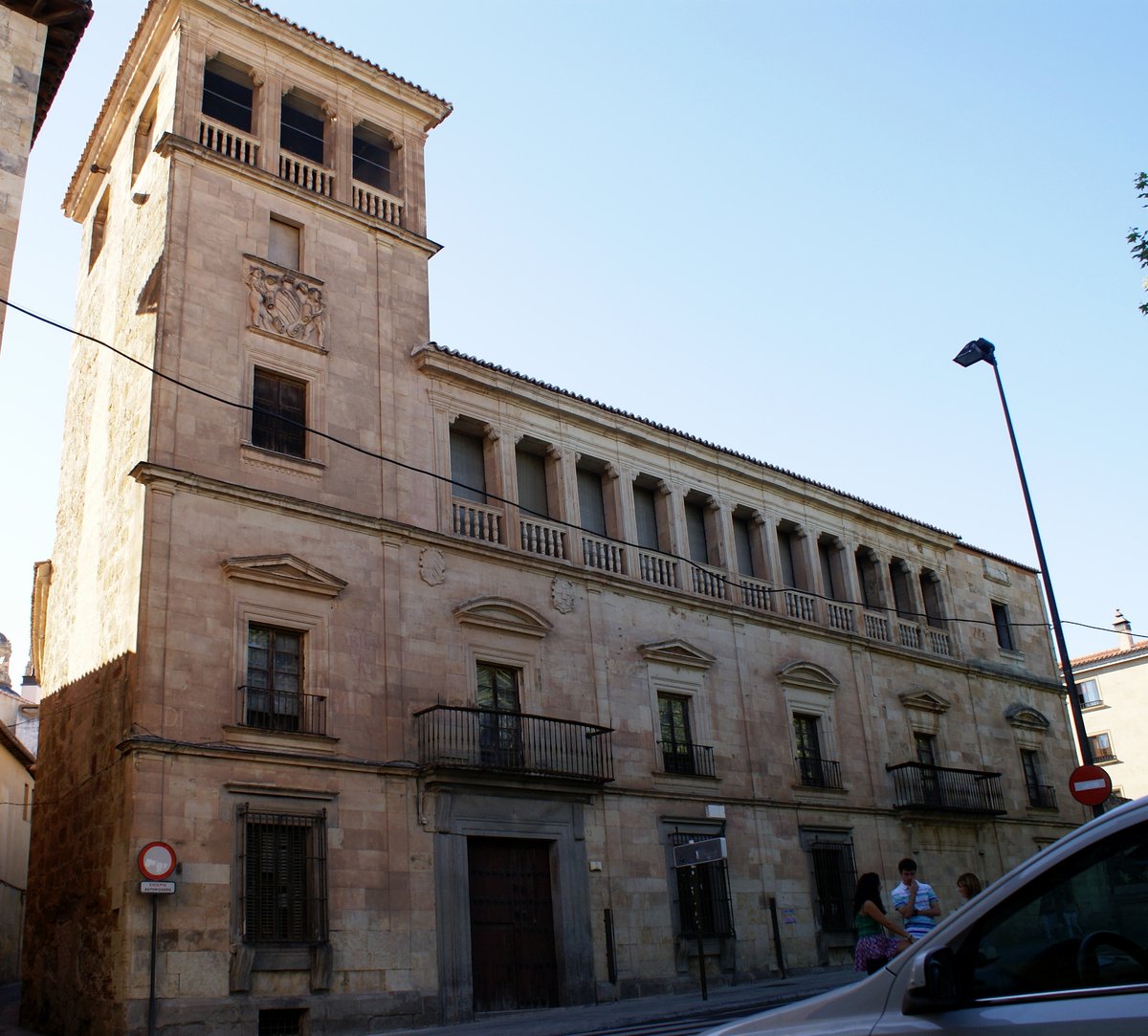
The Cueva de Salamanca is a legendary site in the city of Salamanca, corresponding to what was the crypt of the now-nonexistent church of San Cebrián. During the reign of Isabella I, the access to this area was preventatively sealed with mortar and stones. After the destruction of the church at the end of the 16th century, the cave served as a storeroom for the palace of the Mayorazgo de Albandea, and later as a storeroom for a bakery and a charcoal shop. In the early 1990s, the area on the Cuesta de Carvajal was carefully excavated, and the findings were exhibited to the public in 1993.
Popular tradition quickly assigned the role of teacher to Asmodeo or some other demon, who for seven years taught divination and other dark arts to seven students. At the end of the course, a lottery was held and one of them remained in the hands of the Demon. It is said that the Marquis of Villena was one of the lucky students who managed to escape with his life, though he left his shadow in the hands of Evil, remaining marked for life as one of its adepts. Another variant attributes the role of mocking disciple to the priest Axular, while others cite a sexton or a bachelor named Clemente Potosí as a lecturer.
This mythology reached beyond local borders and appeared in literature, including a work by Miguel de Cervantes in 1615 and a poem by Walter Scott. The tradition moved to Hispanoamérica, where in countries like Argentina, Chile, Uruguay, and southern Brazil, the word salamanca refers to caves where witches and demons are said to celebrate. The name is associated with the words salamandra and mántica, and the practice was linked to the religious practices of indigenous peoples during the colonial period.
Sources: Wikipedia, OpenStreetMap, Wikidata, Wikimedia Commons
Written by Nik Frost
Discuss this with the author and others
No comments yet. Be the first to start the conversation.