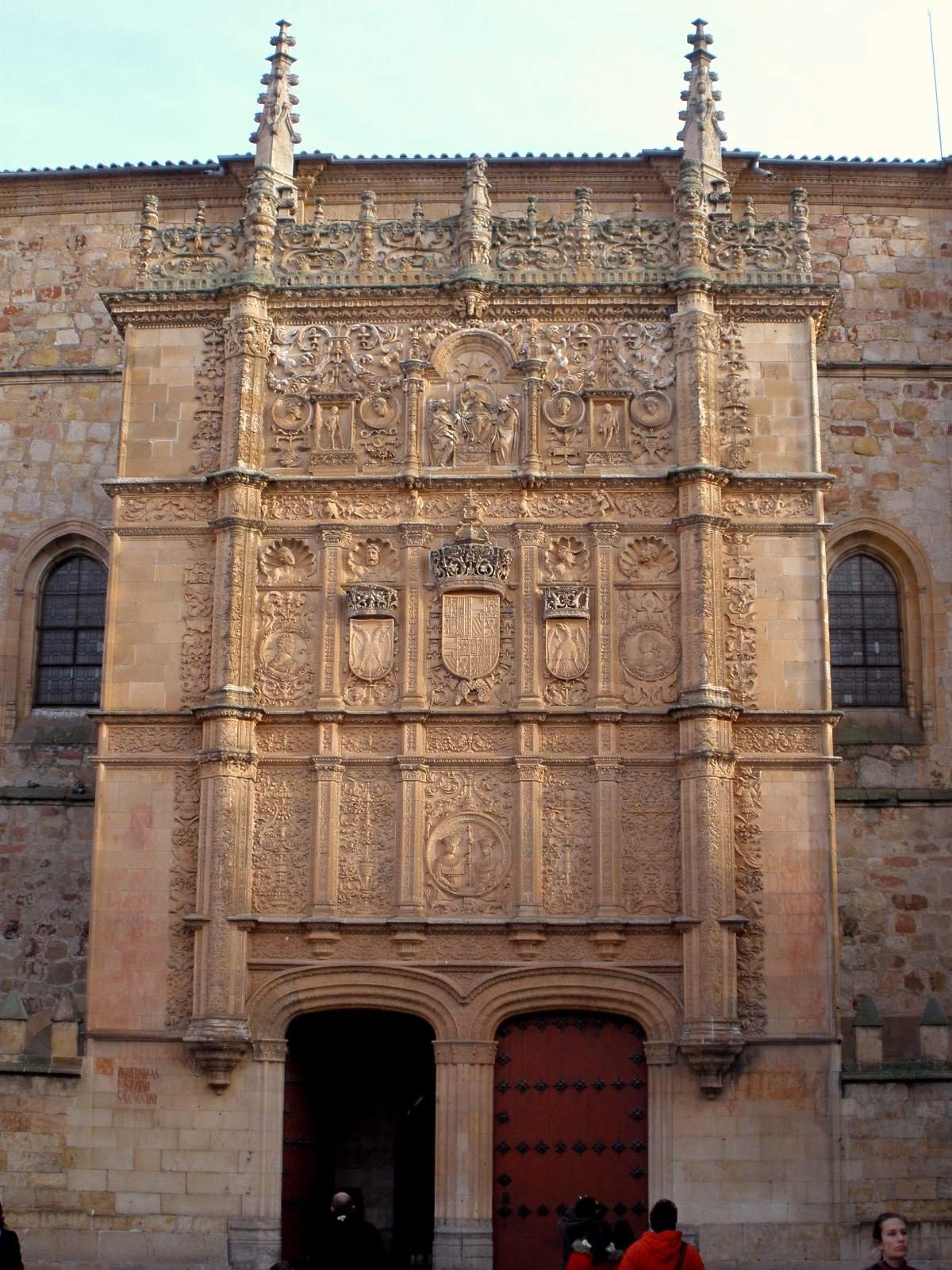

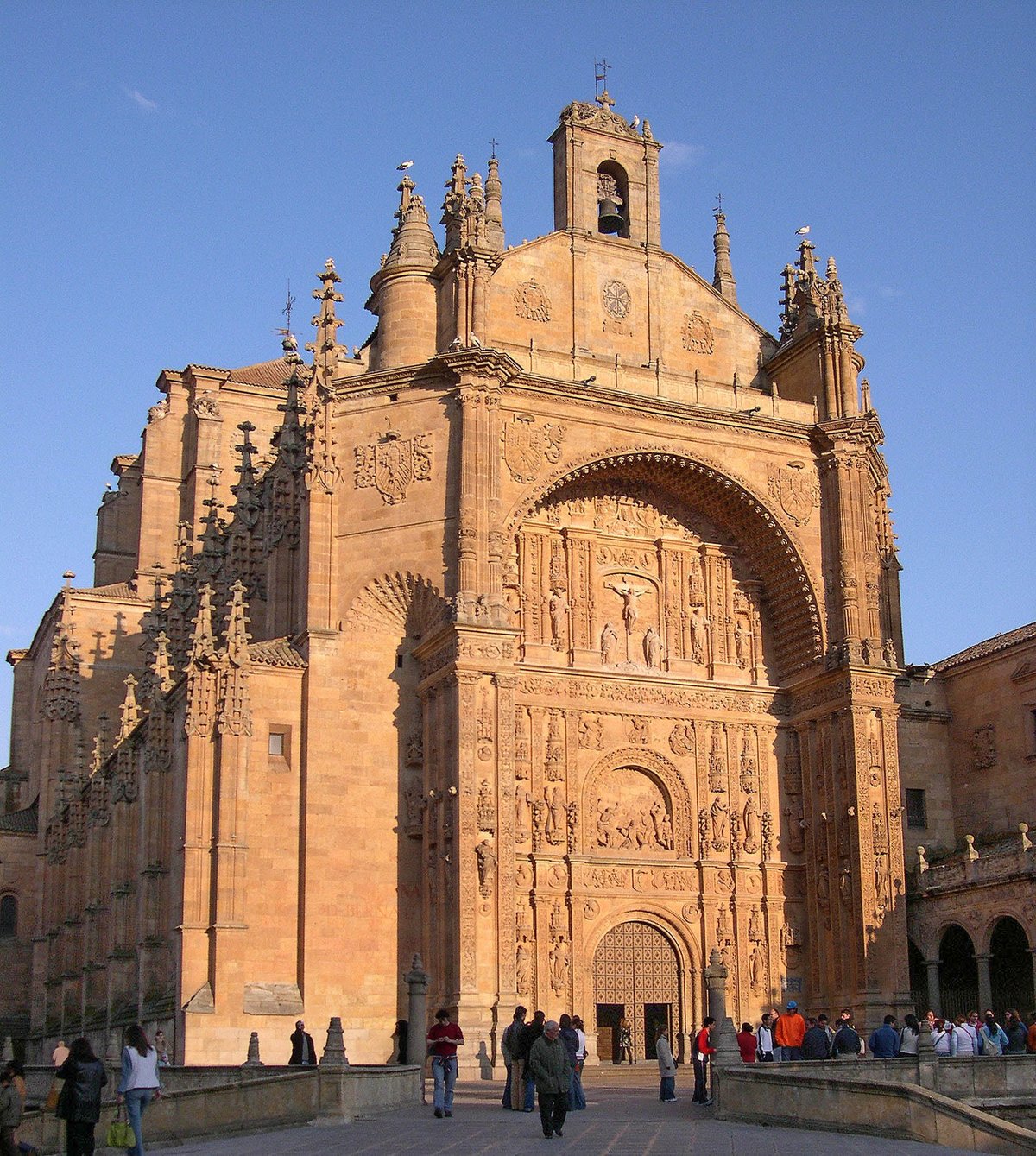
Take a moment to observe the University of Salamanca facade. Atop a human skull sits a small toad, often mistaken for a frog. This symbol served as a warning to students, representing the sin of lust. According to tradition, finding the toad on the facade augurs success in studies.
The facade dates from 1529 and belongs to the plateresco style, which developed in the first 30 years of the 16th century. It is a dense landscape of mythology and propaganda. One section features the medallion of the Reyes Católicos, while another portrays Carlos V as a Roman emperor. To his right is a female representation; while traditionally considered his wife, a 2014 study suggests it is the representation of Juana I de Castilla, his mother.
In the center of the third tier, a pope addresses six men in a scene found on the official university seal. He is flanked by Hercules and Venus. Some scholars view Hercules as a symbol of intellectual effort, while Venus may represent either a passion for knowledge or the danger of vice. Above them sit characters who may be different rulers of antiquity, such as Adriano, Julio César, Augusto, or Alejandro Magno.
According to a 2014 study by Professor Alicia M. Canto, the author was Juan de Talavera. The work may have been funded by Juana I de Castilla, who appears in the second tier facing her son Carlos I de España.
Sources: Wikipedia, OpenStreetMap, Wikidata, Wikimedia Commons
Written by Nik Frost
Discuss this with the author and others
No comments yet. Be the first to start the conversation.