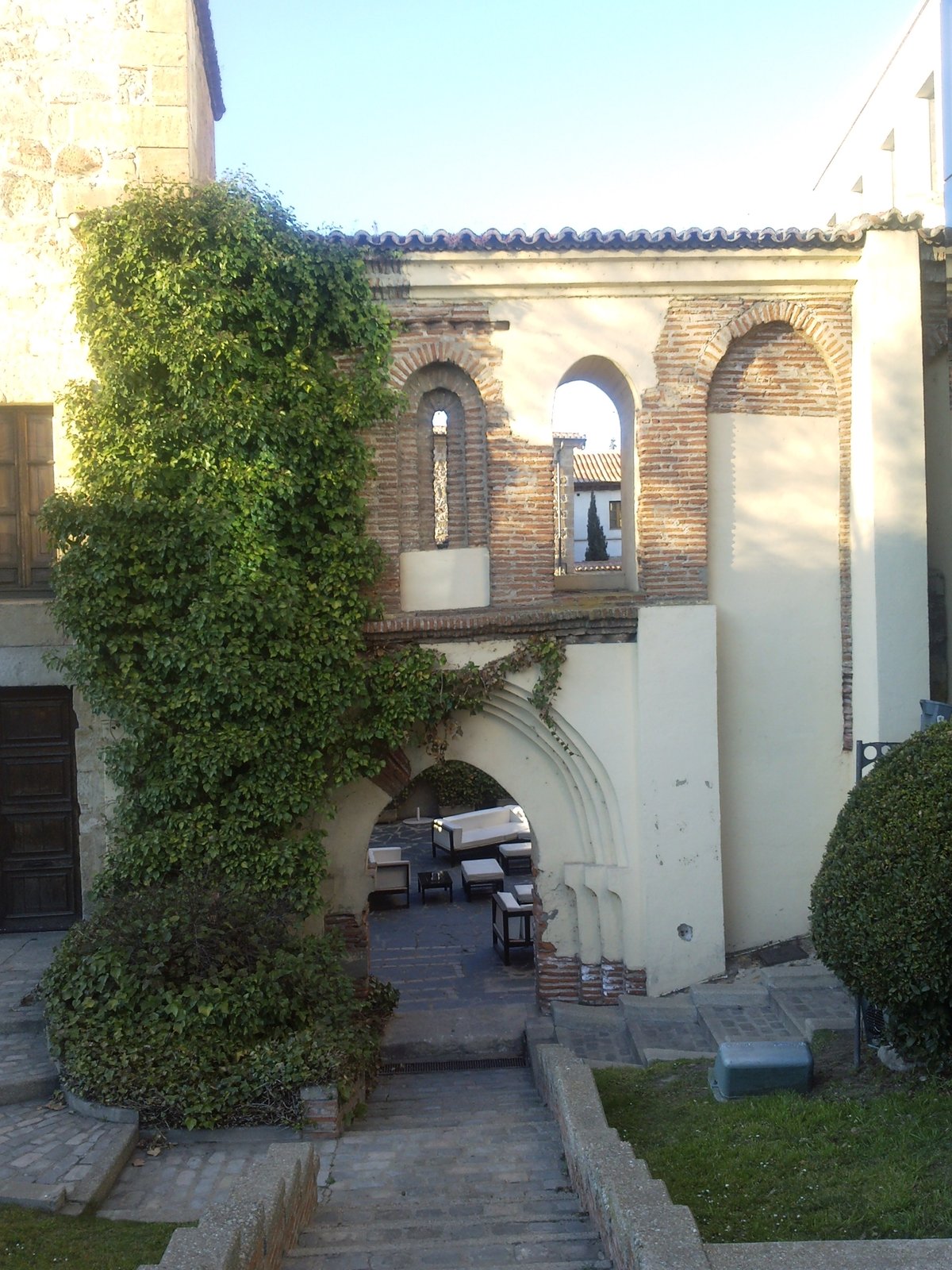

The ruins of the church of San Polo stand southwest of Salamanca near the river Tormes. While its construction dates back to the early 12th century, the building served as a parish for the portogaleses. The heavy use of brick in the structure is a notable feature, similar to the nearby church of Santiago del Arrabal. The building is described as having a Romanesque-Mudéjar architectural style.
We can trace the evolution of the site back to 1529 when a tower was added to the construction. The church remained active until the late 19th century before falling into disrepair. During this time, the parish moved first to the Convent of San Esteban and later to the church of the Trinitarians, which remains the parish of San Pablo today.
Very little of the original structure remains, yet the apses visible today belong to the first construction. In the 19th century, one wall held about thirty statues of saints on brackets, though those were removed long ago. The church originally possessed three naves and a head with three chapels, including a central one with a semicircular apse.
Today, these remains form a public square. Part of the structure is integrated into the Hotel San Polo following archaeological excavations in 1984. Plans were previously made for the site to house a tourist office, but it remains a public space where the history of the area remains visible.
Sources: Wikipedia, OpenStreetMap, Wikidata, Wikimedia Commons
Written by Nik Frost
Discuss this with the author and others
No comments yet. Be the first to start the conversation.