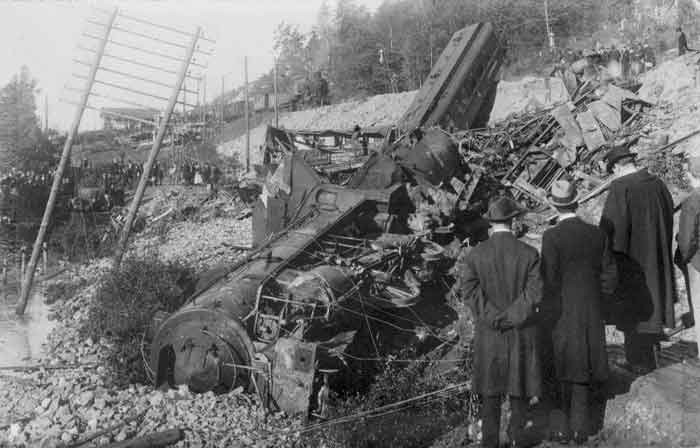

The derailment at Getå, a once-small town now part of Norrköping municipality, unfolded on October 1st, 1918. The disaster, known as the Getå railroad disaster, is the worst rail accident in Swedish history, with 41 people injured and at least 42 lives lost. The wreckage not only claimed human lives but also left a lasting mark on the site, as a small peninsula now extends from the shore of Bråviken Bay, raised by the ground collapse caused by the accident.
The railway line between Åby and Nyköping had been opened just five years prior, on October 1st, 1913. In preparation for its construction, geological surveys had been conducted due to the existing geological fault in the area, posing a risk of the ground collapsing. The spring of 1918 was dry, leading to a drop in the mean water level of Bråviken Bay and the drying out of the ground, which, in turn, caused the ground to crack. However, September was remarkably wet, with enough rain to saturate the ground.
The embankment was built on layers of clay, with the bearing capacity diminished due to the rains. On October 1st, 1918, a layer of surge gravel began to slip against a layer of clay in the embankment, leading to the collapse of the embankment, and subsequently, the road below. This caused the underlying layers to be pushed up, resulting in the formation of the peninsula.
Sources: Wikipedia, OpenStreetMap, Wikidata, Wikimedia Commons
Written by Nik Frost
Discuss this with the author and others
No comments yet. Be the first to start the conversation.