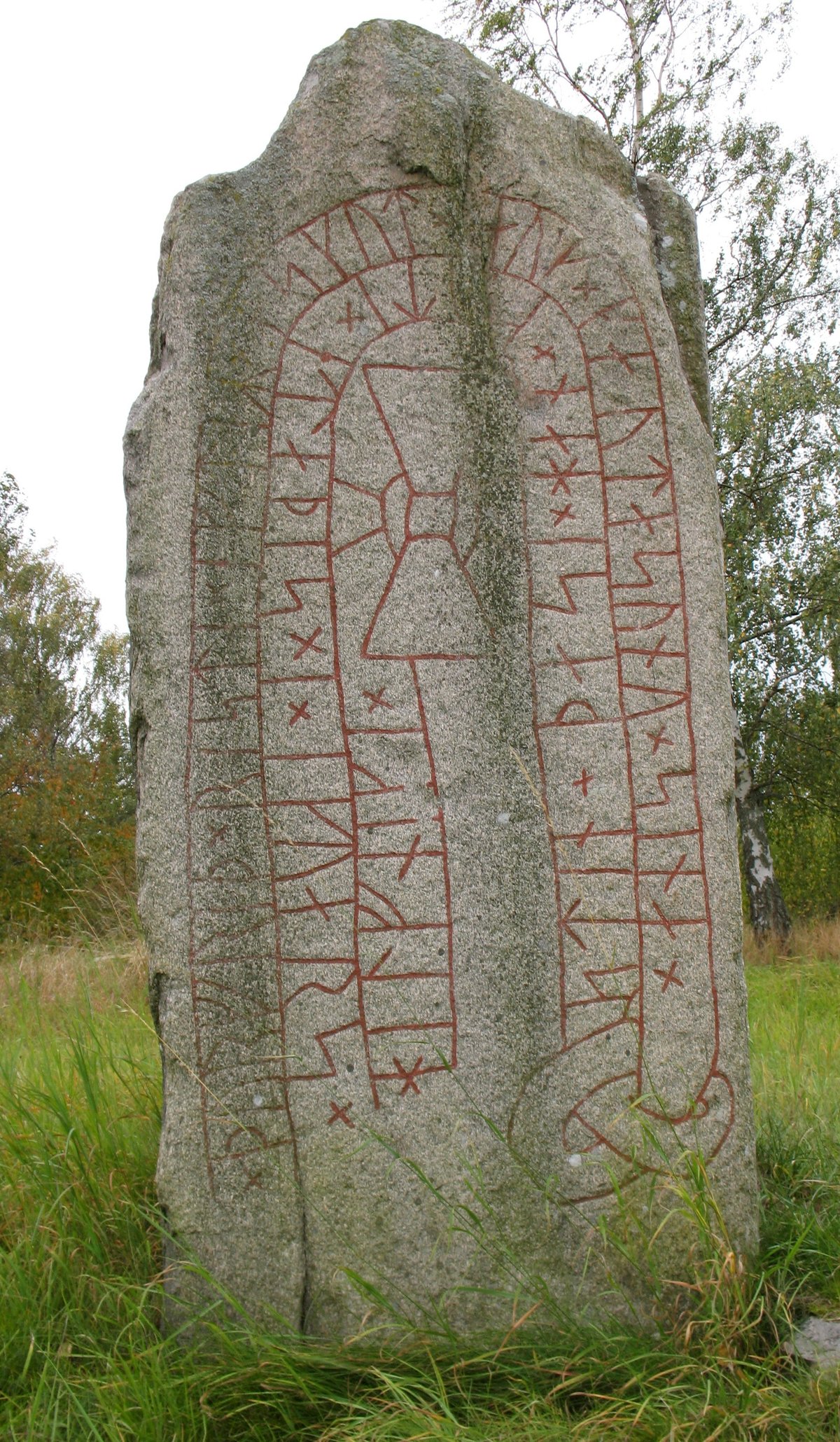

Standing in Sylten, east of Norrköping, the rune stone at the heart of the village seems to be a puzzle. A family of four is named on its inscription, each marked with a cross: Torfrid started it, Åsgöt and Göte, their sons. And then, without warning, it stops. The man known as Göte ended his life in Ingvar's rule. Who was Ingvar? And who was this village named for?
Sylten, the village, is named after this rune stone. Runic inscriptions were common in the Viking Age, but this one is distinctive. The runes are arranged in a double sling, with the first half forming a Roman arch, the second half echoing with a ring-like shape. The Ingvar mentioned in the text is Ingvar the Far-Traveled, a ruler better known as a pirate.
The inscription is in Old Norse. Translated, it reads: 'Torfrid erected after Åsgöt and Göte, their sons, this stone. The Göte died in Ingvar’s following.' Sylten was initially known as Stenningen, or 'Stone Enclosure'. The name switched in the 18th century, as it had become customary to name villages and farms after the stone that marked them, a practice that survived until the modern era. Sylten, or Stenningen, is therefore named, indirectly, if ambiguously, for Göte, and possibly for the unknown Ingvar. But who were these men?
The earliest parts of the inscription form a Viking Age memorial. Åsgöt, Göte, and their unnamed sons, children or grandchildren of Torfrid, may have been killed in battle or moved to farmsteads elsewhere, leaving the memorial behind.
Sources: Wikipedia, OpenStreetMap, Wikidata, Wikimedia Commons
Written by Nik Frost
Discuss this with the author and others
No comments yet. Be the first to start the conversation.