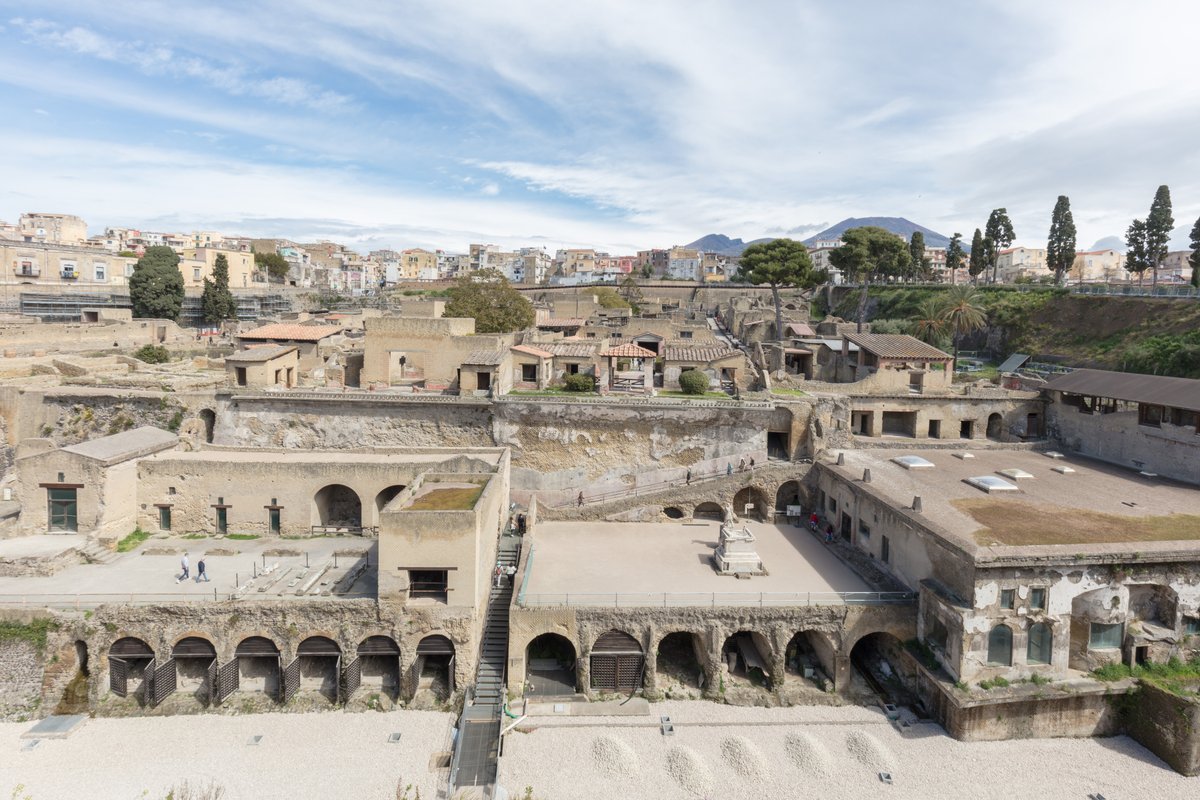

Herculaneum, a once prosperous Roman seaside retreat, was engulfed by the devastating eruption of Mount Vesuvius in 79 AD. For centuries, it lay buried beneath layers of ash and debris, perfectly preserved like time had frozen. The Greek legend tells us that Hercules founded the city, but the historian Strabo claims otherwise, suggesting that the Oscans were the original settlers, followed by the Etruscans, Greeks, and lastly, the Samnites. Herculaneum was initially discovered during the drilling of a well in 1750.
Carbonized by volcanic ash, the site contained numerous organic materials like wooden objects, doors, and beds, still remarkably well-preserved. Excavations began in 1738, revealing streets, buildings, artifacts, but only a fraction of the ancient site has been uncovered. One of the most renowned sites is the Villa of the Papyri, famed for the thousands of charred scrolls discovered there, which provide insights into the lives of people who lived there nearly 2,000 years ago.
Today, Herculaneum offers a fascinating glimpse into the past, a testament to the ancient Romans' ingenuity, and a reminder that beneath the earth lies a world hidden in secrets.
Sources: Wikipedia, OpenStreetMap, Wikidata, Wikimedia Commons
Written by Nicolo Ciampini
Discuss this with the author and others
No comments yet. Be the first to start the conversation.