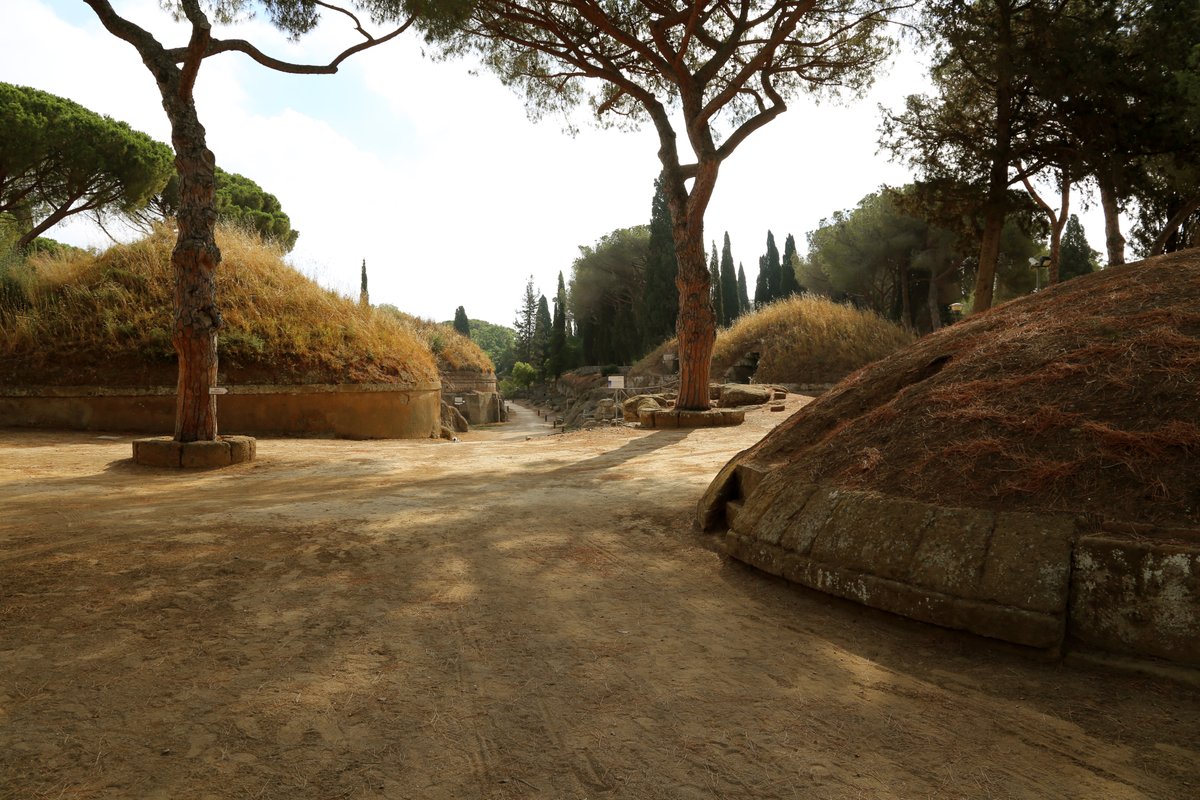

At the Necropoli della Banditaccia, the Etruscans built a literal city for the deceased that mirrors the layout of the living. It is a city of the dead that runs alongside the city of the living, providing scholars with relevant information on the art and culture of the people.
This massive complex covers about 20 hectares and features a burial road stretching over two kilometers. The site contains over 20,000 chamber tombs, and through the interior of these tombs, archaeologists have learned about the domestic life of the Etruscans. The burials show an architectural progression from simple thatched huts to opulent princely houses.
The site is called Banditaccia because, since the late 1800s, the area has been "bandita" - rented out via public auction by the landowners of Cerveteri to the local population. This hillside is packed with many tombs, some of which are arranged in regular rows like the via dei Monti Ceriti and the via dei Monti della Tolfa, dating back to the 6th century BC.
Visitors can explore the public section of the site, which includes these burial roads. While the interior of the Tomba dei Rilievi is visible only through glass to protect its delicate frescoes, the rest of the site offers a vast look into ancient history, featuring hundreds of mounds dating from the 9th century BC to the 2nd century BC.
Sources: Wikipedia, OpenStreetMap, Wikimedia Commons

Written by Nicolo Ciampini
Discuss this with the author and others
No comments yet. Be the first to start the conversation.