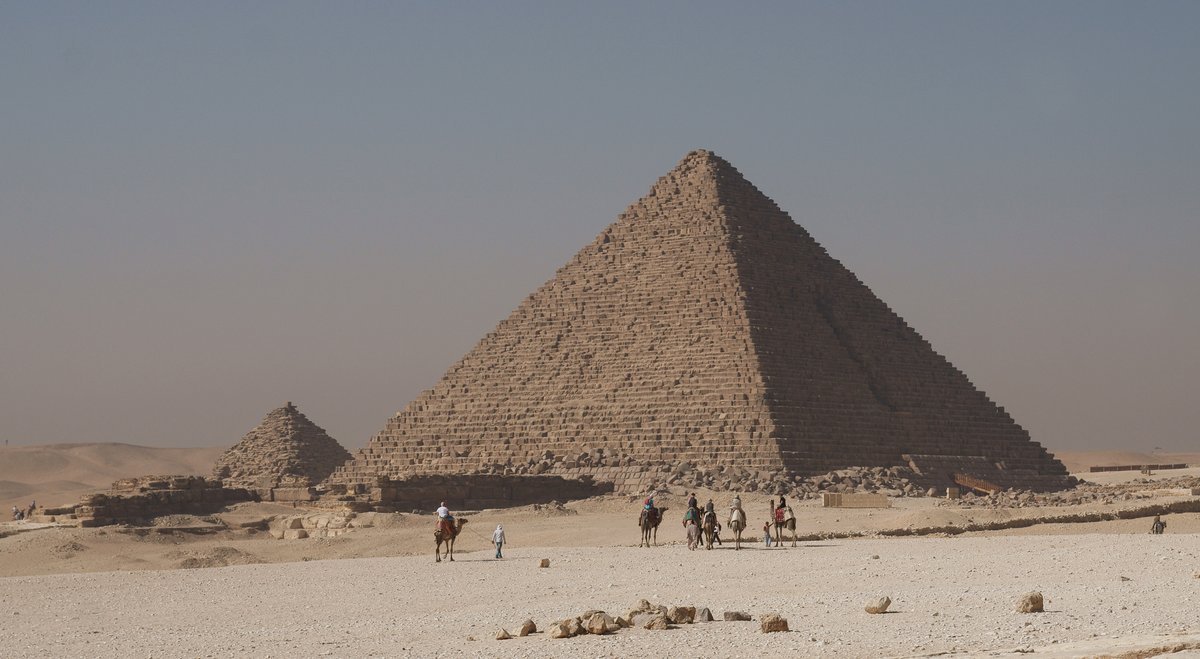

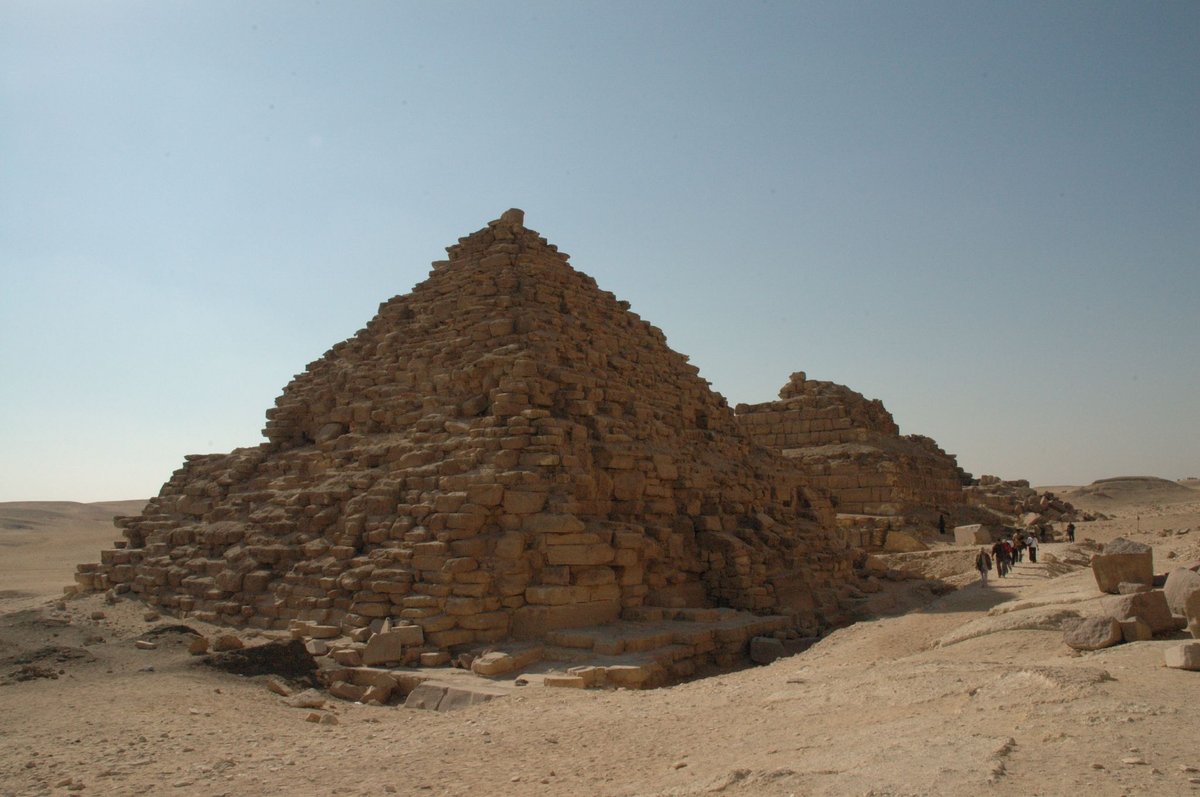
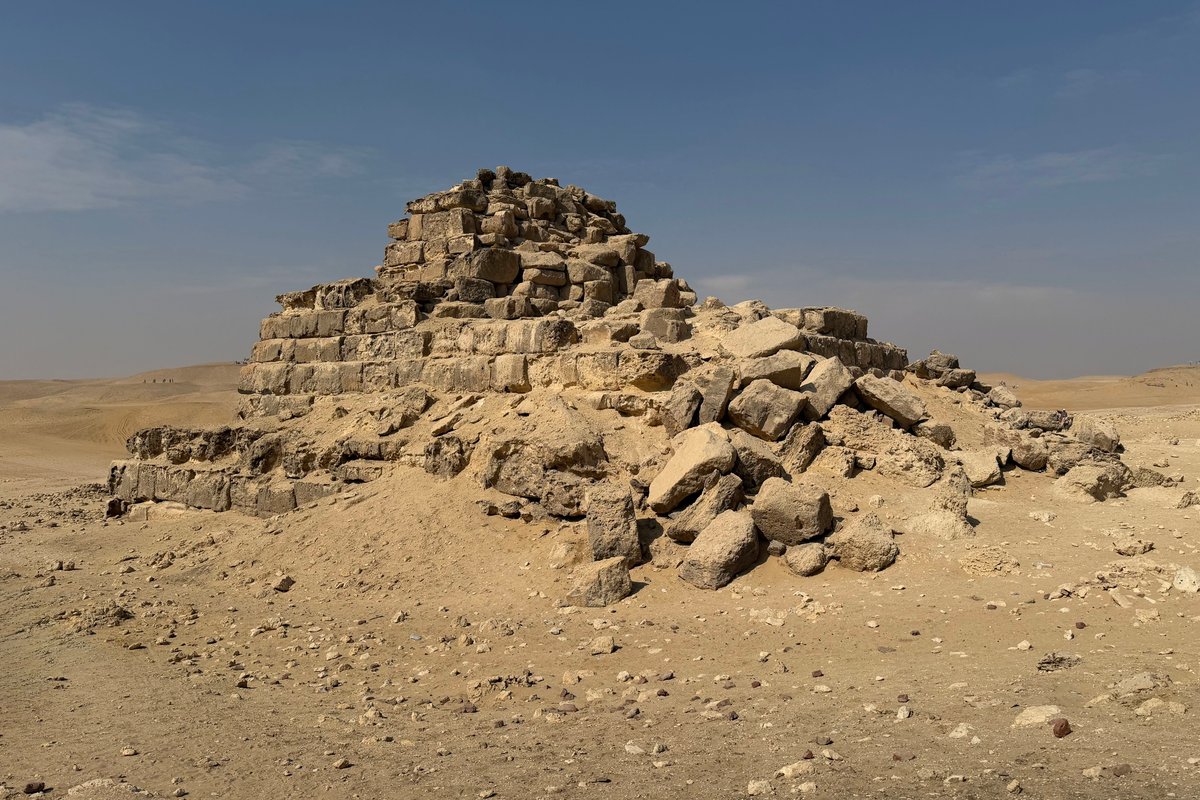
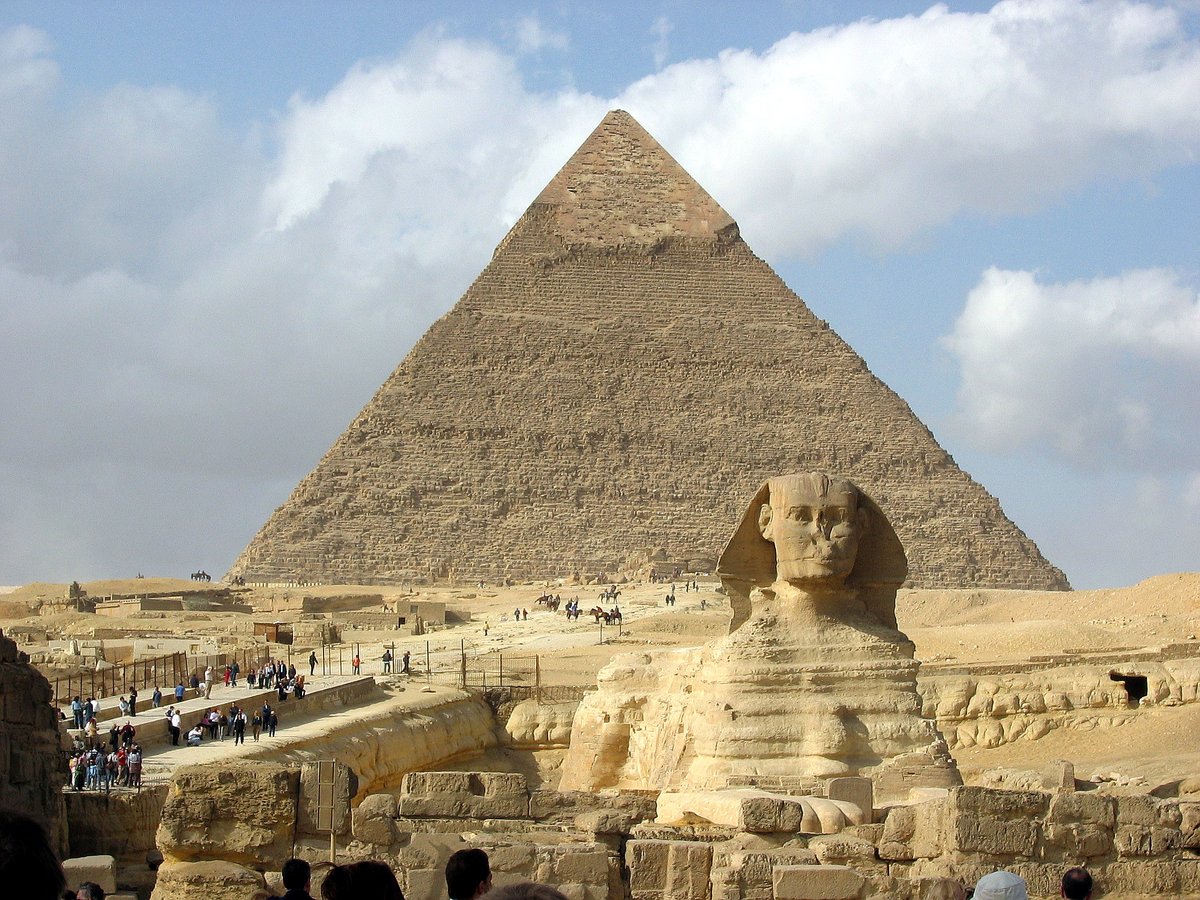
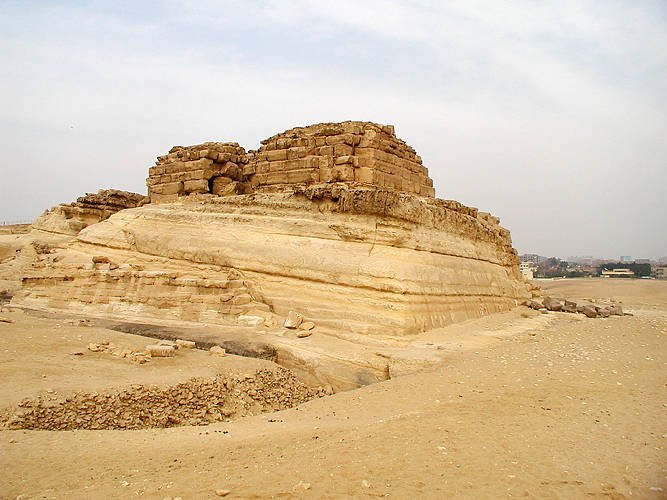
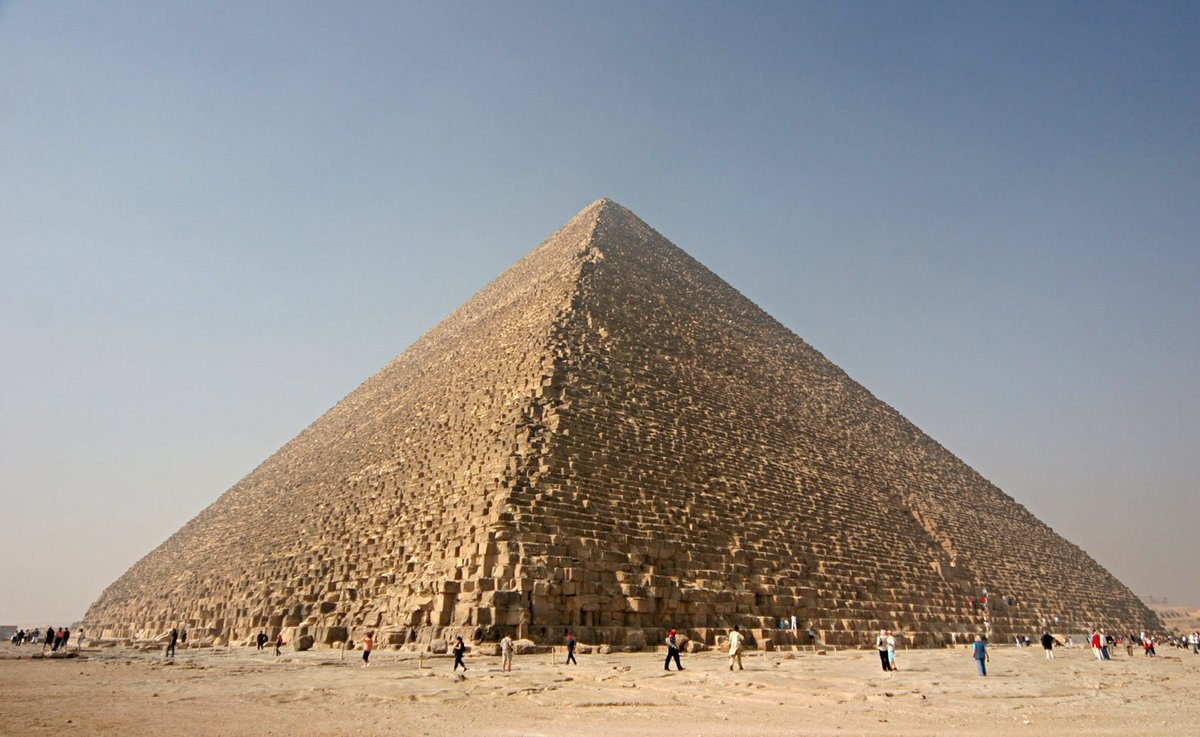
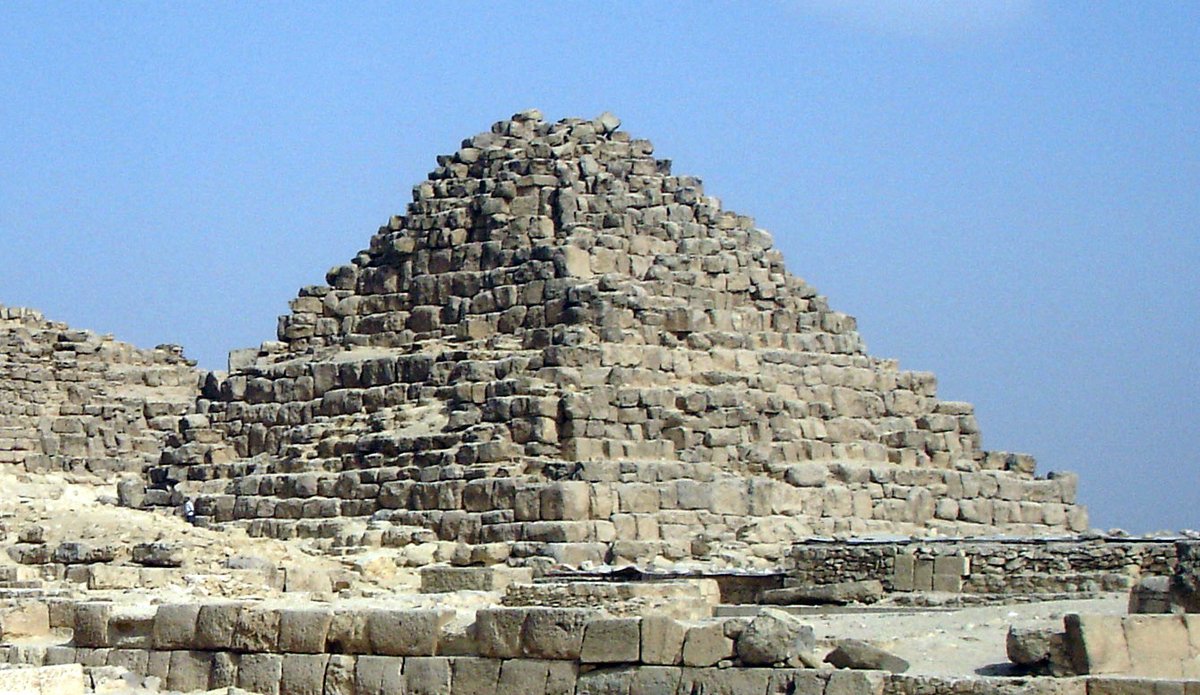
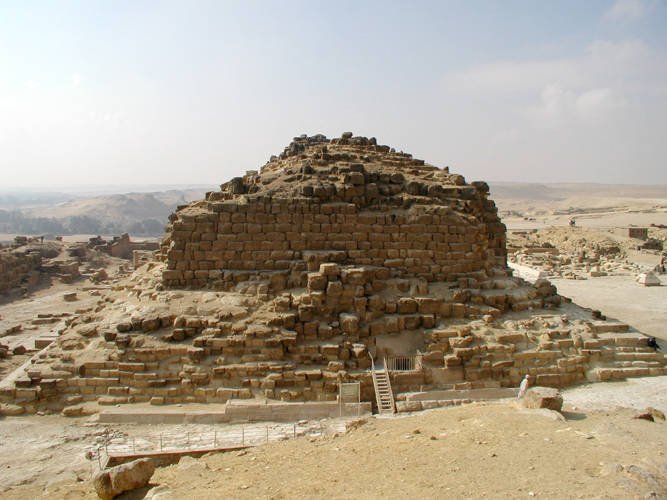
Upon the Giza Plateau stands the pyramid of Menkaure, the smallest of the three main pyramids in the complex. It was built to serve as the tomb of the Fourth Dynasty King Menkaure and possesses roughly one tenth of the volume of the pyramid of Khufu. It is part of a complex comprising a mortuary temple, a valley temple linked by a causeway, and three subsidiary pyramids on its southern side.
Quarrymen cut into the western part of the limestone plateau to extract large monoliths, which were hauled to the eastern and southern sides to level the ground for the foundations. The body of the pyramid consists of local limestone blocks laid in regular courses. A great breach on the northern face reveals that the pyramid was first conceived as a stepped structure, built in great steps of seven to eight courses each, and was then converted into a true pyramid by filling in the steps with successive courses and applying a smooth casing.
Numerous signs of unfinished work indicate that the king died while the monument was still under construction, leaving its completion to his successor Shepseskaf. The lowest sixteen courses of the casing were of red granite from Aswan; however, construction was halted at sixteen to eighteen layers following Menkaure's death. Today, only seven of those granite layers remain due to vandalism and erosion. In the nineteenth century, more of the granite casing was dismantled on the orders of Muhammad Ali to be reused for the construction of the arsenal of Alexandria.
Deep inside, the entrance is located in the center of its northern face. A descending passage opens into a first antechamber where the walls carry carved panelling imitating a palace façade consisting of eleven niches on each of the longer walls. This is the first appearance of decoration of any kind in the internal rooms of a pyramid, as the monuments of Menkaure's predecessors were entirely plain. Beyond lies a portcullis chamber and a corridor leading to a room containing a niche that may have served as a provisional burial place for an earlier scheme.
Sources: Wikipedia, OpenStreetMap, Wikidata, Wikimedia Commons
Written by Mutabor
Discuss this with the author and others
No comments yet. Be the first to start the conversation.