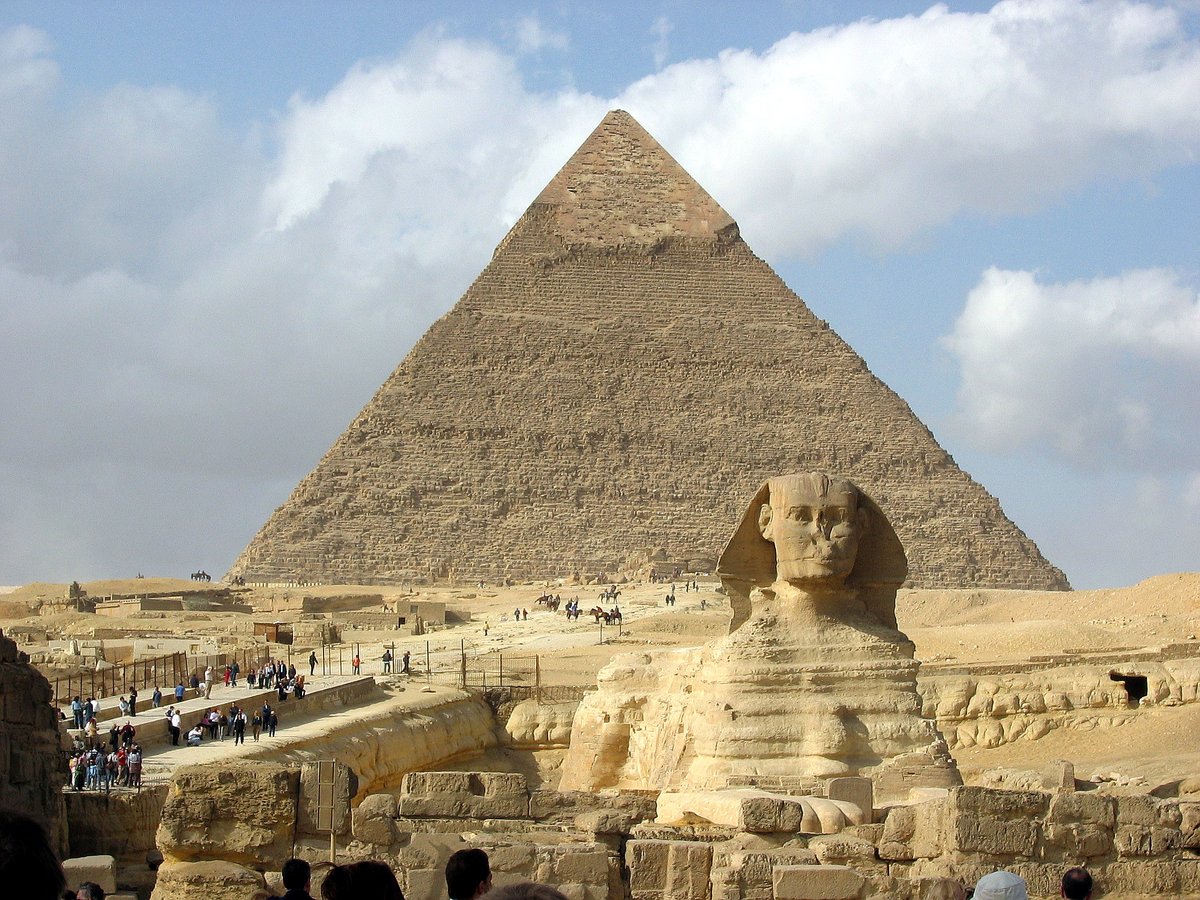

The pyramid of Khafre is the middle of the three Ancient Egyptian Pyramids of Giza, the second tallest and second largest of the group. It is the tomb of the Fourth-Dynasty Pharaoh Khafre, who ruled c. 2558–2532 BC. It is the only pyramid out of the three that still has cladding at the top.
The builders used limestone blocks weighing more than 2 tons each, laying pink granite for the bottom course and Tura limestone for the remainder. Because of the slope of the plateau, the northwest corner was cut 10 m out of the rock subsoil, and the southeast corner was built up. As the pyramid rises, the stones become smaller, becoming only 50 cm thick at the apex. Casing stones cover the top third of the pyramid, but the pyramidion and part of the apex are missing.
Two entrances lead to the burial chamber, with one located 11.54 m up the northern face and the other at the base of the pyramid. The pyramid was likely robbed as early as the First Intermediate Period. Arab historian Ibn Abd al-Salam recorded that the pyramid was opened in 1372, and an Arabic graffito probably from that time remains on the wall of the burial chamber.
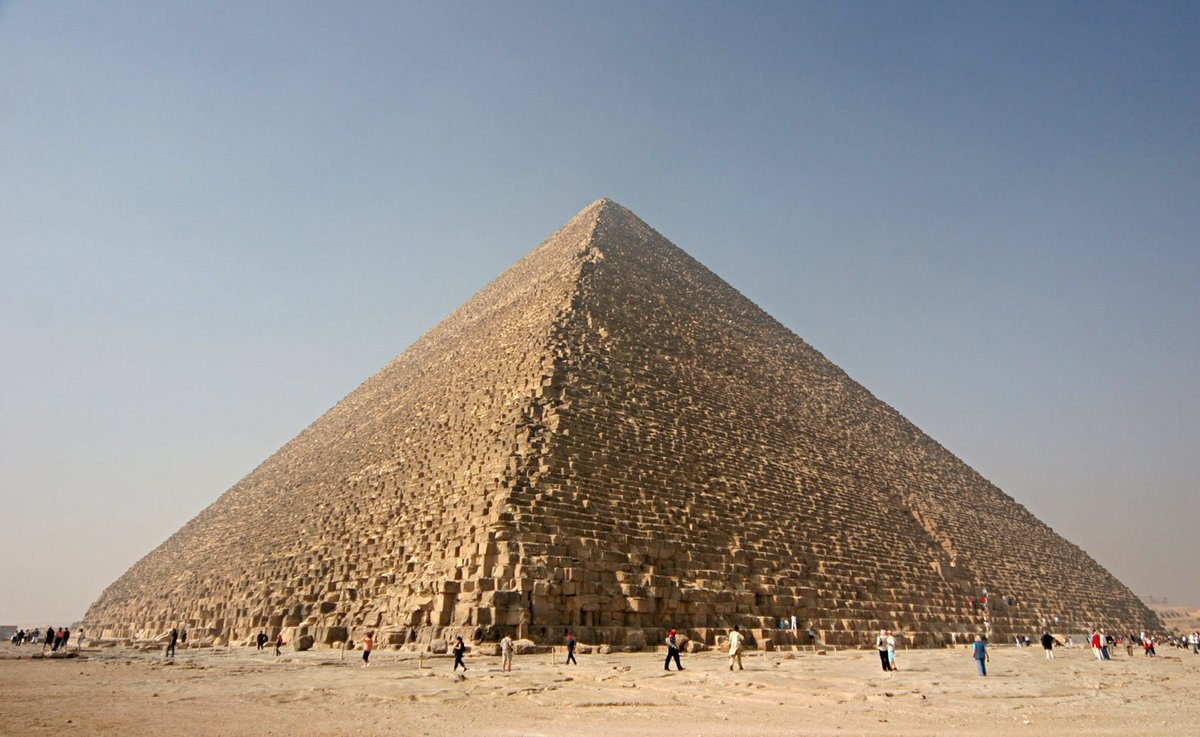
The pyramid has a base length of 215.5 m and rises to a height of 136.4 m. It sits on bedrock 10 m higher than the pyramid of Khufu, which makes it appear to be taller. The slope of the pyramid rises at a 53° 08' angle, steeper than the 51° 50' 24" angle of its neighbor.
Sources: Wikipedia, OpenStreetMap, Wikidata, Wikimedia Commons
Written by Mutabor
Discuss this with the author and others
No comments yet. Be the first to start the conversation.