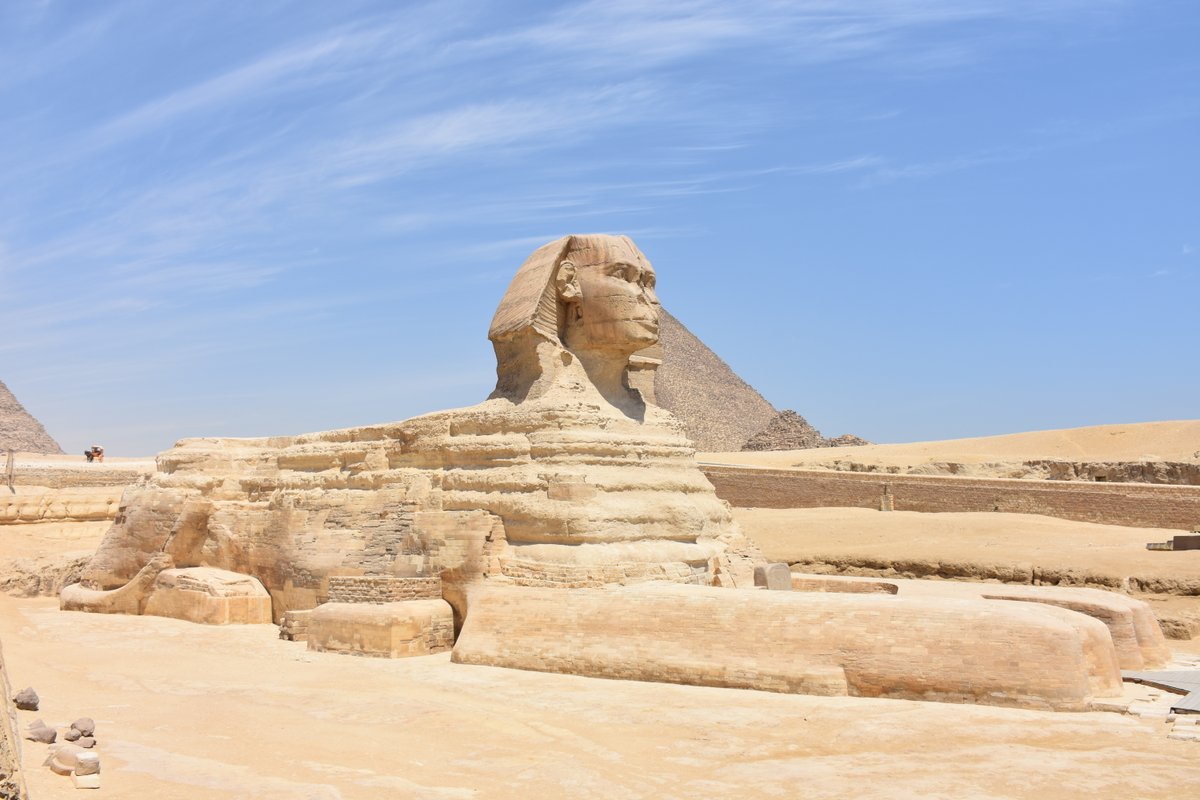

The Great Sphinx of Giza is a limestone statue of a resting sphinx, a mythical creature with the head of a human and the body of a lion. The monument was sculpted from the limestone bedrock of the Eocene-aged Mokattam Formation and faces east on the Giza Plateau, on the west bank of the Nile in Giza, Egypt. The oldest known monumental sculpture in Egypt, the Sphinx is part of the Memphite Necropolis and is a UNESCO World Heritage Site.
Archaeological evidence suggests the Sphinx was created by Egyptians of the Old Kingdom during the reign of Khufu or Khafre. Scholars and Egyptologists believe the face of the Sphinx was carved to represent either the pharaoh Khufu or one of his sons, pharaohs Djedefre and Khafre, but a consensus has not been reached and the person(s) in whose likeness the Sphinx was carved remains in dispute. The Sphinx is a monolith carved from the bedrock of the plateau, which also served as the quarry for the pyramids and other monuments in the area.
The monument is 73 m (240 ft) long from paw to tail, 20 m (66 ft) high from the base to the top of the head, and 19 m (62 ft) wide at its rear haunches. In the New Kingdom, the Sphinx was revered as the solar deity Hor-em-akhet, and the 14th century BC pharaoh Thutmose IV specifically refers to it as such in his Dream Stele.
Over the centuries, writers and scholars have recorded their impressions and reactions upon seeing the Sphinx. The Sphinx has undergone multiple restorations, the most recent of which involved replacing layers of limestone blocks around the base. Although the Dream Stele associates the Sphinx with Khafre, there is not one single contemporary inscription which connects the Sphinx with Khafre, leaving the statue's cultural context and its creators' original intent as a subject of ongoing study.
Today, the Sphinx remains a solemn and silent symbol of Egyptian antiquity. Even though the temple and enclosure at its base were not completed at the time of its creation, the monument stands as a massive piece of the Memphite Necropolis, a relic of an era whose specific cultural context remains partially hidden from the modern world.
Sources: Wikipedia, OpenStreetMap, Wikidata, Wikimedia Commons


Written by Mutabor
Discuss this with the author and others
No comments yet. Be the first to start the conversation.