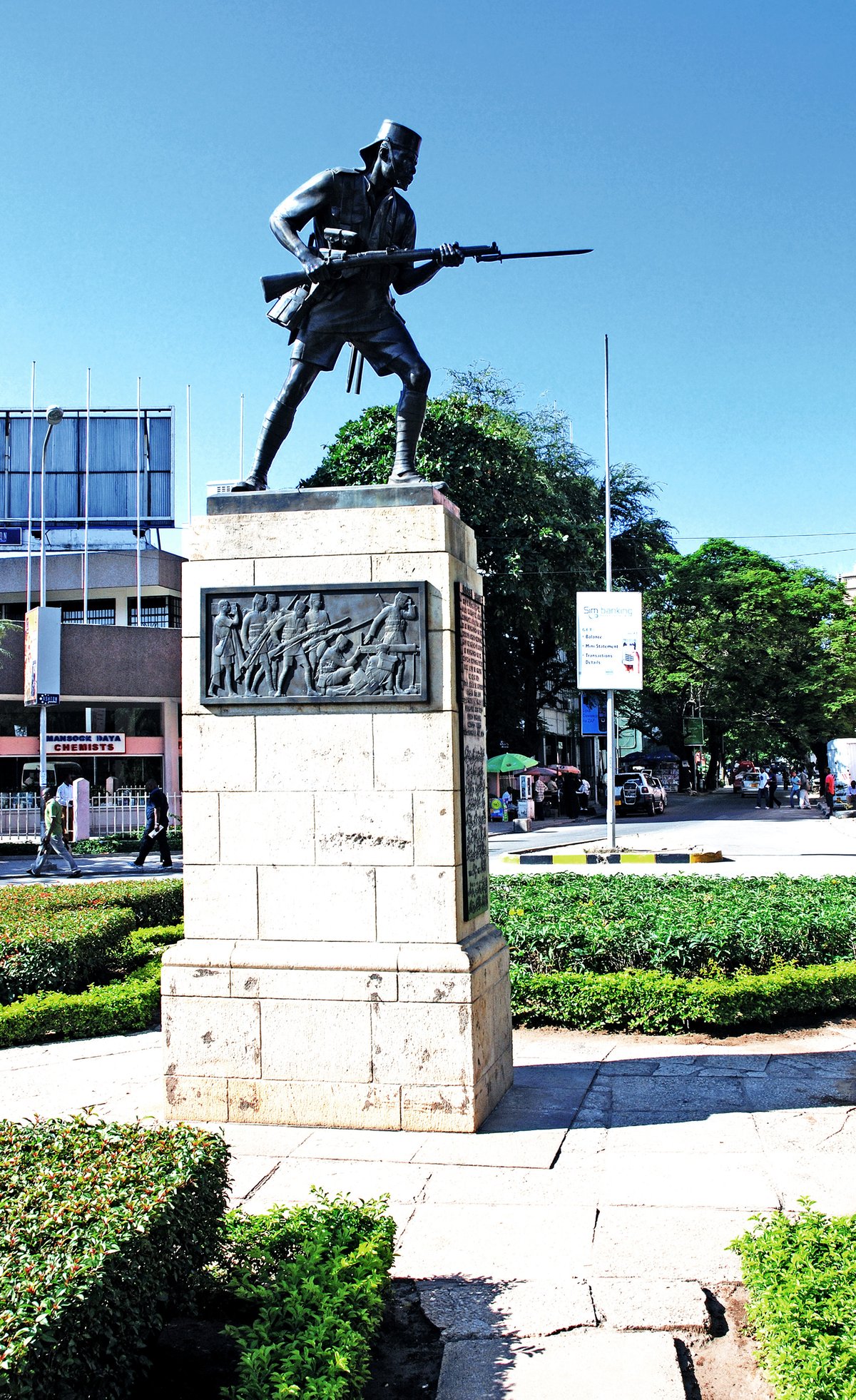

The Askari Monument, also known as the Dar es Salaam African Memorial, stands at the center of a roundabout on Samora Avenue in Dar es Salaam, Tanzania. Unveiled in 1927, it serves as a memorial to the askari - African soldiers - who fought in the British campaign against German forces in East Africa during World War I. The site marks the exact center of downtown Dar es Salaam and was the location of a former statue of the German explorer and army major Hermann Wissmann, which was removed by the British in 1916.
The monument was erected to honor the King's African Rifles and the Carrier Corps. Its main feature is a bronze sculpture of an African soldier known as "The Askari," realized in the United Kingdom by British sculptor James Alexander Stevenson of Westminster's Morris Bronze Founders. Stevenson signed the statue with his pseudonym "Myrander." Before being sent to Tanzania, the statue was exhibited at the Royal Academy and received critical praise. The soldier is depicted with a rifle and bayonet pointed toward the Dar es Salaam harbour.
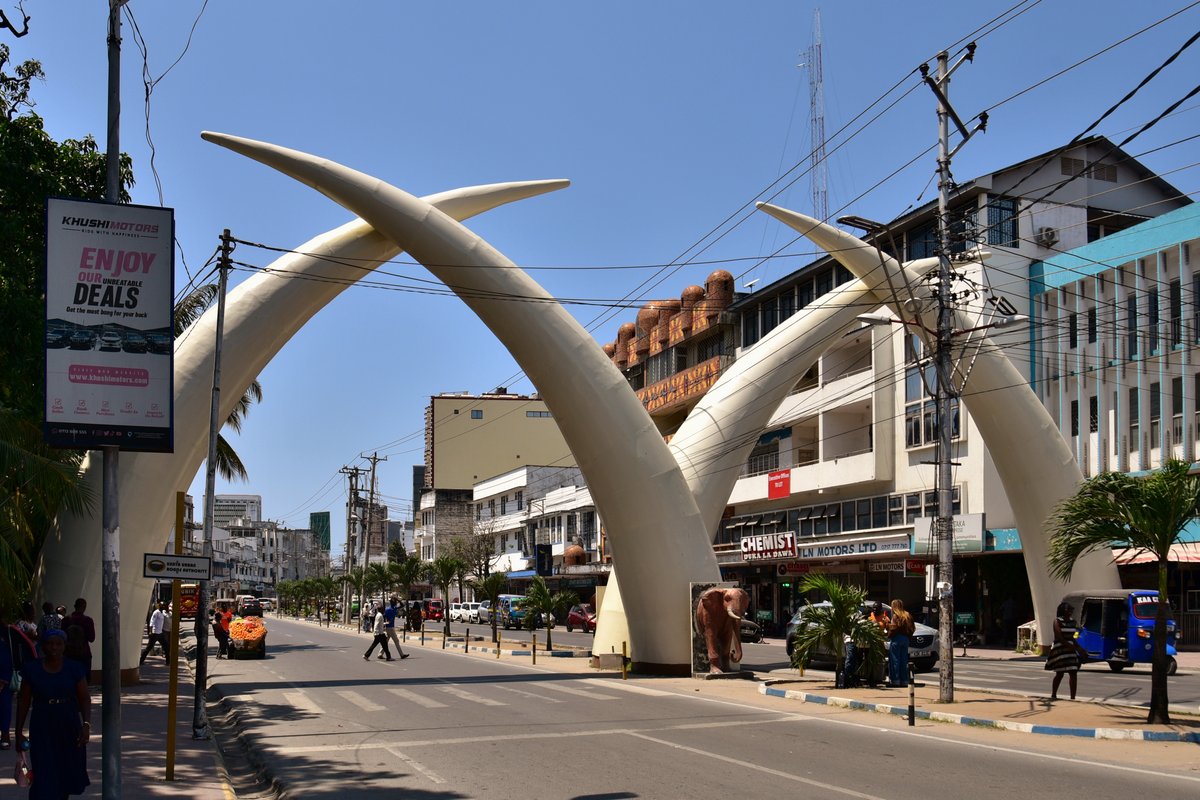
The statue stands on a stone pedestal featuring plaques with dedications in Swahili (Arabic and Latin script) and English. The English inscription includes a quote attributed to Rudyard Kipling: "If you fight for your country even if you die your sons will remember your name." The monument is part of a group of three Askari Monuments unveiled in the same year in what was then British East Africa, with the other two located in Mombasa and Nairobi.
Sources: Wikipedia, OpenStreetMap, Wikidata, Wikimedia Commons
Written by Mutabor
Discuss this with the author and others
No comments yet. Be the first to start the conversation.