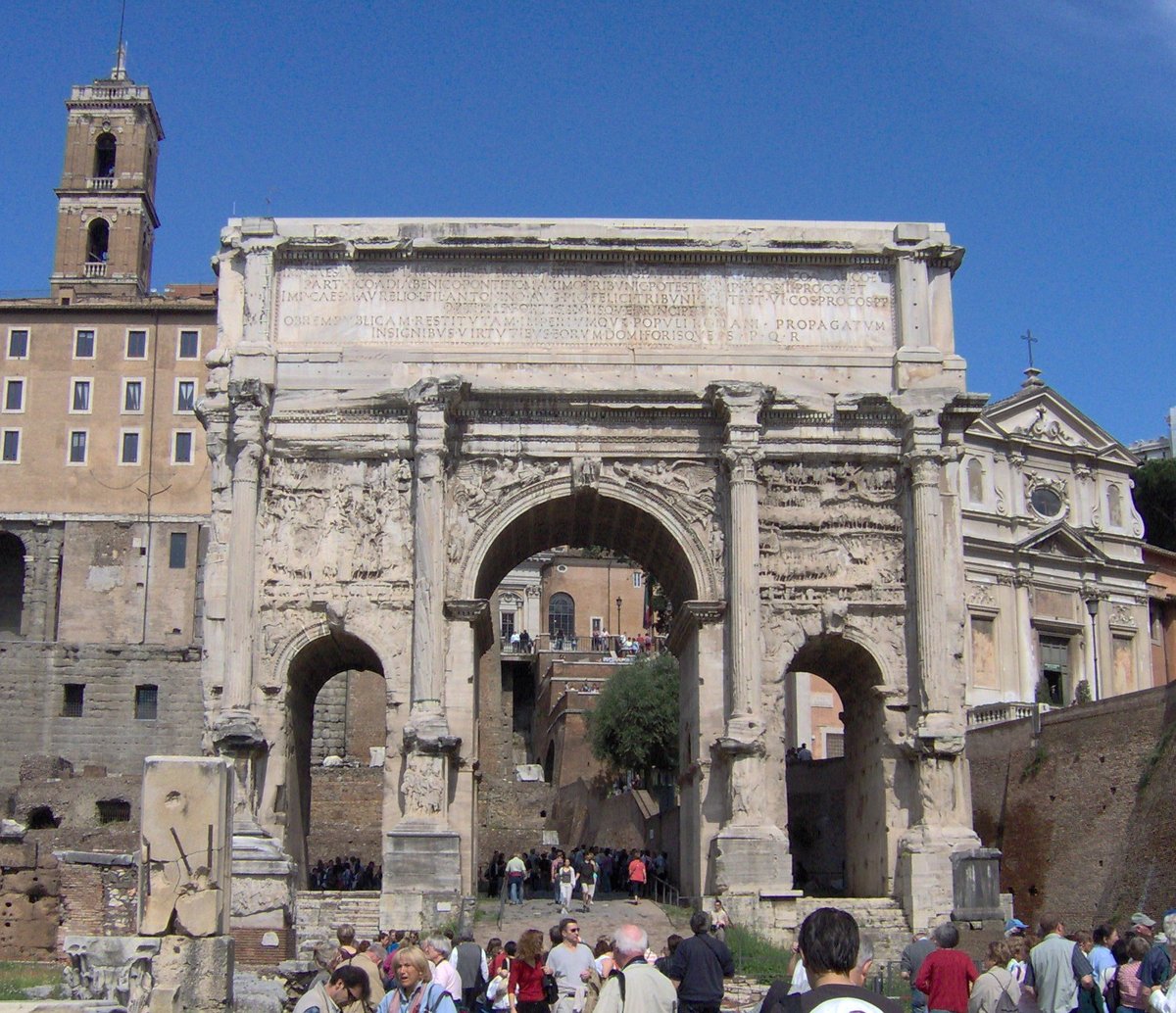

In the Roman Forum, high above the ancient level, stands the Arch of Septimius Severus, a monument commemorating the victories of Emperor Septimius Severus. Built in 203 AD, it is named for the emperor who conquered the Parthian Empire twice, at great cost, and lacked the grace to share his power. But there is more to this stone than a history of Rome's expansion under a Berber-born emperor.
The arch bears two sets of relief panels: one on the attic, the other set inside each of the four archways. They depict four battles, four seasons, four horsemen, and a two-headed eagle - a double-edged symbol of rivalry and conquest. But the most striking details are the contrasting styles of the panels. Some are elegant and fine in their carved detail, while others are rough and hurried, seemingly made by different hands.
Inside the arch, a stair leads to a small space above the reliefs, where once stood the emperor himself, in a chariot pulled by four horses. The statues of the emperor and his two sons, Caracalla and Geta, were made of gilded bronze, but Geta's image was quickly removed after his murder by Caracalla - the same emperor who had him represented on the arch in the first place.
The Arch of Septimius Severus is a monument to power, a testament to Rome's victories, and a stark reminder of the twists and turns of Rome's imperial family. It is not just a triumph of stone, but a twisted tale of obsession, betrayal, and inheritance, etched in marble for all to see.
Sources: Wikipedia, OpenStreetMap, Wikidata, Wikimedia Commons
Written by Nicolo Ciampini
Discuss this with the author and others
No comments yet. Be the first to start the conversation.