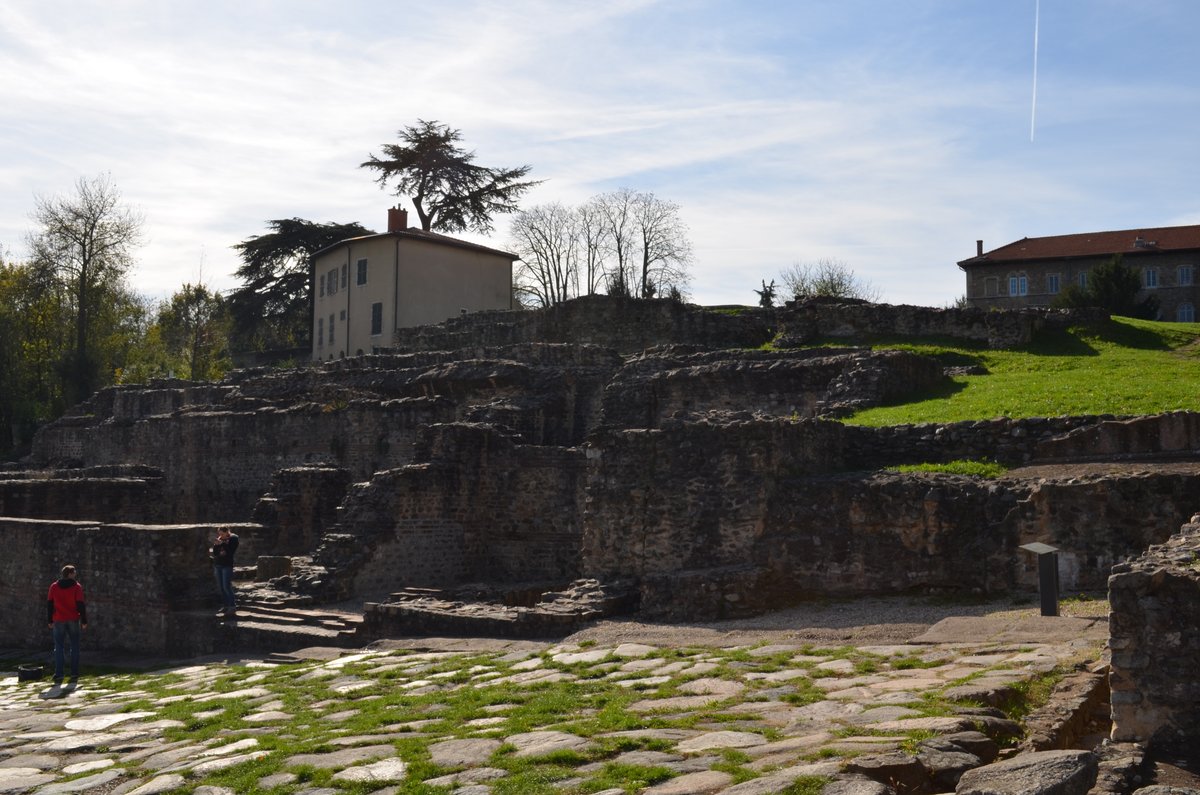

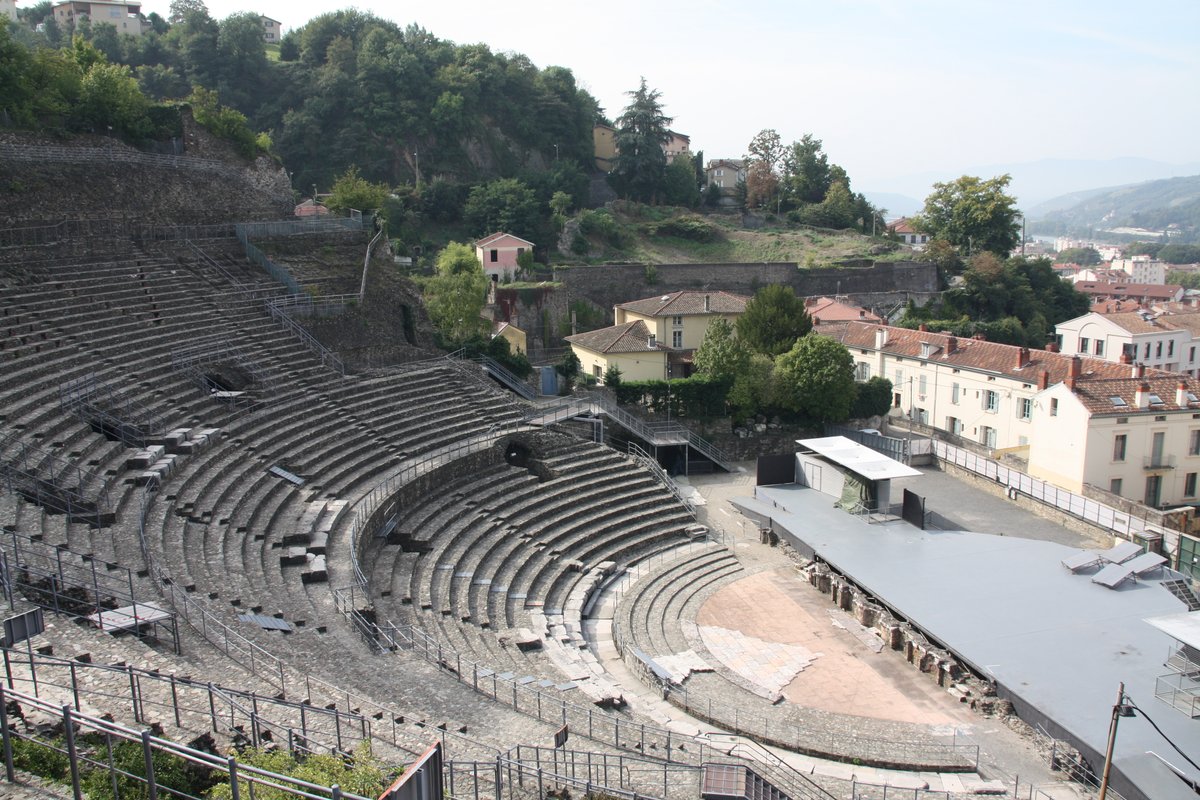
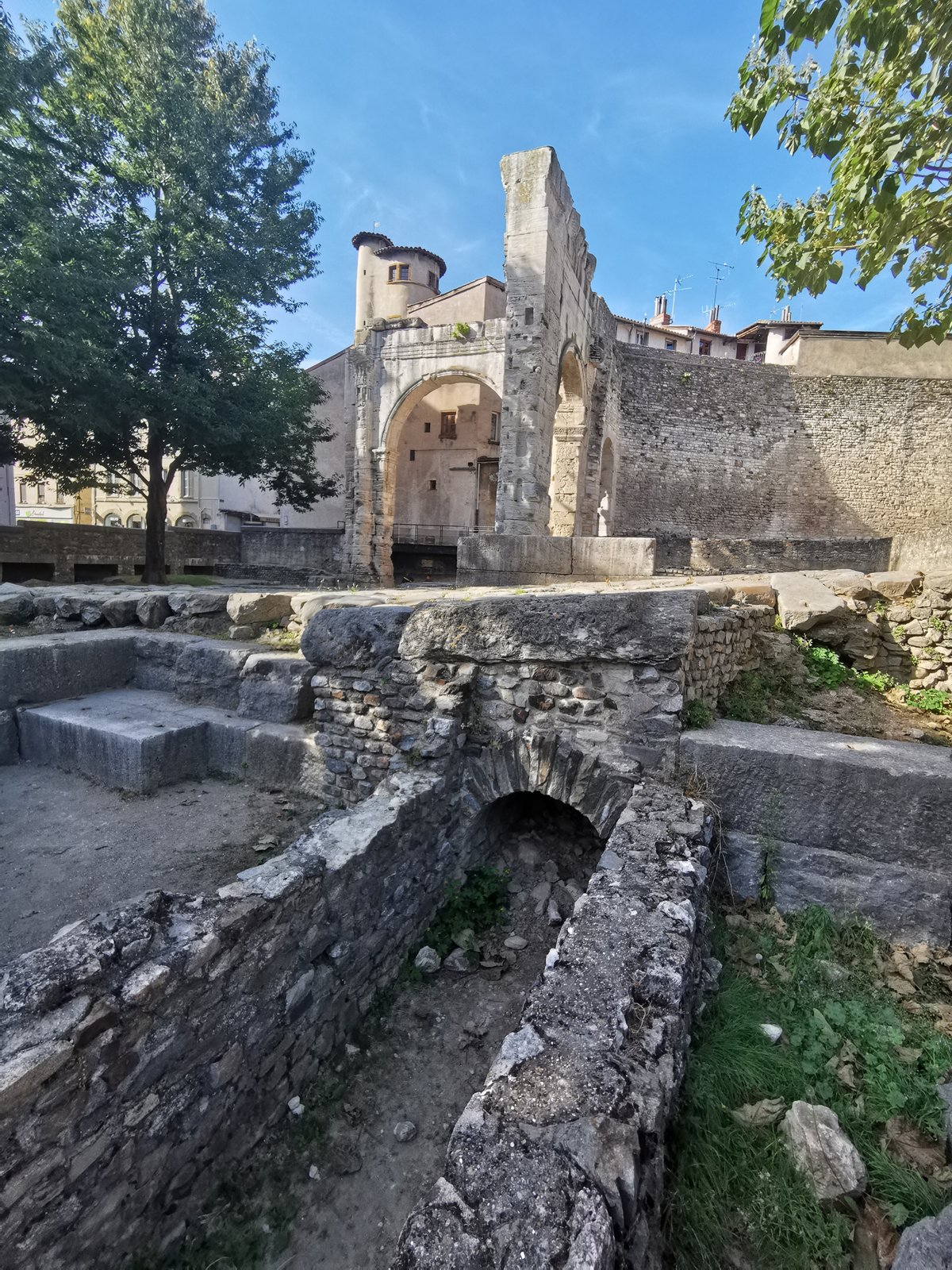
For years, the ruins located behind the ancient theater in the Fourvière district of Lyon were identified as the Temple of Cybele, a pagan sanctuary. This identification was based on the discovery of a well-preserved taurobolic altar dating to 160 AD, the oldest known accessory of the cult of Cybele in Gaul. However, the exact destination of the complex remains unknown, leading to various historical and speculative interpretations, including its identification as an 'insula basilicale,' a pretorium for Agrippa, or a governor's palace.
In the 1920s, excavations began, and between 1965 and 1978, Amable Audin explored the site further. He identified a structure he called the 'insula basilicale,' which he believed consisted of a civil basilica and administrative offices abandoned between 121 and the mid-2nd century, subsequently destroyed to build the temple. He also described a sequence of three buildings: the insula basilicale from the beginning of the 1st century, a reservoir from the Gier aqueduct built around 120, and finally the temple of Cybele built in 160.
Research led by Armand Desbat in the 1990s utilized modern techniques to offer a different perspective. Desbat concluded that the structures previously thought to be cult buildings were actually two buildings constructed approximately twenty years apart: first a high-quality residence, or domus, which may have been a palace, and then a large, likely public building that was too damaged to identify. He dated the shop complex with a portico to around 30 BC and suggested that what was considered a temple was actually a new residence built around 20 BC.
Further analysis of the site reveals a complex history of construction and renovation. A reservoir for the Gier aqueduct, with a capacity of 1,500 cubic meters and a structure similar to the Aqua Virgo in Rome, was eventually built over the western part of the massif. While the identification of the site as a temple of Cybele was officially abandoned in 1998 due to the lack of supporting evidence and chronological inconsistencies, the site remains a significant archaeological area with occupation dating back to the Bronze Age.
Sources: Wikipedia, OpenStreetMap, Wikidata, Wikimedia Commons
Written by Nicolo Ciampini
Discuss this with the author and others
No comments yet. Be the first to start the conversation.