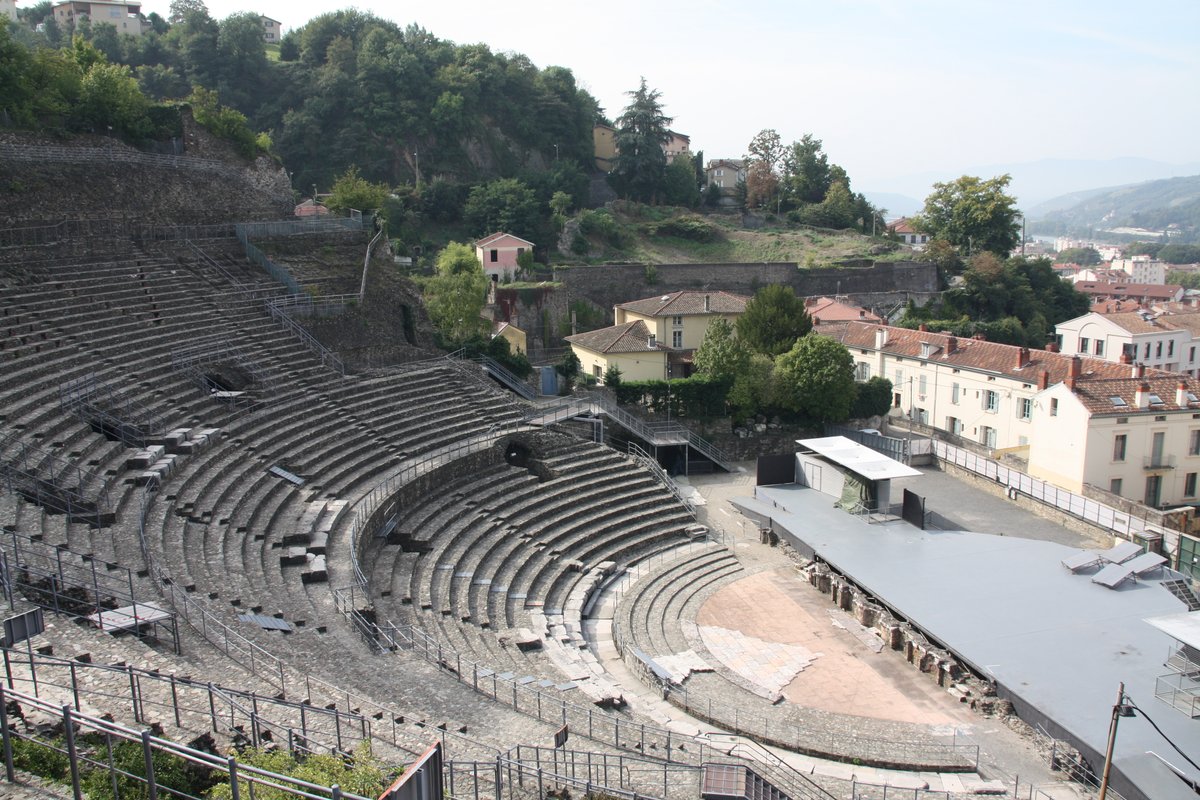

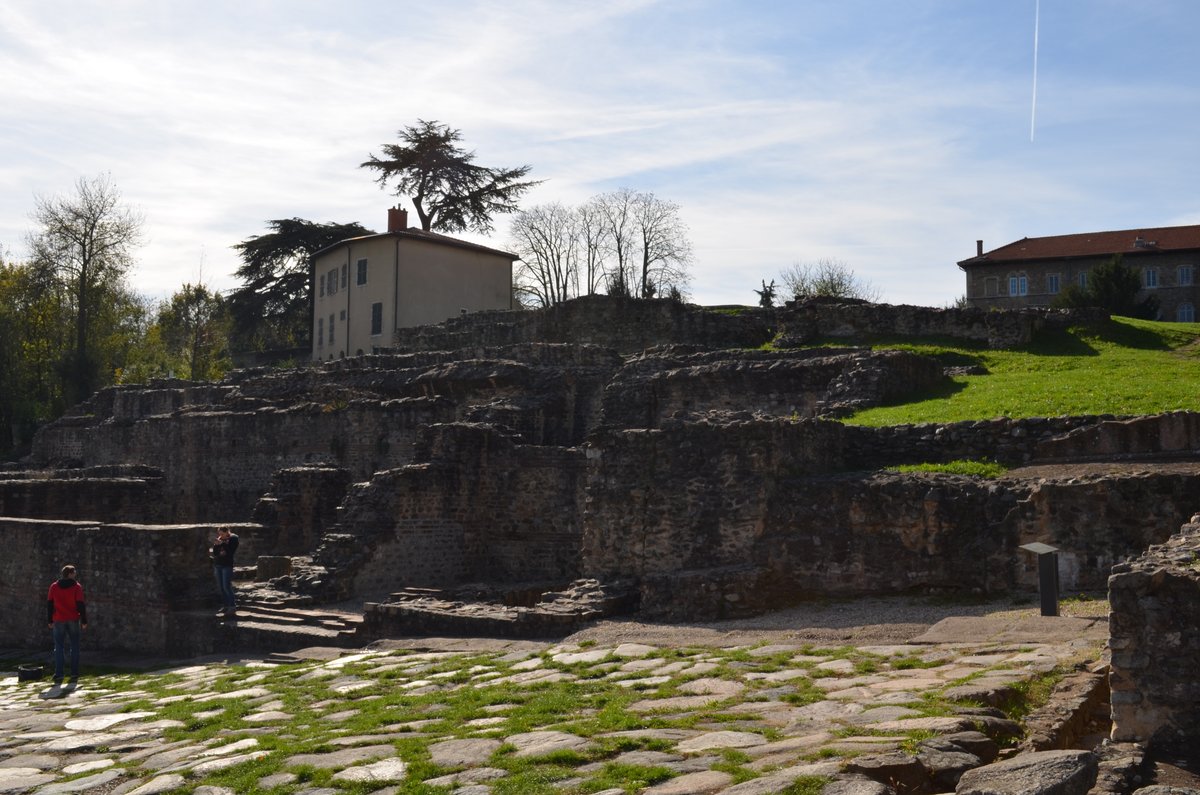
During the 1st century, the Romans constructed a theatre in Vienne that was one of the largest in the Roman world. It was ranked as the third largest in Gaul, surpassed only by sites at Autun and Mandeure. The structure was built with limestone blocks anchored into the hill of Pipet, forming a cavea that opens to the west.
The local odéon acts as a rare twin to this theatre, forming a remarkable archaeological couple. The theatre was capable of holding between 11 and 14,000 people in antiquity. A part of the orchestra and four steps have preserved their marble covering, featuring marble seats with griffin feet. The pulpitum was decorated with animal bas-reliefs, and fragments of sculptures showing chained captives and winged victories were found nearby, possibly belonging to the theatre's stage wall.
The site was identified as a theatre in 1908, and works of excavation were undertaken in 1922 by Jules Formigé. It was inaugurated in 1938 by the president of the Republic, Lebrun. Today, the theatre has 46 steps with a capacity of approximately 8,000 to 9,000 spectators.
The theatre remains a functional space for the city, hosting the Jazz à Vienne festival every year. Since 2013, a study has been underway to find several hundred additional places to accommodate visitors to this historical site.
Sources: Wikipedia, OpenStreetMap, Wikidata, Wikimedia Commons
Written by Nicolo Ciampini
Discuss this with the author and others
No comments yet. Be the first to start the conversation.