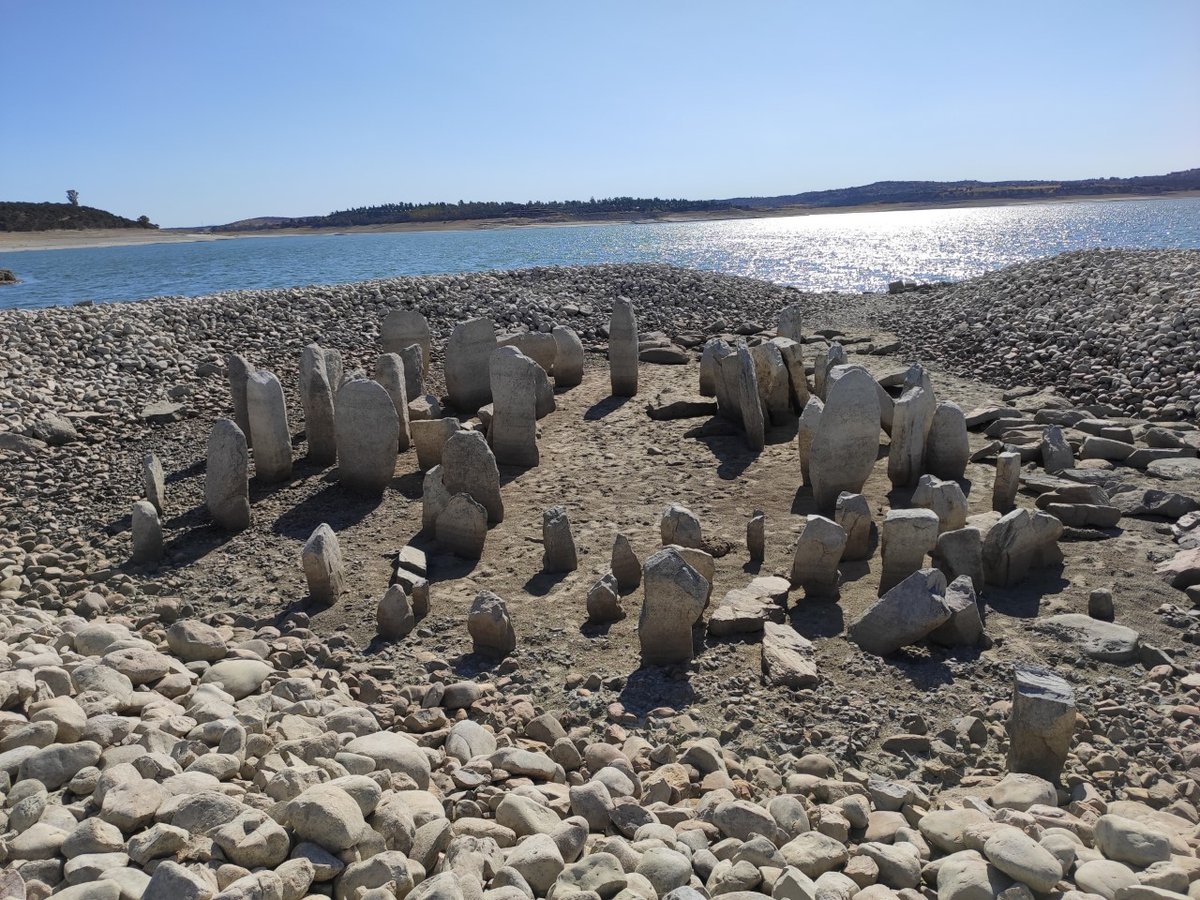

The Dolmen of Guadalperal rests within the Valdecañas reservoir in eastern Extremadura. Constructed around 3000 BC, this megalithic site is composed of 150 granite stones called orthostats. These stones create a vertical chamber five metres in diameter and a corridor about 21 metres long.
At the entrance, a two-metre high menhir features wavy carvings believed to be a representation of the Tagus River. These figures may have served as protection for the site. The structure could have been a solar temple, and also been used as a burial enclave. Roman remains found there - a coin, ceramic fragments, and a grinding stone - indicate that at that time it was safely preserved from looting.
First excavated in the 1920s, the site was inundated in 1963 by the construction of the reservoir. The water has caused irreparable damage to the stones and their engravings. In July 2019, a NASA satellite photograph captured the full structure during a drought.
Evidence of a nearby settlement including mills and houses suggests that the builders lived on-site during construction. Today, the Raices de Peraleda association is requesting the recovery of the monument due to the deterioration observed from the water.
Sources: Wikipedia, OpenStreetMap, Wikidata, Wikimedia Commons
Written by Nik Frost
Discuss this with the author and others
No comments yet. Be the first to start the conversation.