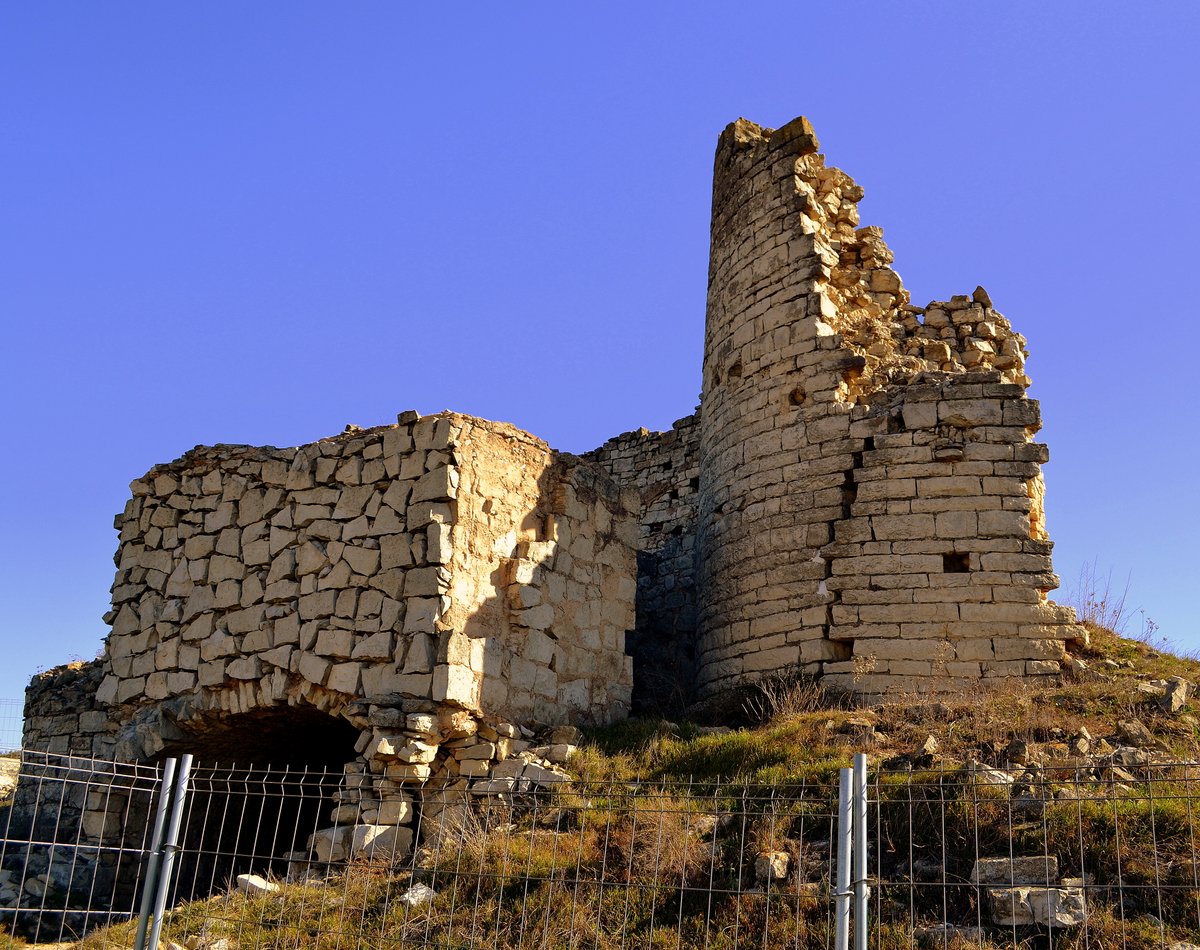

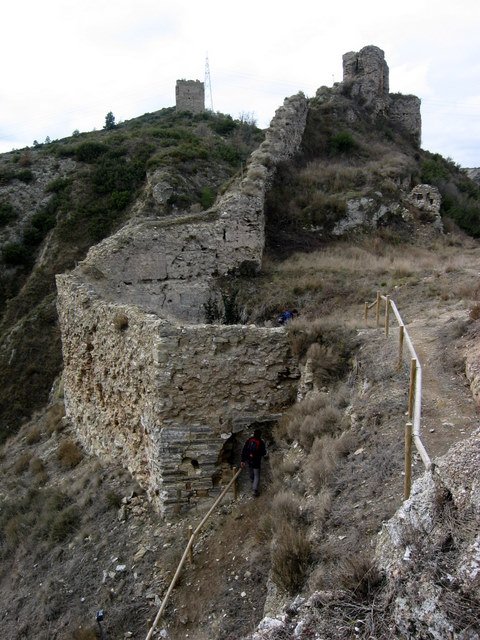
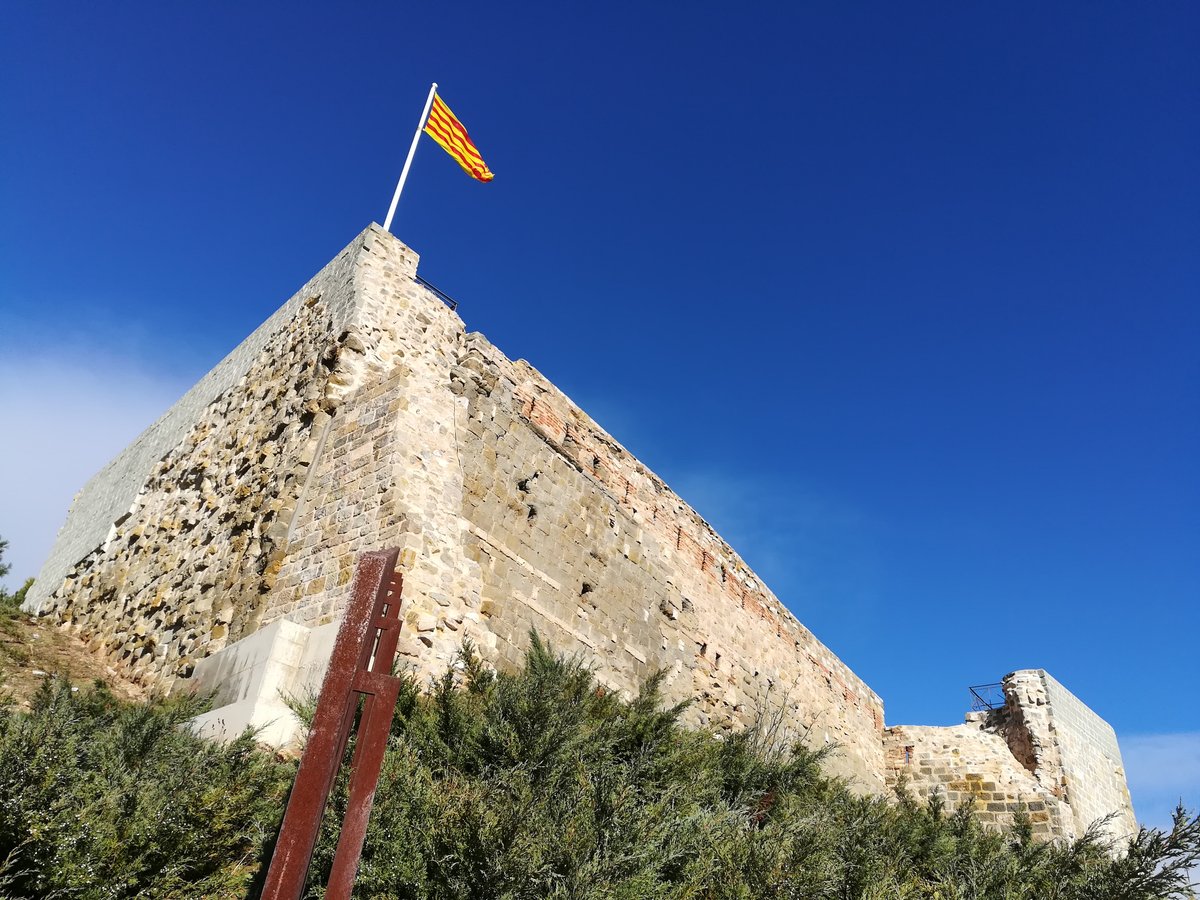
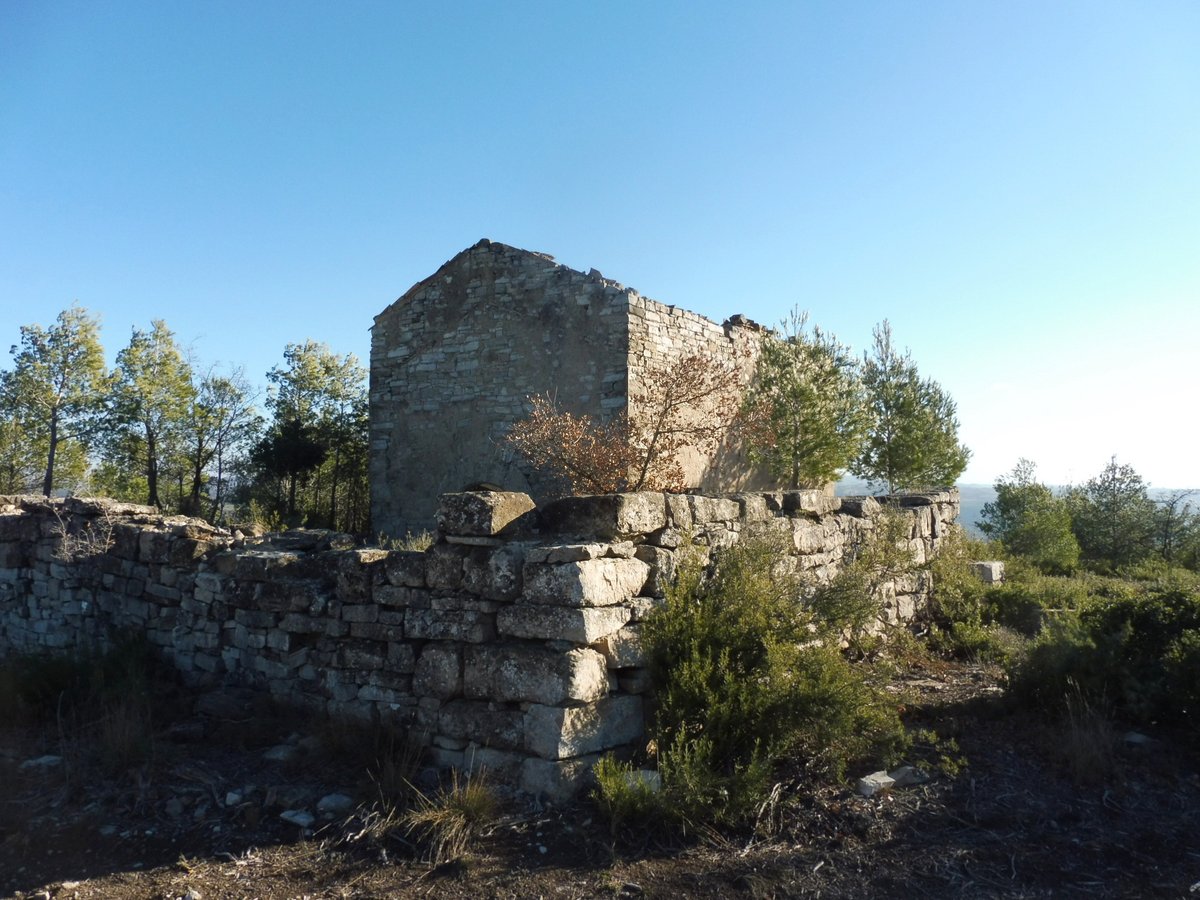
Look toward the valley of the torrent de Malacara to find the Castell d'Alta-riba. This 11th century sentinel remains a national cultural asset, born from the era when the county of Berga reclaimed the Sió valley during a time of profound territorial change. Its enduring presence invites us to look closer at how human history carves itself into the landscape.
The fortress is anchored by a circular tower that rises directly from the living rock. Though the nearby structures have faded away, the north side preserves six meters of height to show the primary floor level. We can still see the marks of the original scaffolding within the mortar and stone, offering a clear window into the craftsmanship of the past.
A journey through the interior reveals a shift from a square base with thin walls to a circular upper space. One must note the rectangular chamber called the forat del càstig, which featured a false vault and a narrow passage to the levels above. These specific details suggest a fascinating architectural link to the tower of the Castell de Gàver.
The legacy of this site is written in its changing owners. It moved from the counts of Barcelona to various feudal lords like the Alta-riba lineage before the monastery of Santes Creus purchased it in 1238. Now, the Association of Friends of the Castle ensures that this hilltop landmark continues to serve as a dedicated site for study and preservation.
Sources: Wikipedia, OpenStreetMap, Wikidata, Wikimedia Commons
Written by Nik Frost
Discuss this with the author and others
No comments yet. Be the first to start the conversation.