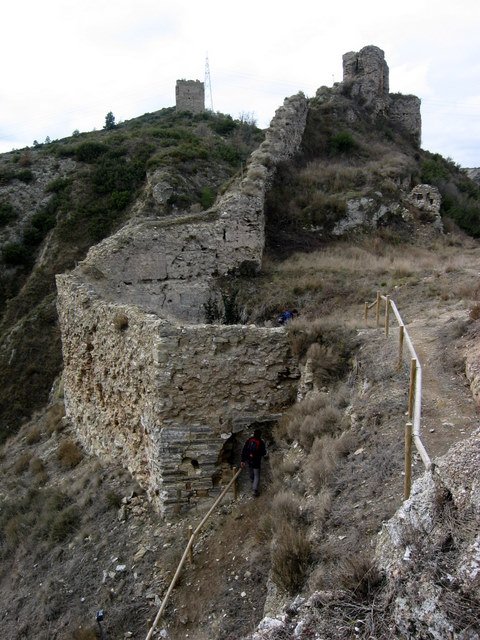

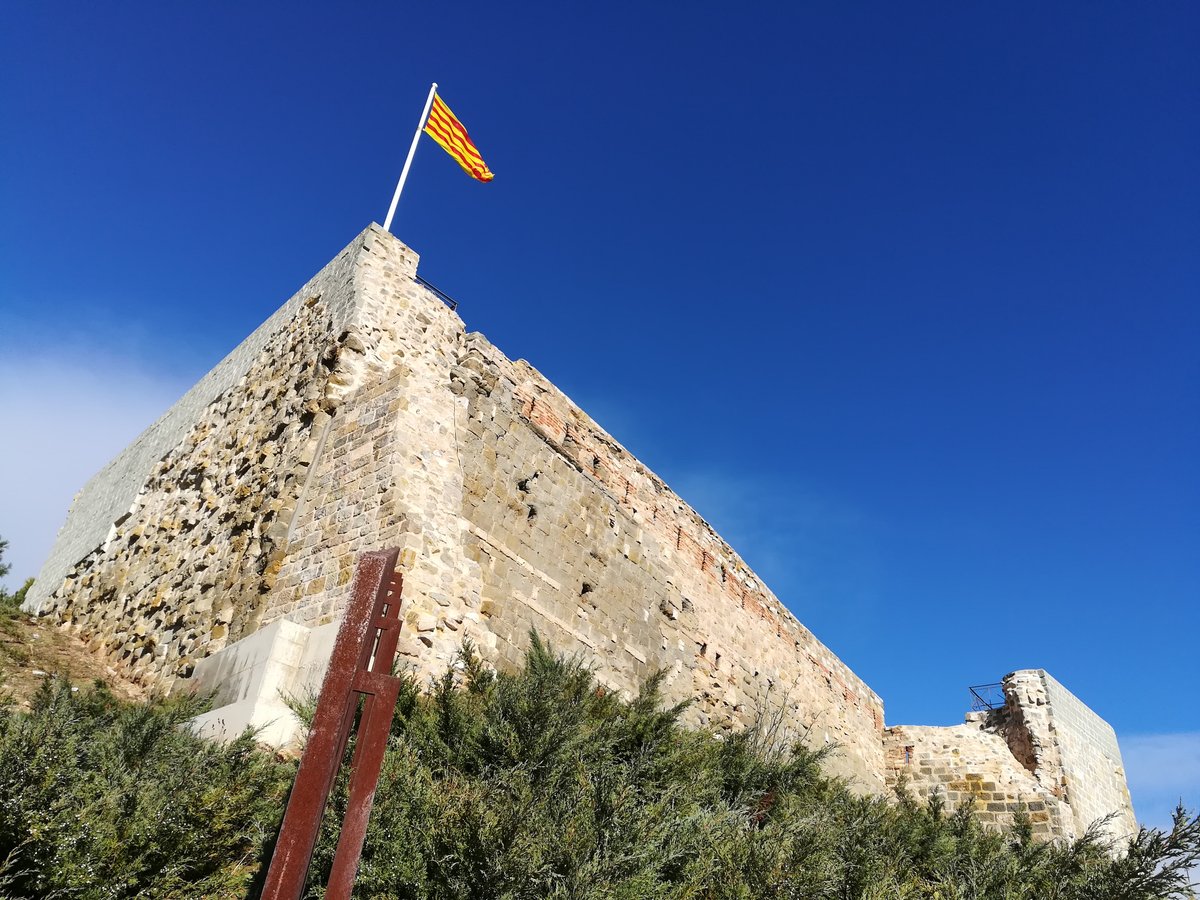
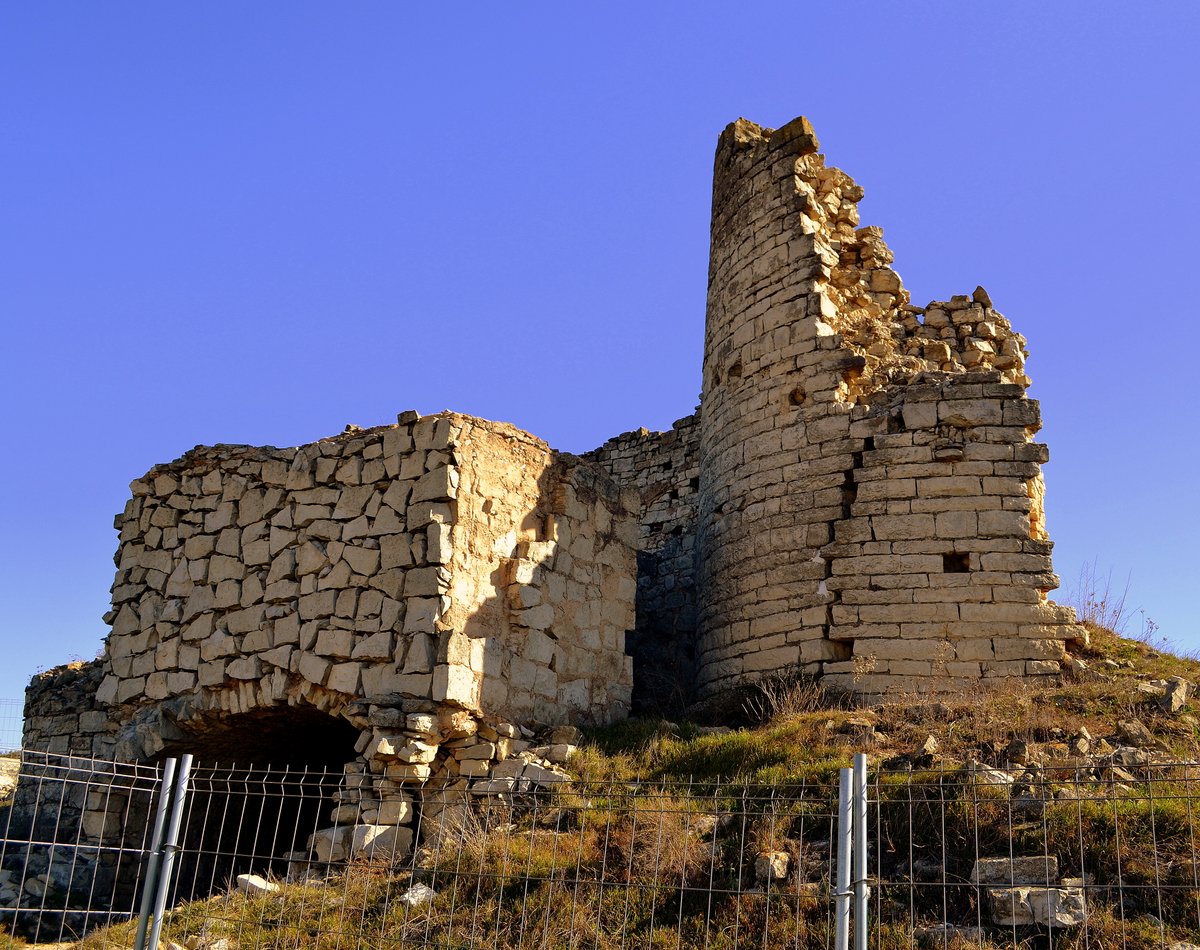
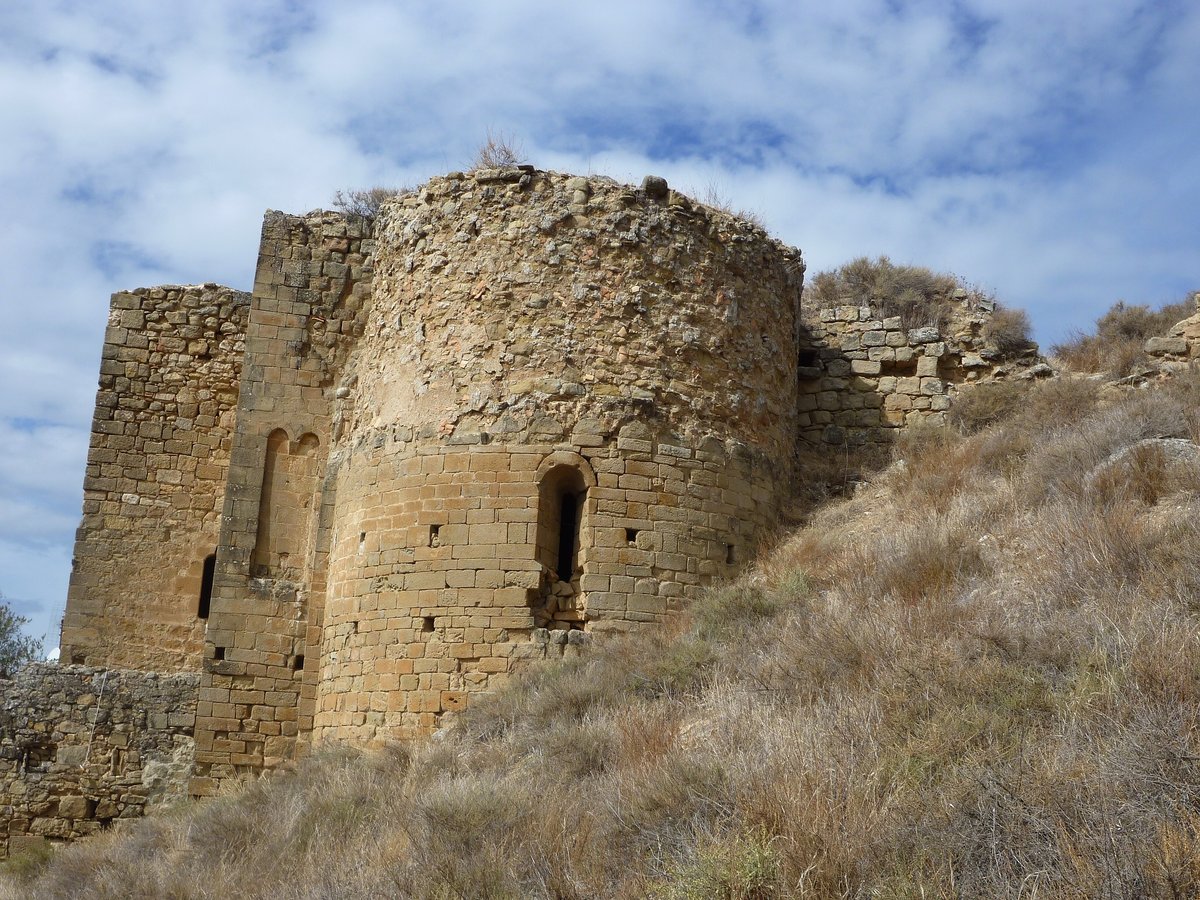
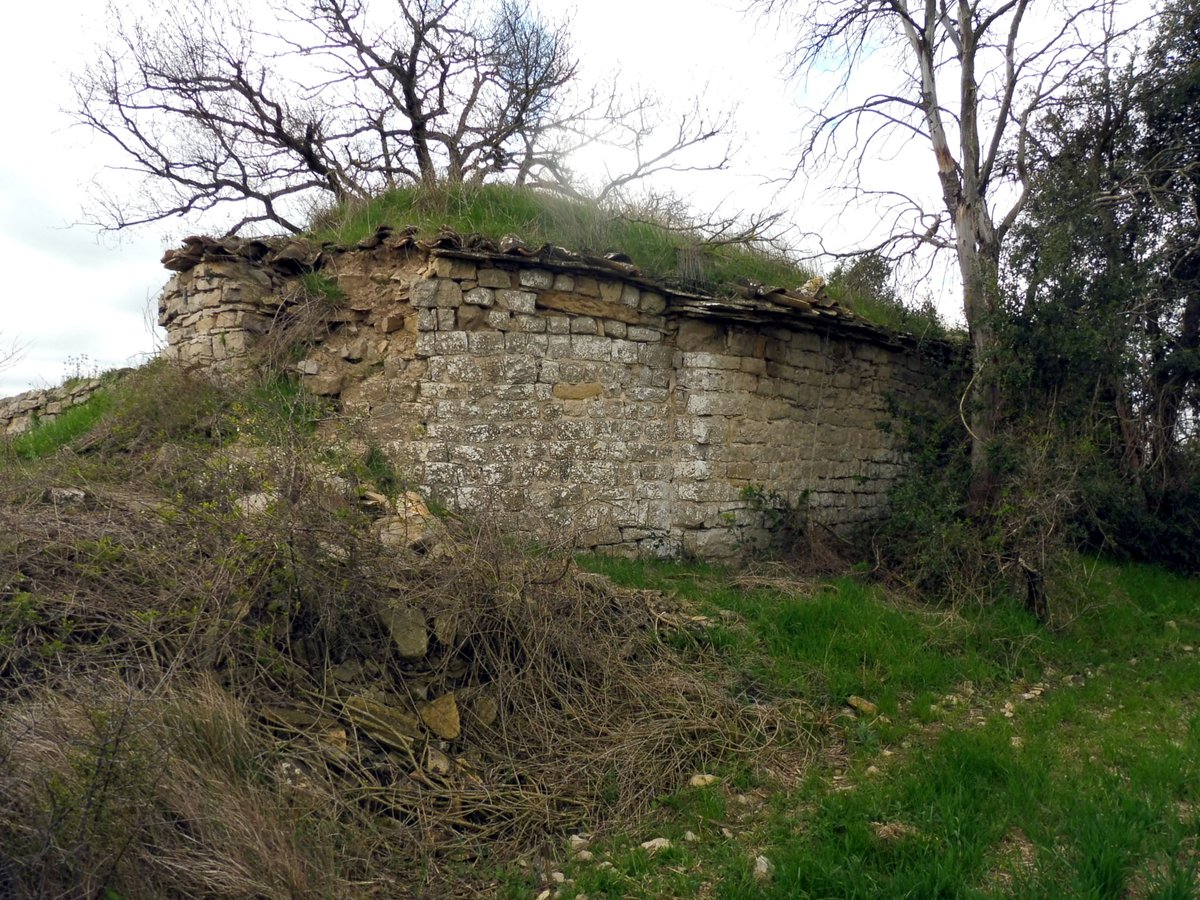
A fortress built a millennium ago sits atop an outcrop where the serras fall from the Calaf plateau, overlooking the Llobregós valley. Known as Castell de Castellfollit or Castellfollit de Riubregós, this castle still stands with some parts damaged and others well preserved. While the exact construction date is unknown, several parts suggest it may have been built or reformed by Muslims. The castle was strategically located on the border between two sides during a period of disputes in the 11th century, and the first documents about the castell date from 1039.
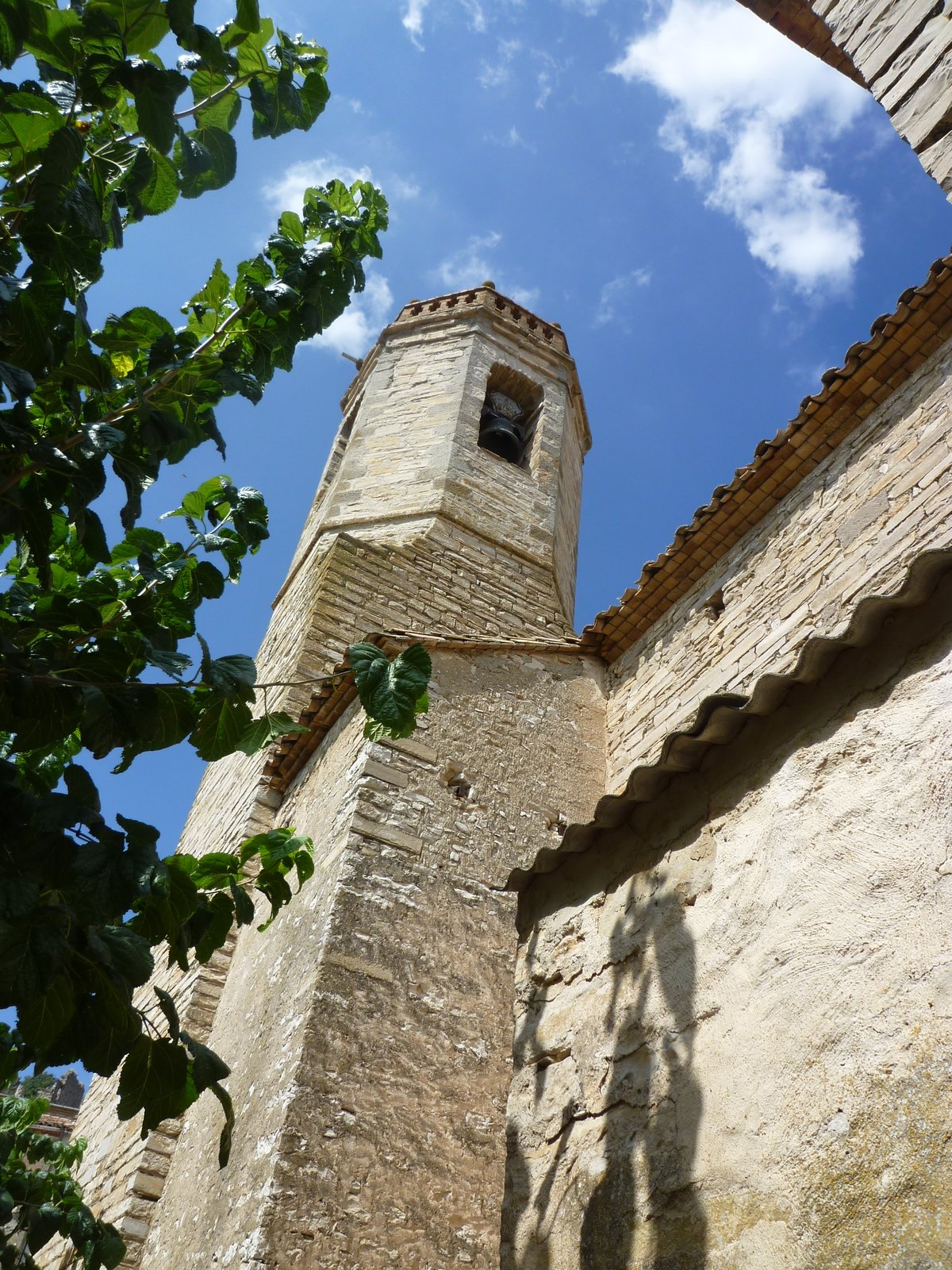
It is also known as Castell de Sant Esteve because there was a temple dedicated to that saint, but that temple has likely disappeared. The damaged parts of the castle show signs of severe impact, revealing glimpses into its tumultuous history. On the prison walls, you'll find paintings of knights, celebrations, and battles. Recognizable coats of arms can be seen in the paintings, such as the ones of the Cardona.
In 1822, the castle was intentionally destroyed by the military during the persecution against the regency of Urgell. What remains today is what survived that demolition. Nearby, the Count of de la Mina planted a stone with an inscription telling towns to take example and not harbor enemies of the homeland.
Sources: Wikipedia, OpenStreetMap, Wikidata, Wikimedia Commons
Written by Nik Frost
Discuss this with the author and others
No comments yet. Be the first to start the conversation.