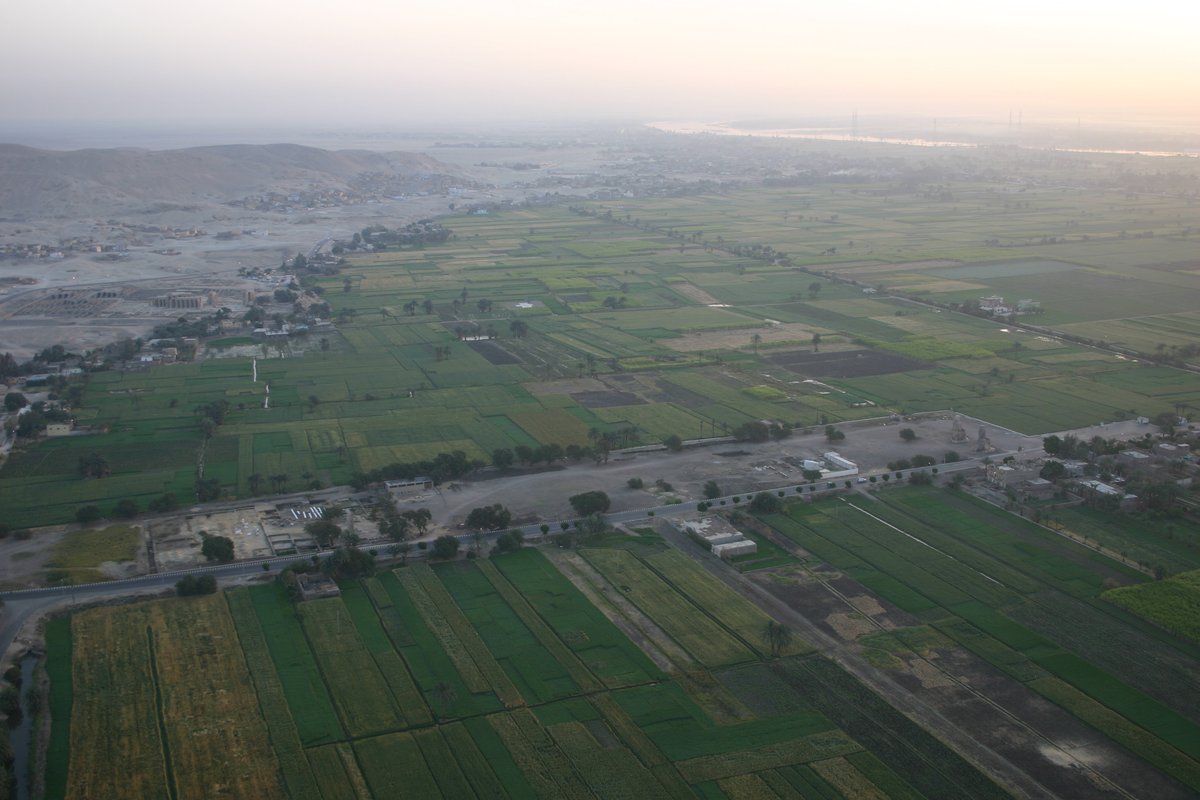
Travel back to an era, where the Nile pulsed with life, and kings were esteemed as gods in human form. Amenhotep III, a noble of the Nile, ruled with grace. His grand tomb, Kom el-Hettân, though faded with time, stands tall as a testament to Egypt's grandeur. Its columns, the Colossi - the silent sentinels of Memnon - guard the sacred entrance. To wander its halls today is to feel the weight of Egypt's vast history pressing close.
Though many stories of its splendor remain unconfirmed, one tale still echoes - that Kom el-Hettân was the largest funerary complex in Thebes. Perched on a natural mound beside the Western bank of the Nile, the site underwent excavations, the first led by the renowned Dr. Hourig Sourouzian in the early 2000s. The ruined temple has since unveiled secrets, such as the undecorated granite north wall, traces left by Kushites as captives, lists of Nubian towns along the Nile, and massive red granite colossal statues.
Amenhotep III's burial ground was designed not just for his afterlife but also to declare Egypt's unity before the gods, during the Sed Festival, an annual celebration marking his continued reign and eternal life.
Sources: Wikipedia, OpenStreetMap, Wikidata, Wikimedia Commons
Written by Mutabor
Discuss this with the author and others
No comments yet. Be the first to start the conversation.