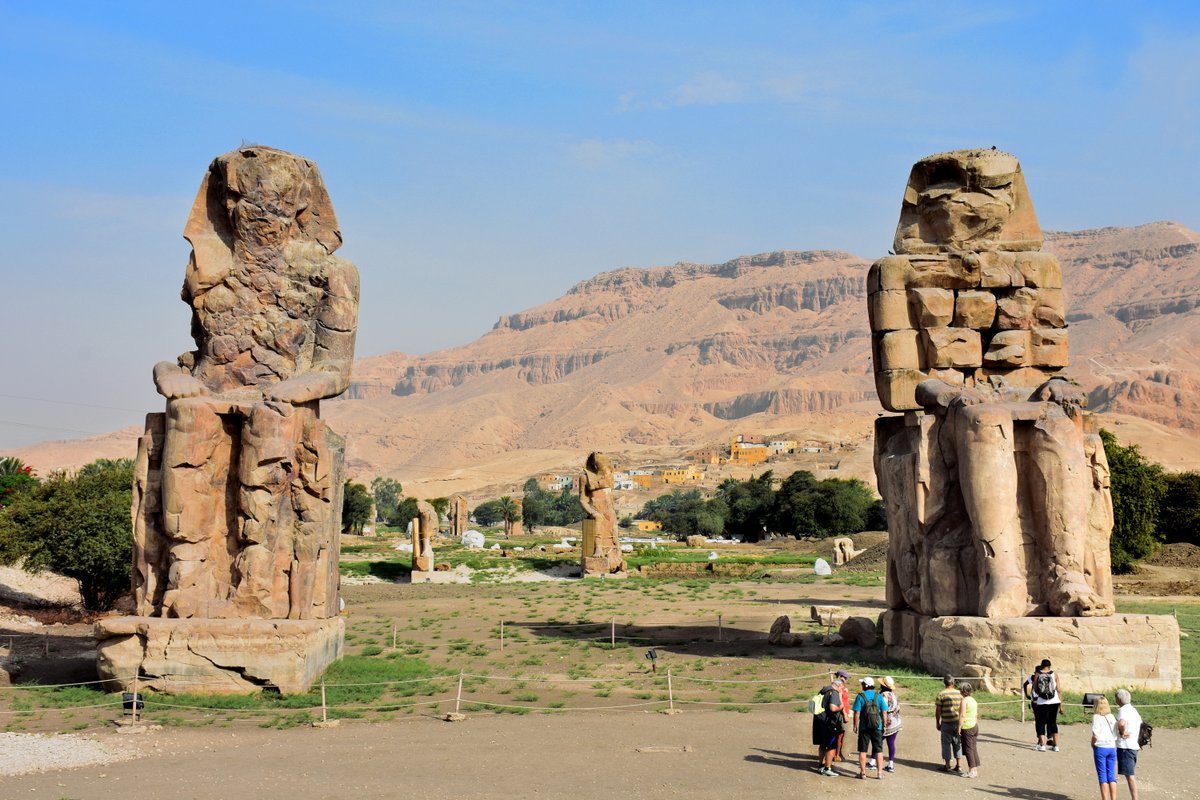

Two massive statues of quartzite sandstone sit in a seated position, their hands resting on their knees and their gaze facing eastwards towards the river. These are the Colossi of Memnon, two structures reaching 18 m in height and weighing an estimated 720 tons each. They were constructed to stand as guardians of the mortuary temple of Amenhotep III, a pharaoh whose titles called him the good god and who sought to immortalize himself in statuary.
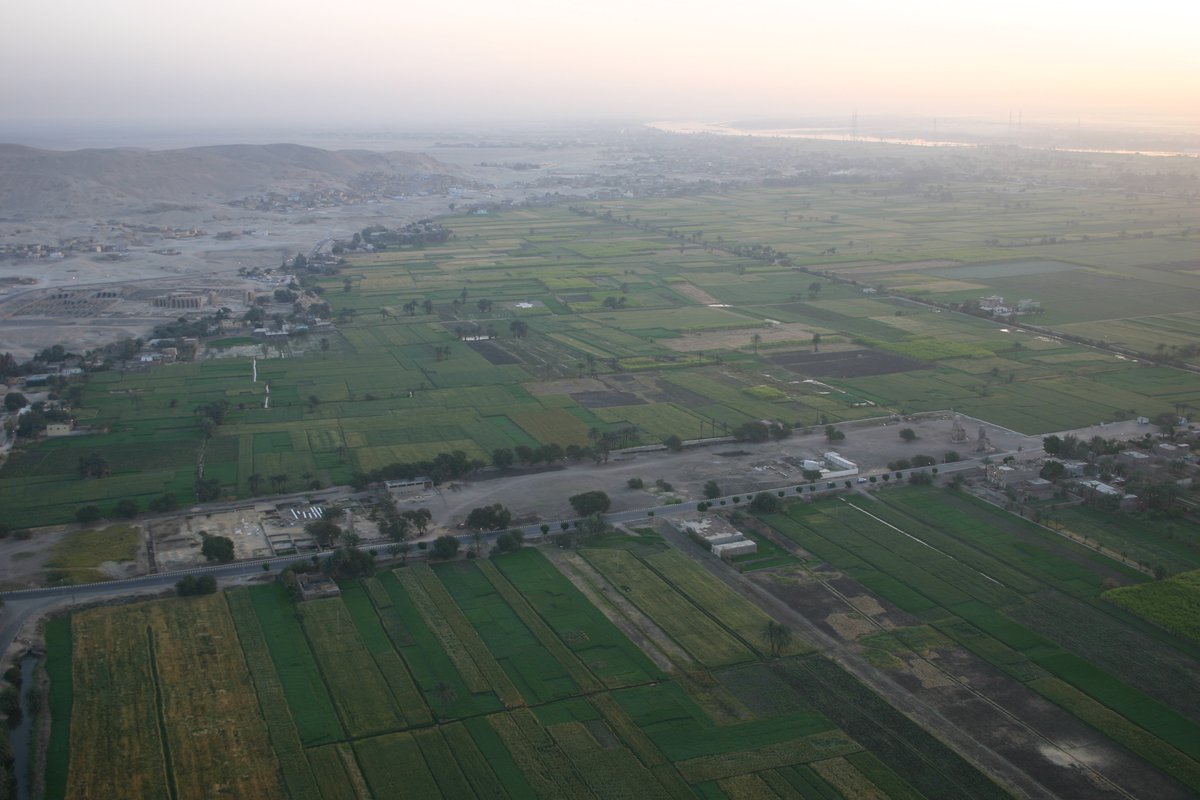
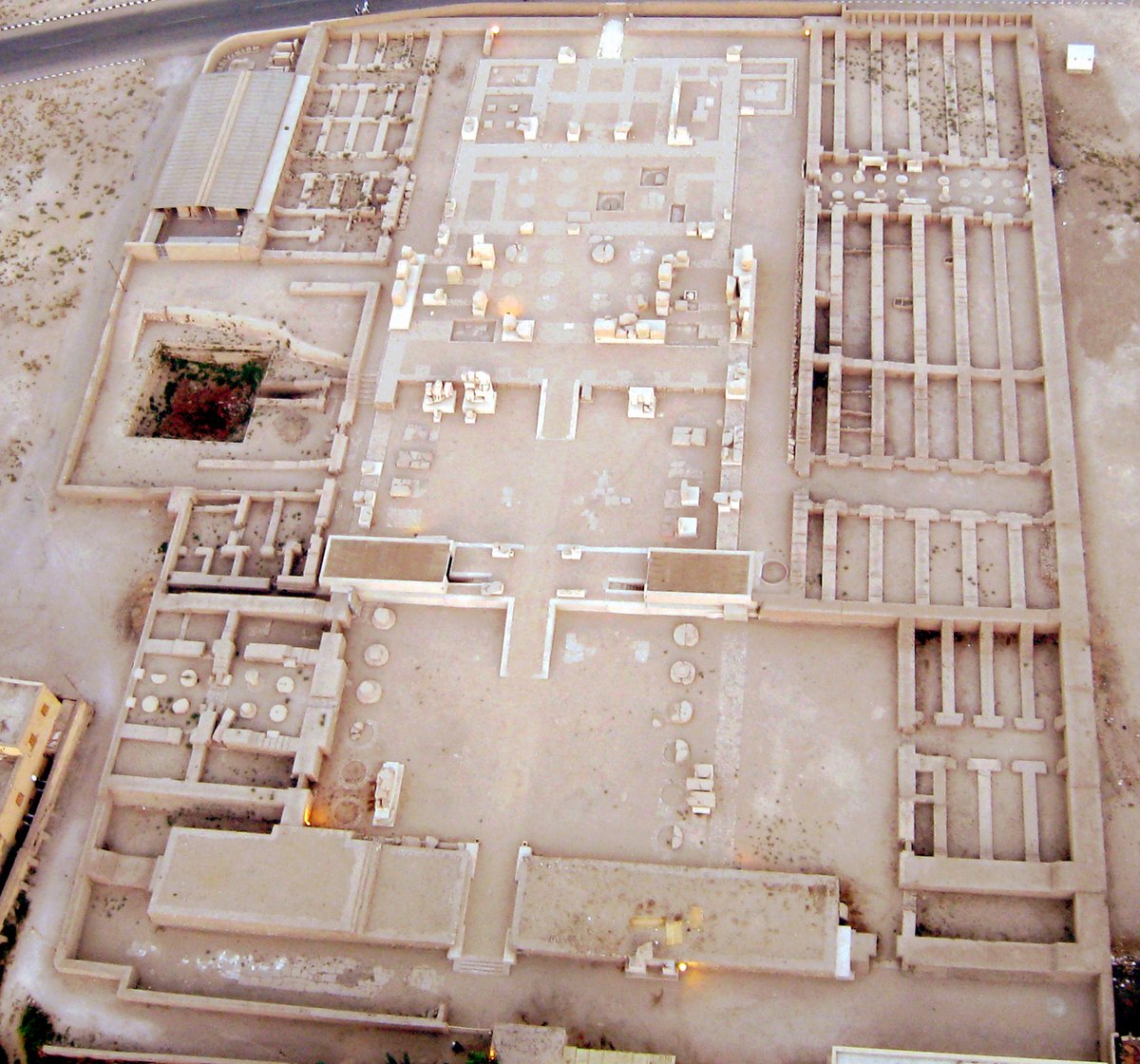
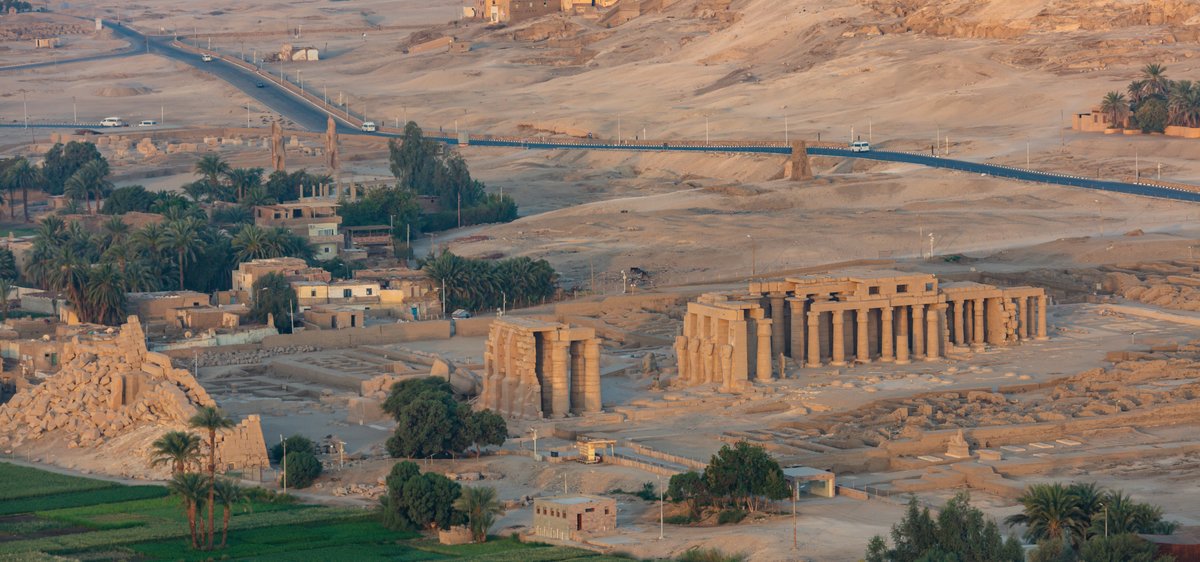
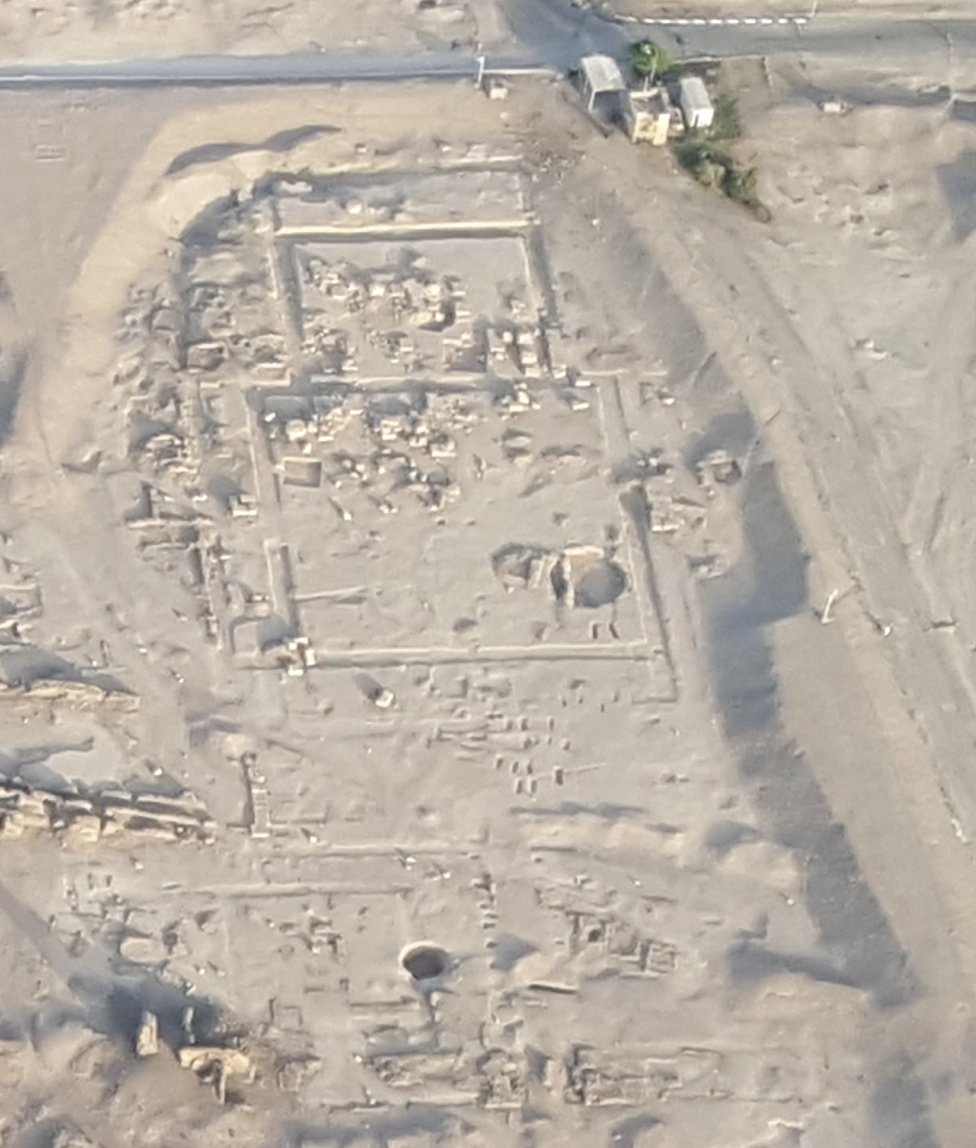
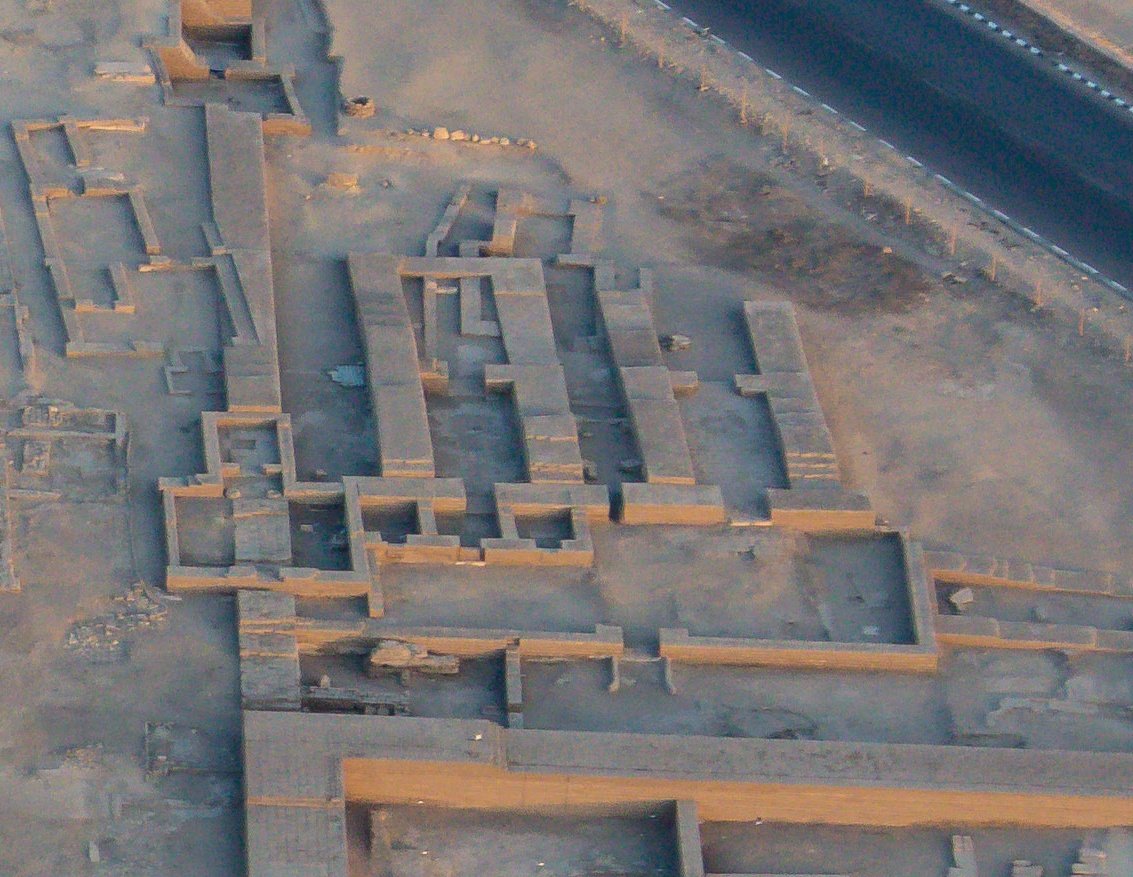
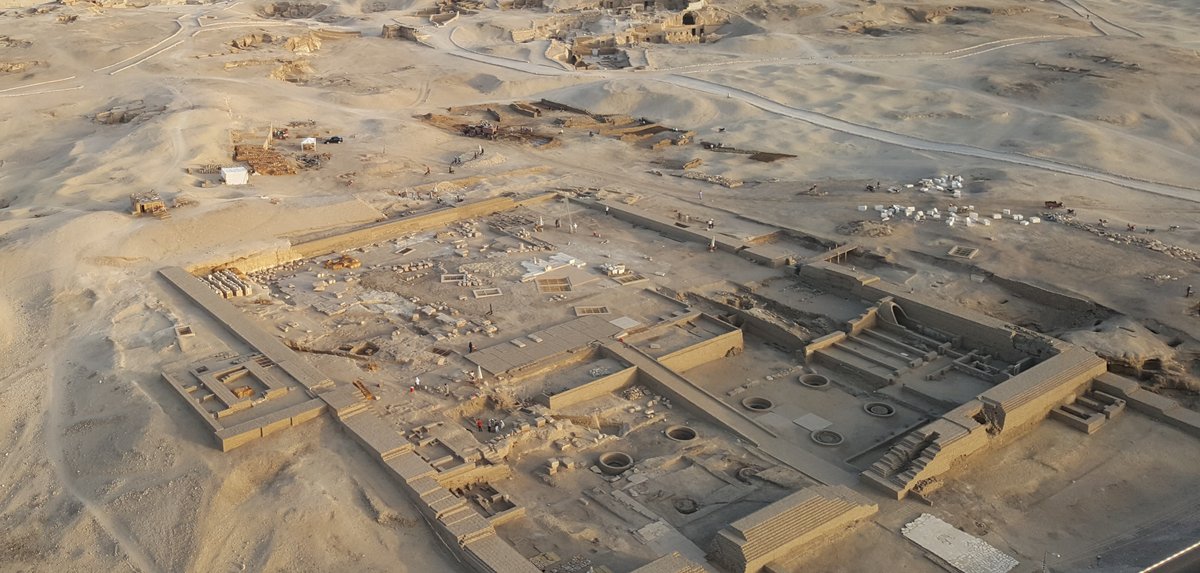
In its day, this temple complex was the largest and most opulent in Ancient Egypt, covering 35 hectares. Even later rivals like the Ramesseum were unable to match it in area, and even the Temple of Karnak was smaller at the time. However, the temple stood on the edge of the Nile floodplain, and successive annual inundations gnawed away at its foundations, leaving very little of the original structure today besides the colossi.
Because of their scale, the statues are visible from over 10 miles away. The twin figures depict Amenhotep III with three shorter figures carved into the front throne alongside his legs: his wife Tiye and his mother Mutemwiya. The middle of the throne would have held an unidentified daughter, though it has been destroyed. The side panels of the statues depict the Nile god Hapi.
Both statues are quite damaged, with the features above the waist virtually unrecognizable. The southern statue comprises a single piece of stone, but the northern figure has a large extensive crack and consists of 5 tiers of stone above the waist. These upper levels are made of a different type of sandstone and are the result of a later reconstruction attempt. The statues contain 107 Roman-era inscriptions in Greek and Latin, some of which refer to sounds emitted by the statues and include the name Memnon.
Sources: Wikipedia, OpenStreetMap, Wikidata, Wikimedia Commons
Written by Mutabor
Discuss this with the author and others
No comments yet. Be the first to start the conversation.