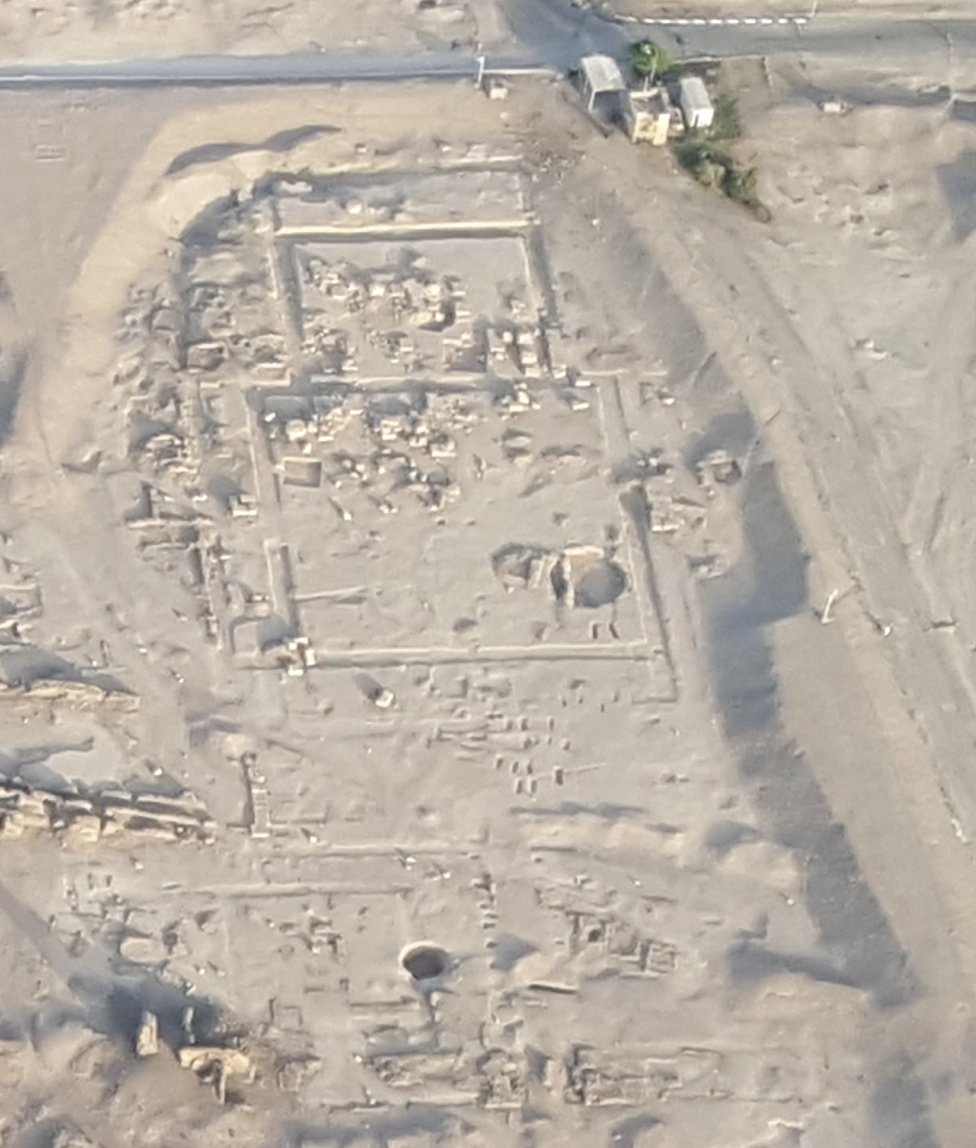

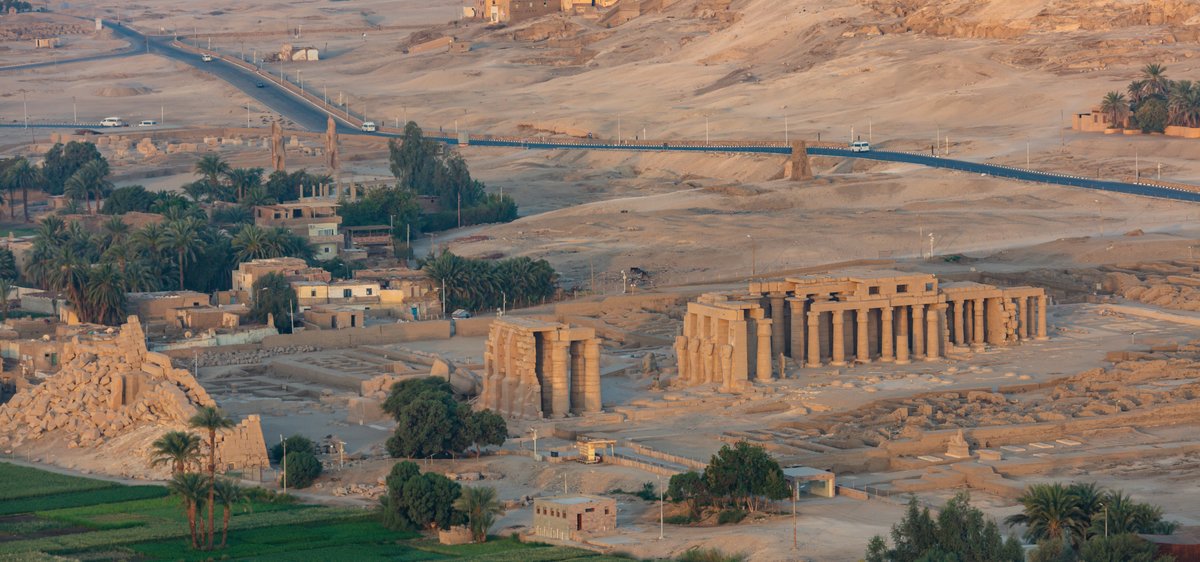
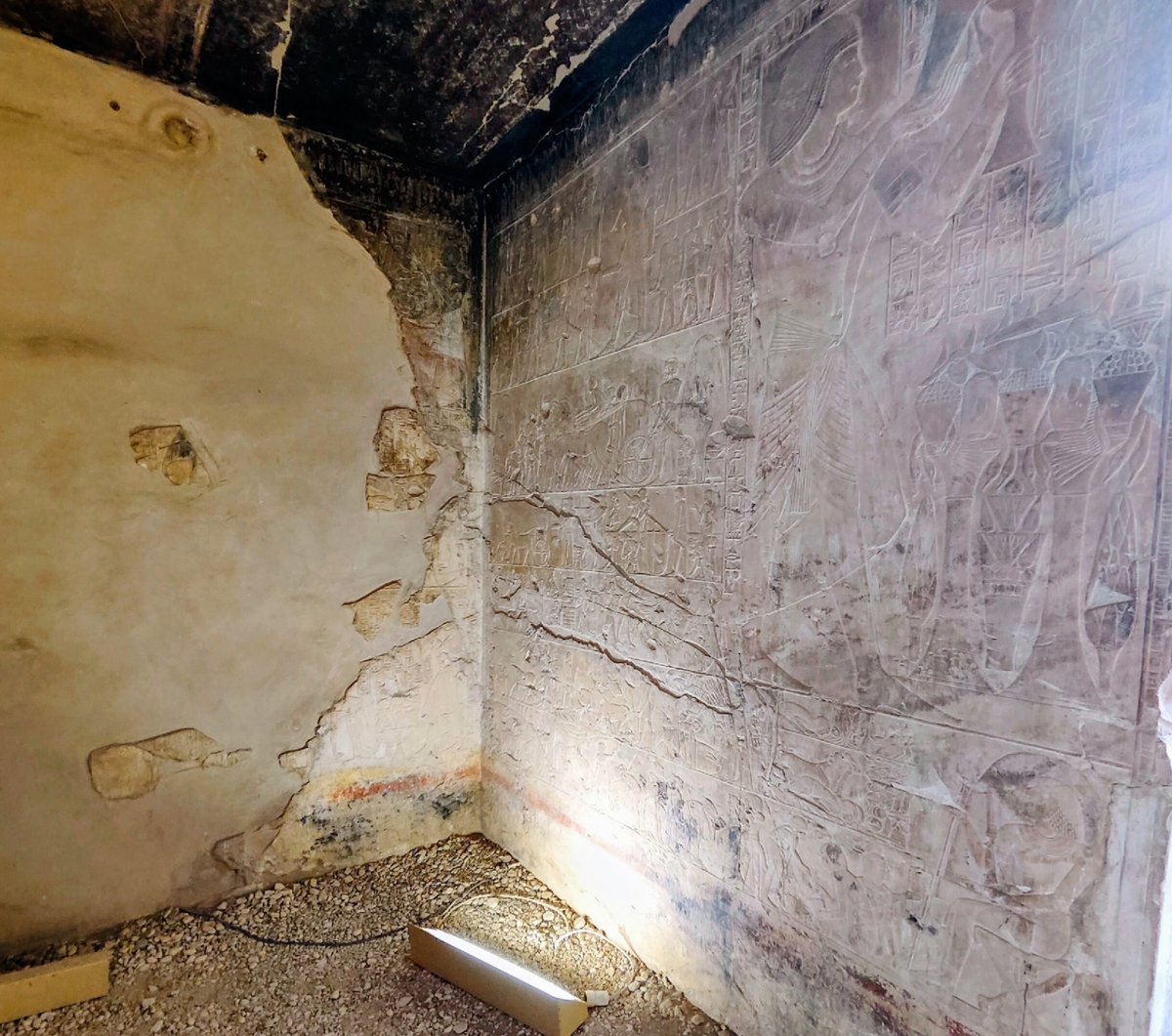
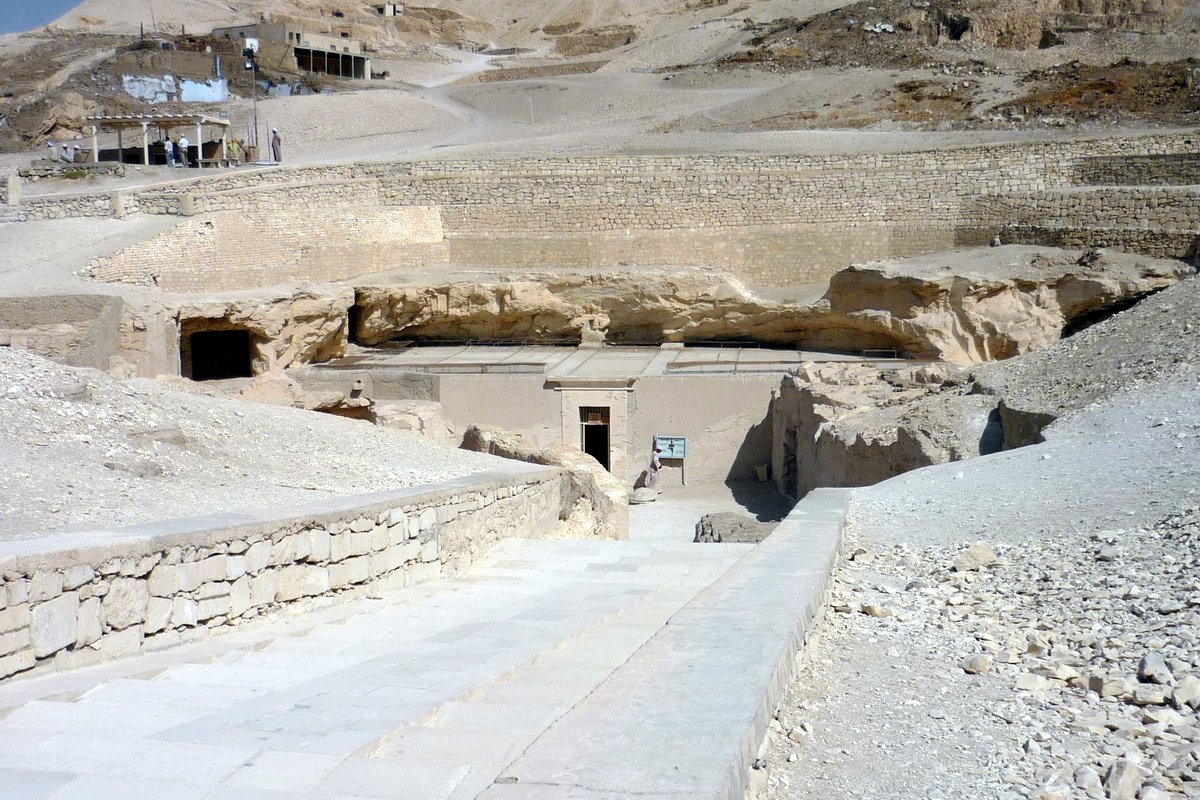
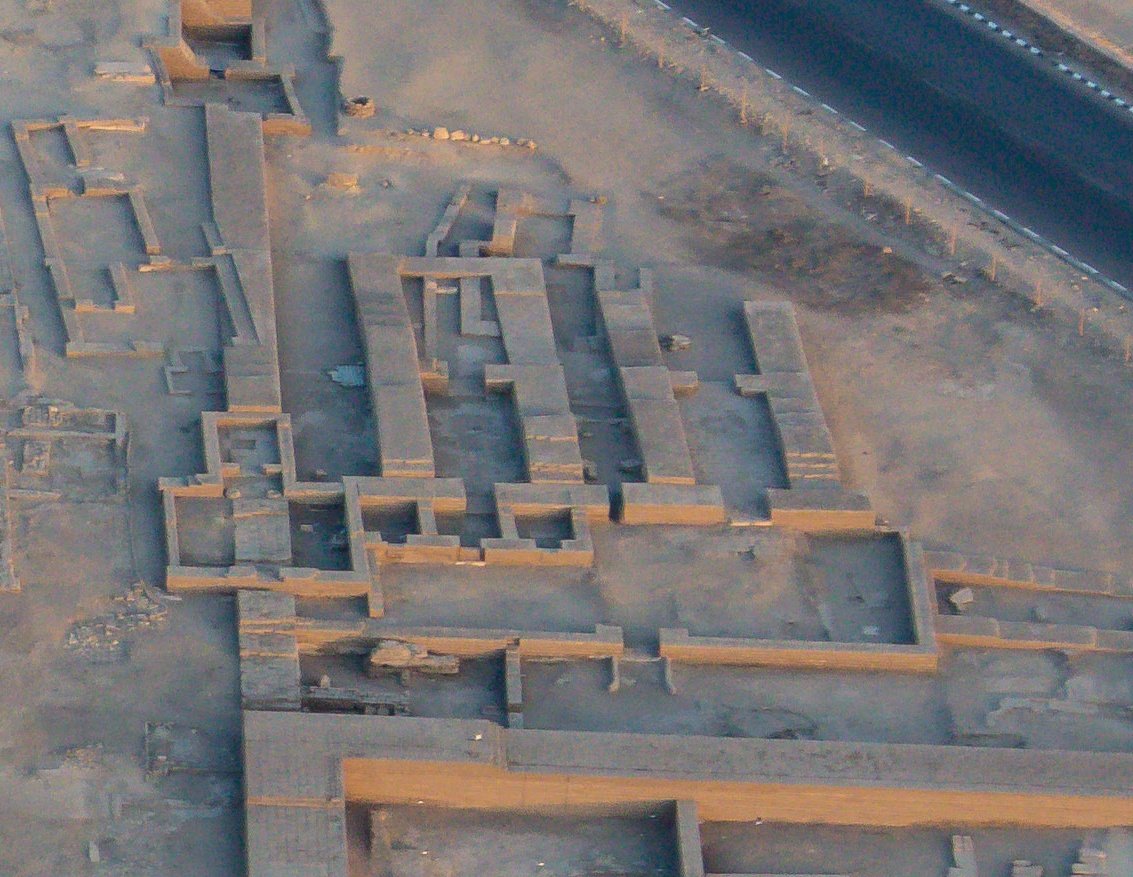
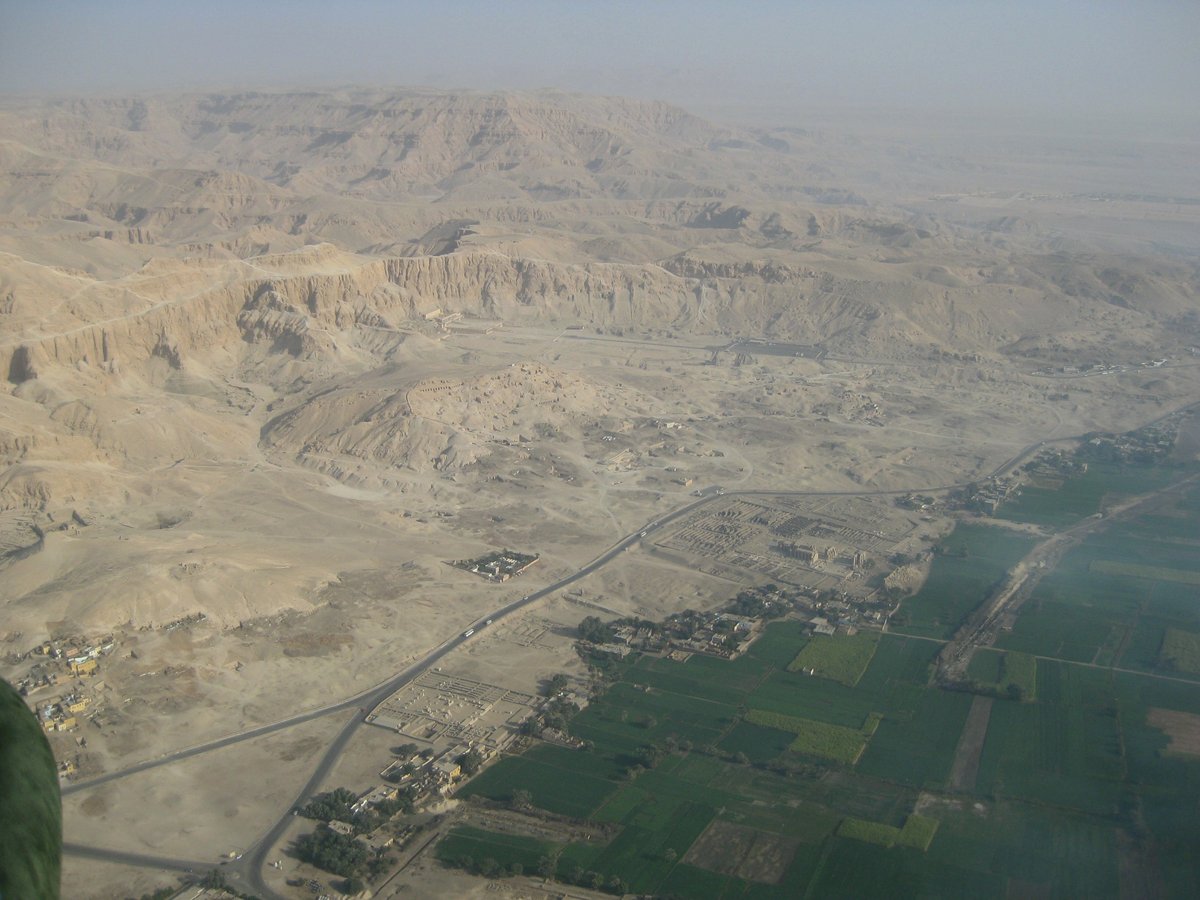
The Mortuary Temple of Ay and Horemheb is an Ancient Egyptian temple located at Medinet Habu in the Theban Necropolis. Built on sloping ground on the west bank of the Nile, the structure was constructed primarily of sandstone for the temple itself, while mudbrick was used for the ancillary buildings. The complex consisted of three successive courts flanked by pylons, a peristyle court, several hypostyle halls, and a sanctuary. A small palace was also located within the third court.
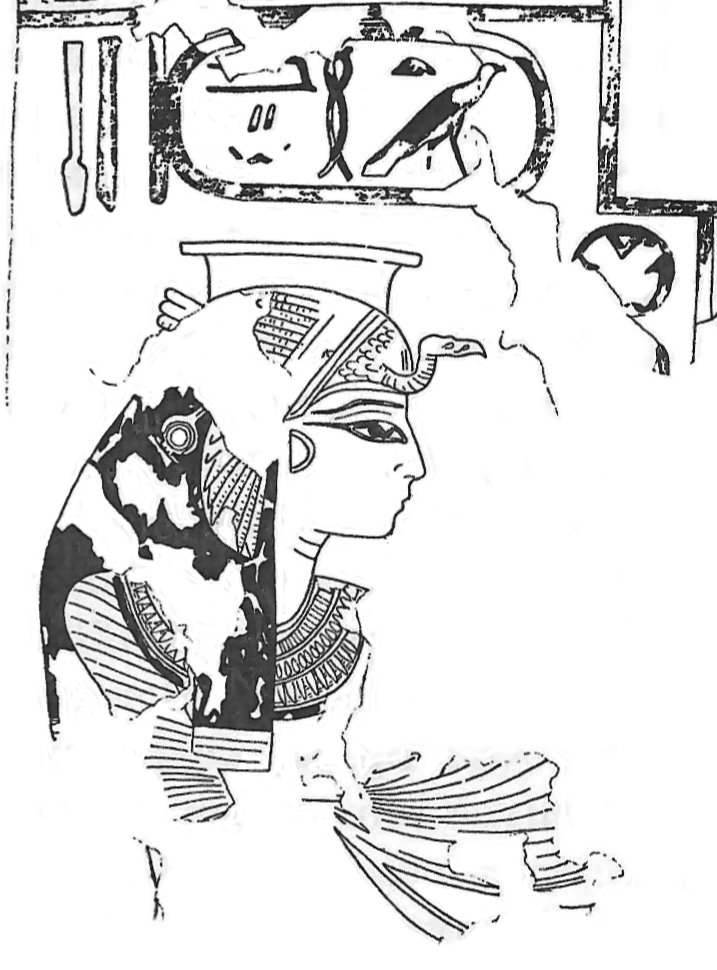
Pharaoh Ay built the mortuary temple to ensure his cult's survival after his death. It was positioned near the small temple of Amun at Medinet Habu and the mortuary temple of Amenhotep III. This location likely demonstrated Ay's attachment to the newly restored cult of Amun following the Amarna Period and his proximity to the royal family of the Eighteenth Dynasty. The building was originally named "Mansion of Kheperkheperure-Iri-Maat, Enduring is the Memorial in the Place of Eternity."
After Ay's death, his successor Horemheb completed the construction of the funerary complex but subsequently usurped the temple. He erased every trace of Ay's name and renamed the building "Mansion of Djeserkheperure-Setepenre." More than a century later, the immense mortuary temple of Ramesses III was built to the south, incorporating the small temple of Amun and bordering the southern enclosure wall of the temple of Ay and Horemheb. At that time, the cult of Horemheb was probably still maintained there.
Today, the monument is almost completely destroyed. The ruins were first excavated in 1931 and 1932 by Uvo Hölscher of the Oriental Institute of the University of Chicago.
Sources: Wikipedia, OpenStreetMap, Wikidata, Wikimedia Commons
Written by Mutabor
Discuss this with the author and others
No comments yet. Be the first to start the conversation.