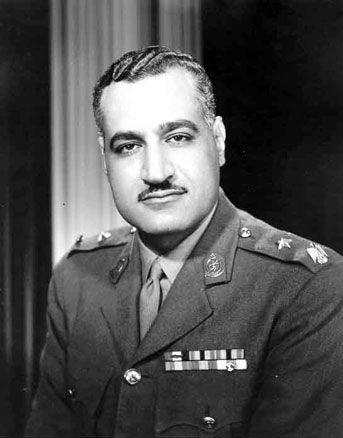

Gamal Abdel Nasser Hussein was the second president of Egypt from 1954 until his death in 1970. Born on January 15, 1918, in Bakos, Alexandria, Nasser was the son of Abdel Nasser Hussein, a postal worker born in Beni Mur in Upper Egypt and raised in Alexandria, and Fahima Hammad, who was born in the village of Bani Murr to a family from Mallawi, el-Minya.
Nasser attended a primary school for the children of railway employees until 1924, when he was sent to live with his paternal uncle in Cairo. In 1928, he moved to Alexandria to attend the Attarin elementary school. In 1929, he left for a private boarding school in Helwan before returning to Alexandria to enter the Ras el-Tin secondary school. It was during this time that he became involved in political activism, joining the paramilitary wing of the Young Egypt Society for a brief period in 1934.
Nasser led the Egyptian revolution of 1952 and introduced land reforms the following year. His popularity grew significantly after the nationalization of the Suez Canal and the subsequent Suez Crisis. During his presidency, he launched major socialist measures and modernization reforms, including the Aswan Dam and Helwan city. Although he remains an iconic figure for his strides toward social justice and Arab unity, his tenure is also noted for authoritarianism and human rights violations.
Sources: Wikipedia, OpenStreetMap, Wikidata, Wikimedia Commons
Written by Mutabor
Discuss this with the author and others
No comments yet. Be the first to start the conversation.