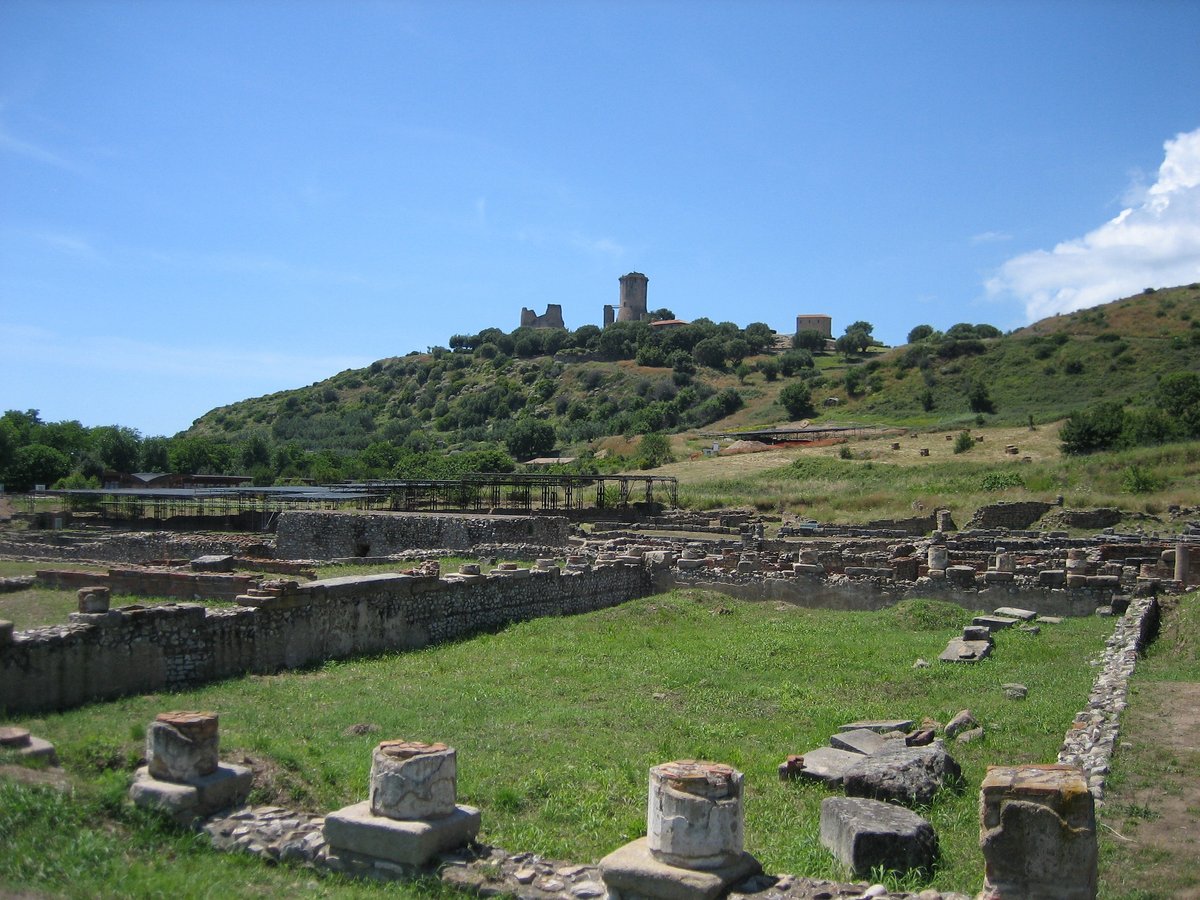

Elea-Velia, now located near the modern village of Ascea in the Province of Salerno, Italy, was originally founded by Greeks from Phocaea around 538-535 BCE and named Hyele. Over time, the name changed to Ele, then Elea, and eventually Velia during the Roman era. However, the name Hyele is believed to have derived from the Ionic word for glass, indicating the city's early importance in trading and craftsmanship.
The city was an important cultural hub, known for its Eleatic philosophical school founded by Parmenides and Zeno, famous for their paradoxes. The city supplied ships for the Punic wars and served as a naval base for Brutus and Octavian in the second half of the 1st century BC.
In recent excavations, the archaic temple of Athena was discovered on the acropolis of Velia,dating back to 540-530 BC. Greek brick-stamps, with a unique shape, were also found at the site, further uncovering the history of this ancient city.
Guarda l'antica Elea-Velia, sita nearby Ascea in provincia di Salerno, Italia, fu originariamente fondata dai Greci di Focea intorno al 538-535 a.C. e chiamata Hyele. Nel tempo il nome cambiò in Ele, poi Elea e infine Velia durante l'età romana. Tuttavia, il nome Hyele è creduto provenire dal greco ionico per il vetro, indicando l'importanza della città nelle prime fasi della produzione e del commercio.
Elea-Velia fu un importante centro culturale, noto per la sua scuola eleatica fondata da Parmenide e Zeno, famosi per i loro paradossi. La città forniva navi per le guerre puniche e naviglio per Bruto e Ottaviano nel secondo semestre del I secolo a.C.
Nel corso degli scavi recenti è stata scoperta la tempio arcai di Atena sulla acropoli di Velia, datata al 540-530 a.C. Cancelli greci con forma unica furono anche trovati sul sito, ulteriormente rivelando la storia di questa antica città.
Sources: Wikipedia, OpenStreetMap, Wikidata, Wikimedia Commons
Written by Nicolo Ciampini
Discuss this with the author and others
No comments yet. Be the first to start the conversation.