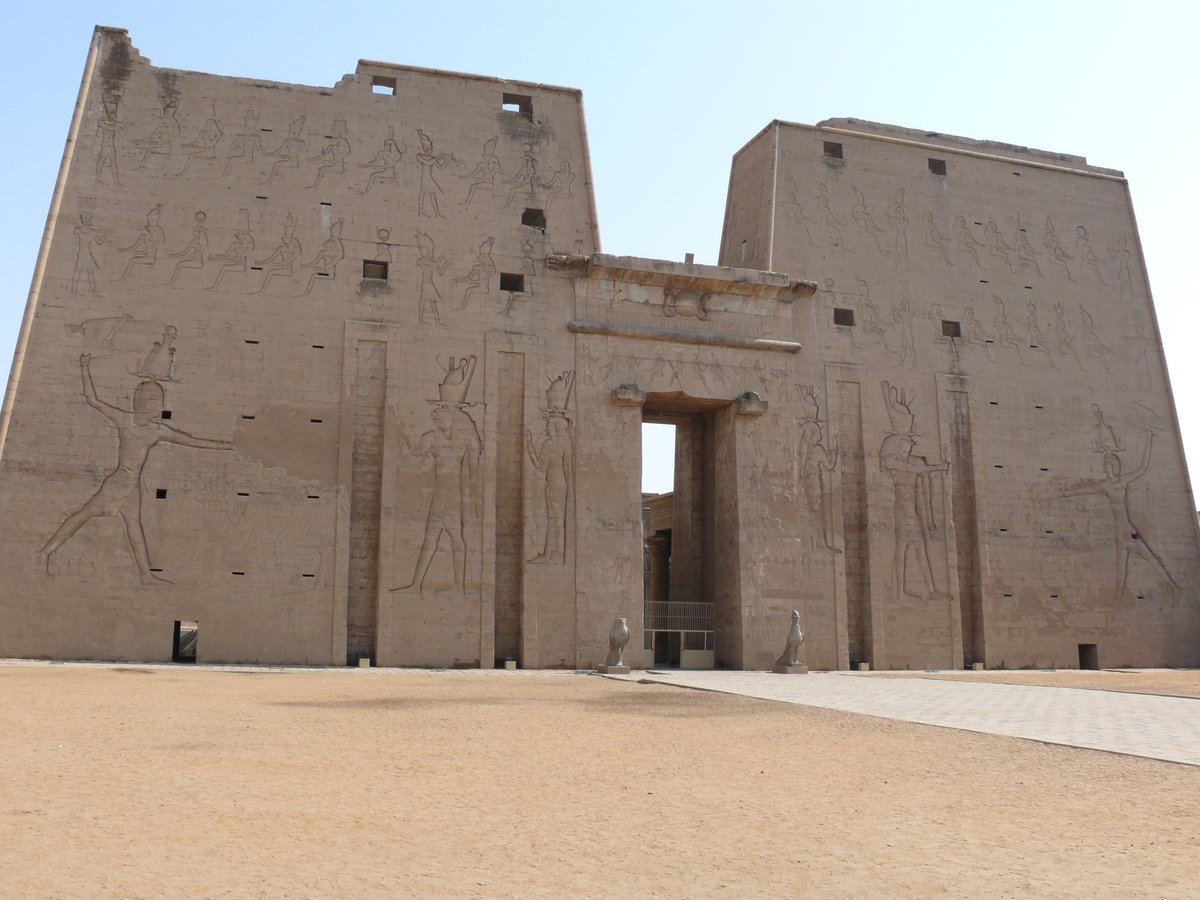

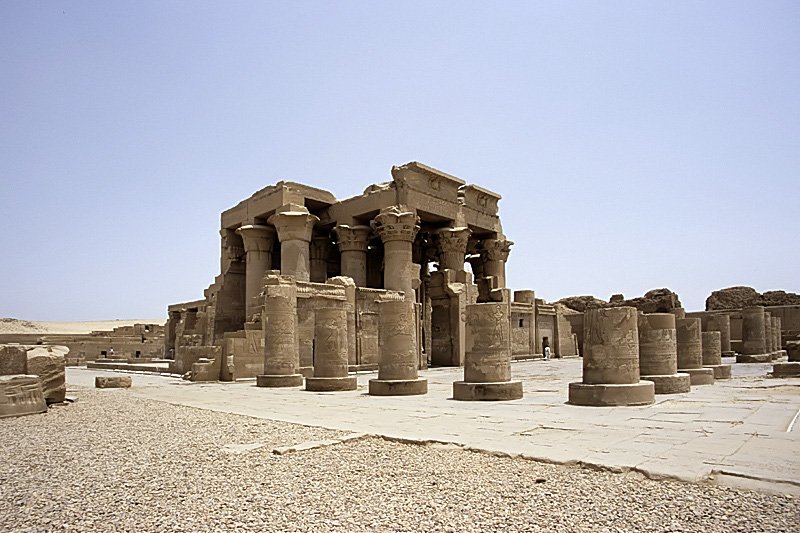
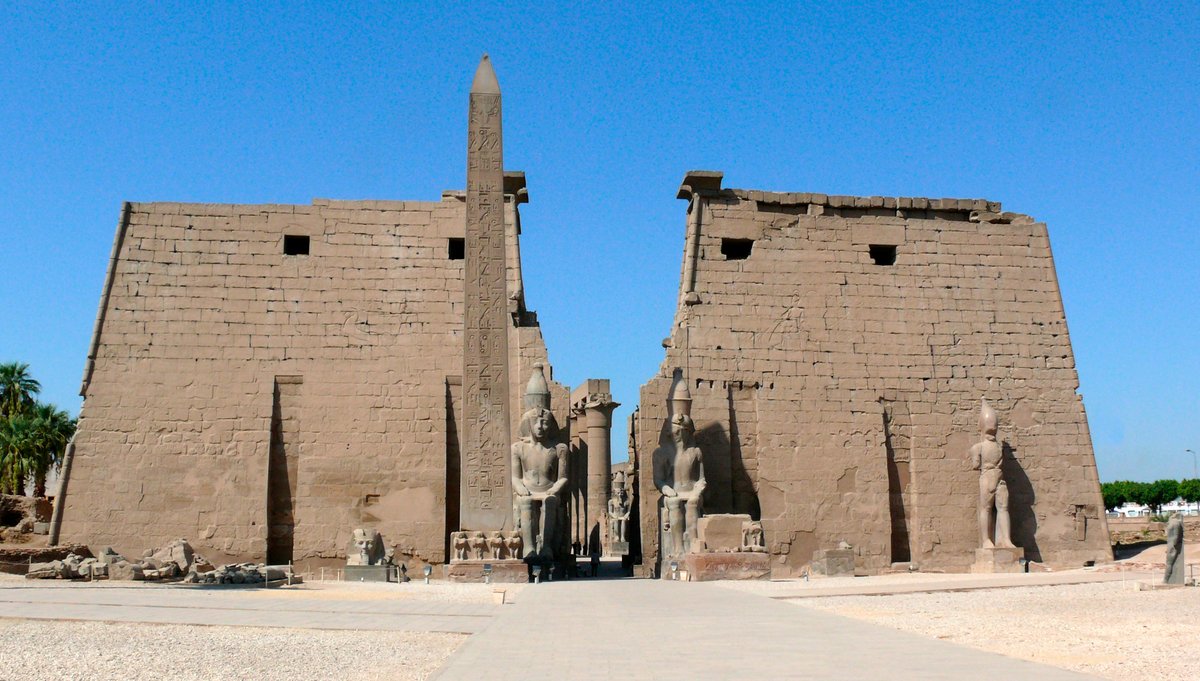
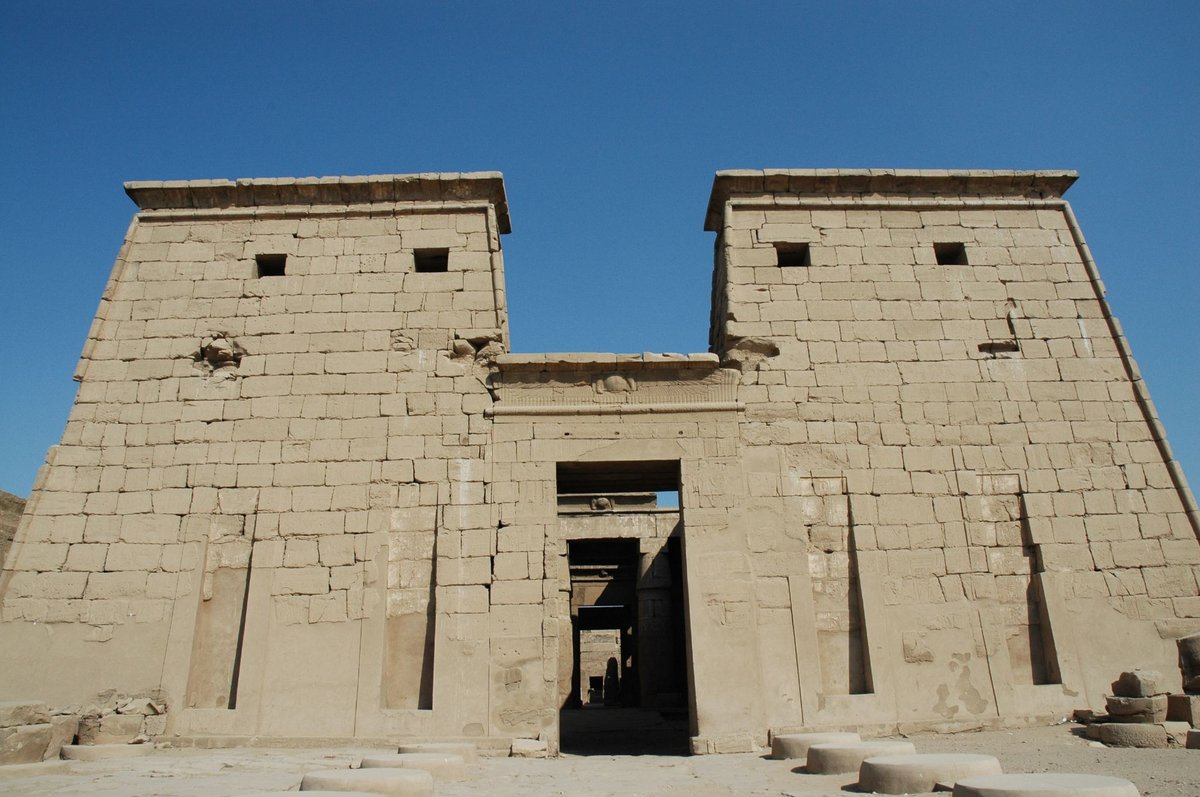
The Temple of Edfu is an Egyptian temple located on the west bank of the Nile in Upper Egypt. Built during the Ptolemaic Kingdom between 237 and 57 BC, it is one of the best-preserved shrines in the country. The temple was constructed on the site of an earlier, smaller temple dedicated to Horus. Over the centuries, it became buried under 12 metres of sand and river silt, remaining hidden until a French expedition identified it in 1798.
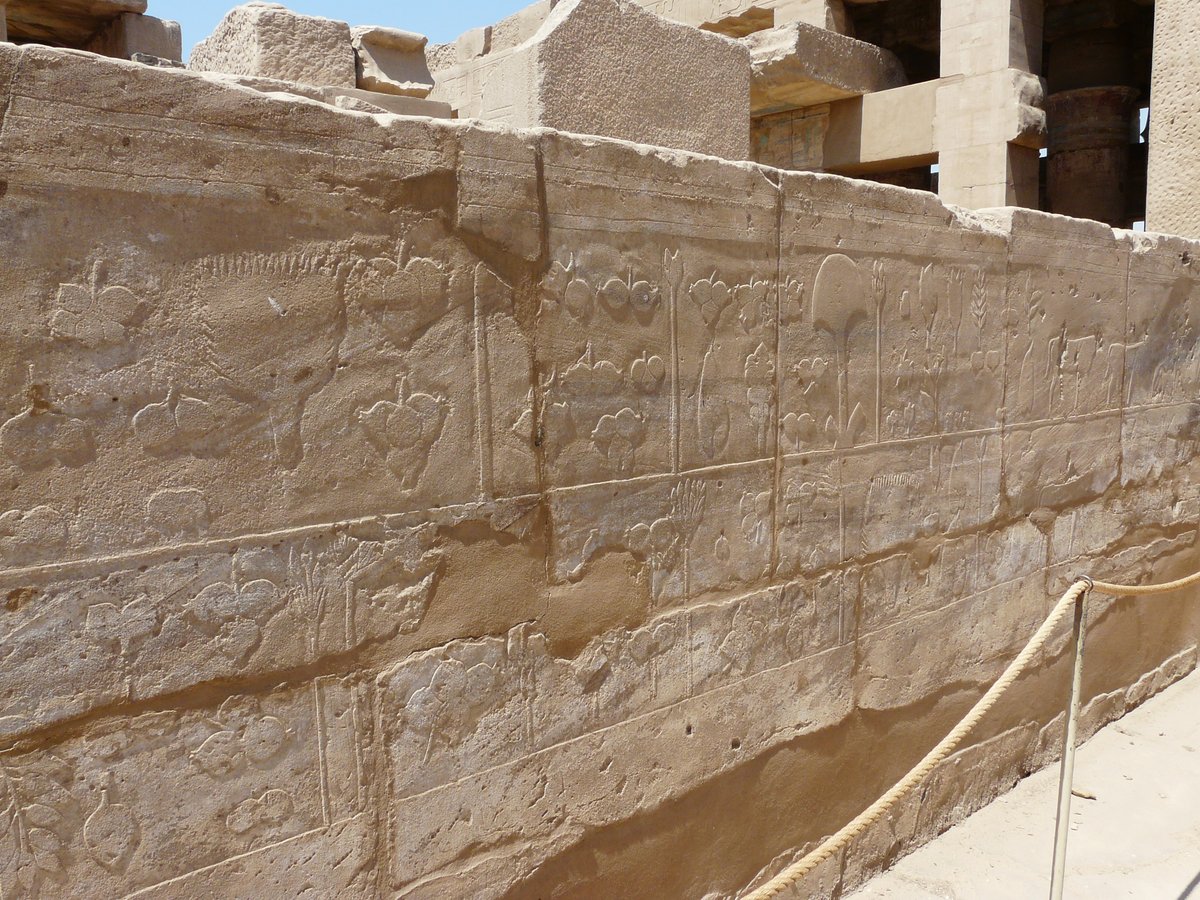
The temple walls provide important information on language, myth, and religion. Inscribed building texts preserve information about the mythical interpretation of the temple as the Island of Creation. These inscriptions also include important scenes of the Sacred Drama, which relate to the age-old conflict between Horus and Seth. The temple served as the center for several festivals sacred to Horus, most notably the annual journey of Hathor from Denderah to Edfu to mark their sacred marriage.
According to the temple's creation myth, the world began entirely covered by water. During the struggle between land and primeval water, reeds grew with the help of a falcon, which were strengthened by the gods The Far and The Large. These reeds were the germ cell for the temple of Edfu, where Horus landed as a falcon. The snakelike Apophis tried to impede the creation, but was defeated by a harpoon, one of the forms of Ptah. The first temple was then designed by the gods Thoth and Seshat, one responsible for wisdom and the other for scripture.
To protect the building against external threats, 60 gods formed a living wall around the temple. The temple's courtyard columns even provided a model for the Temple Works in Holbeck, Leeds, where the columns were closely copied in the frontage of the works.
Sources: Wikipedia, OpenStreetMap, Wikidata, Wikimedia Commons

Written by Mutabor
Discuss this with the author and others
No comments yet. Be the first to start the conversation.