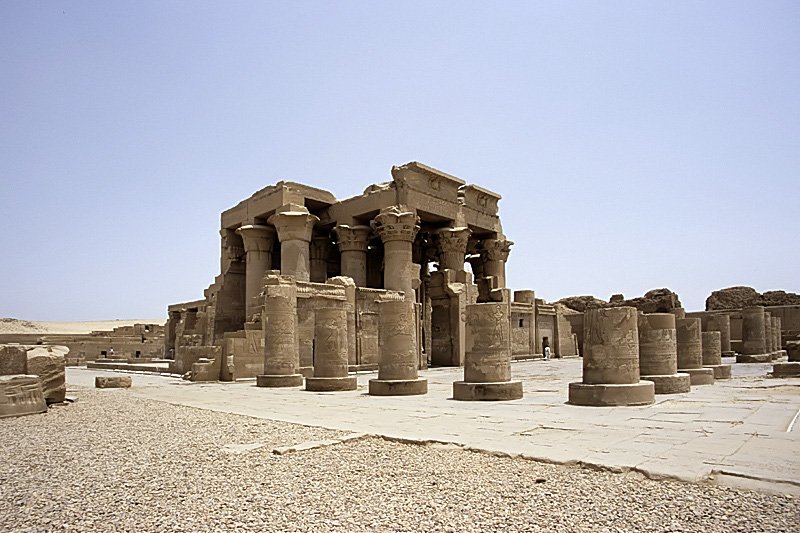

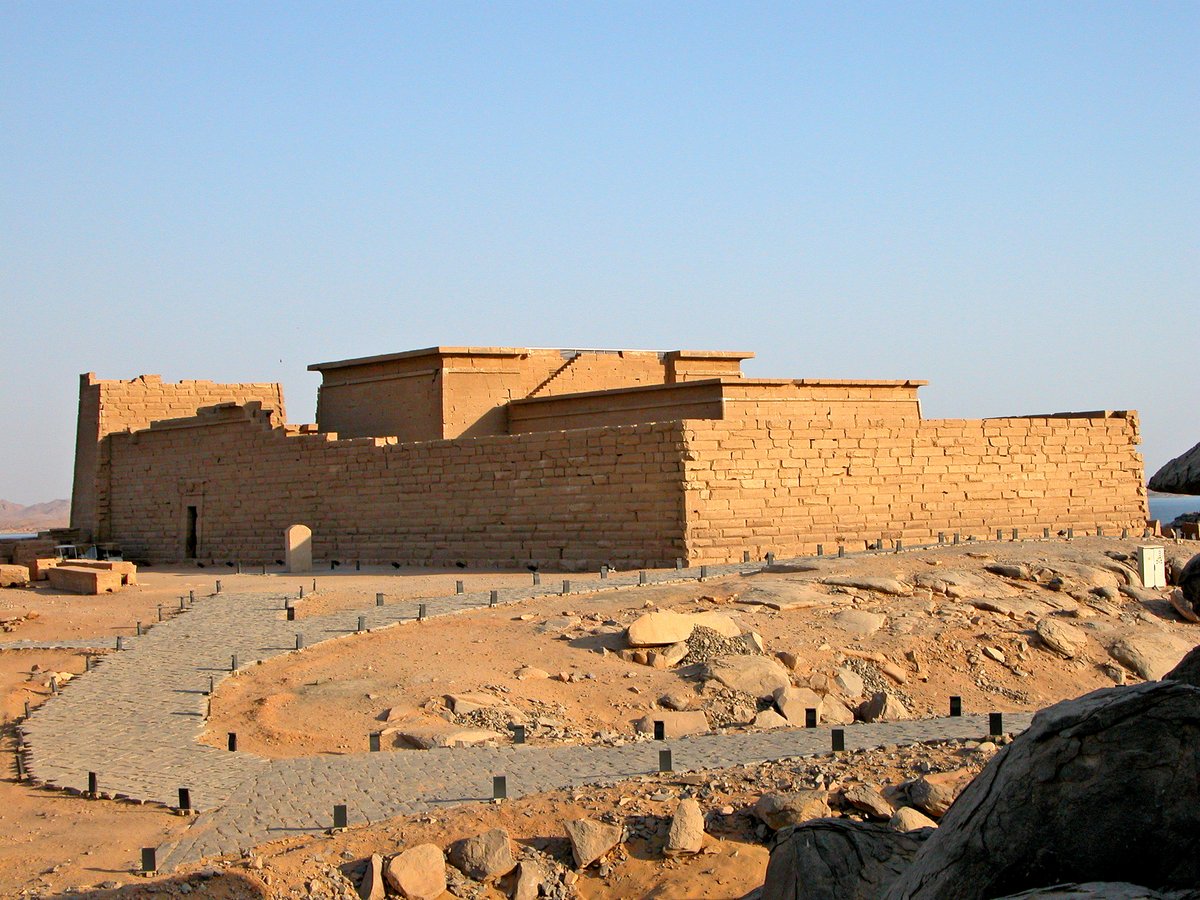
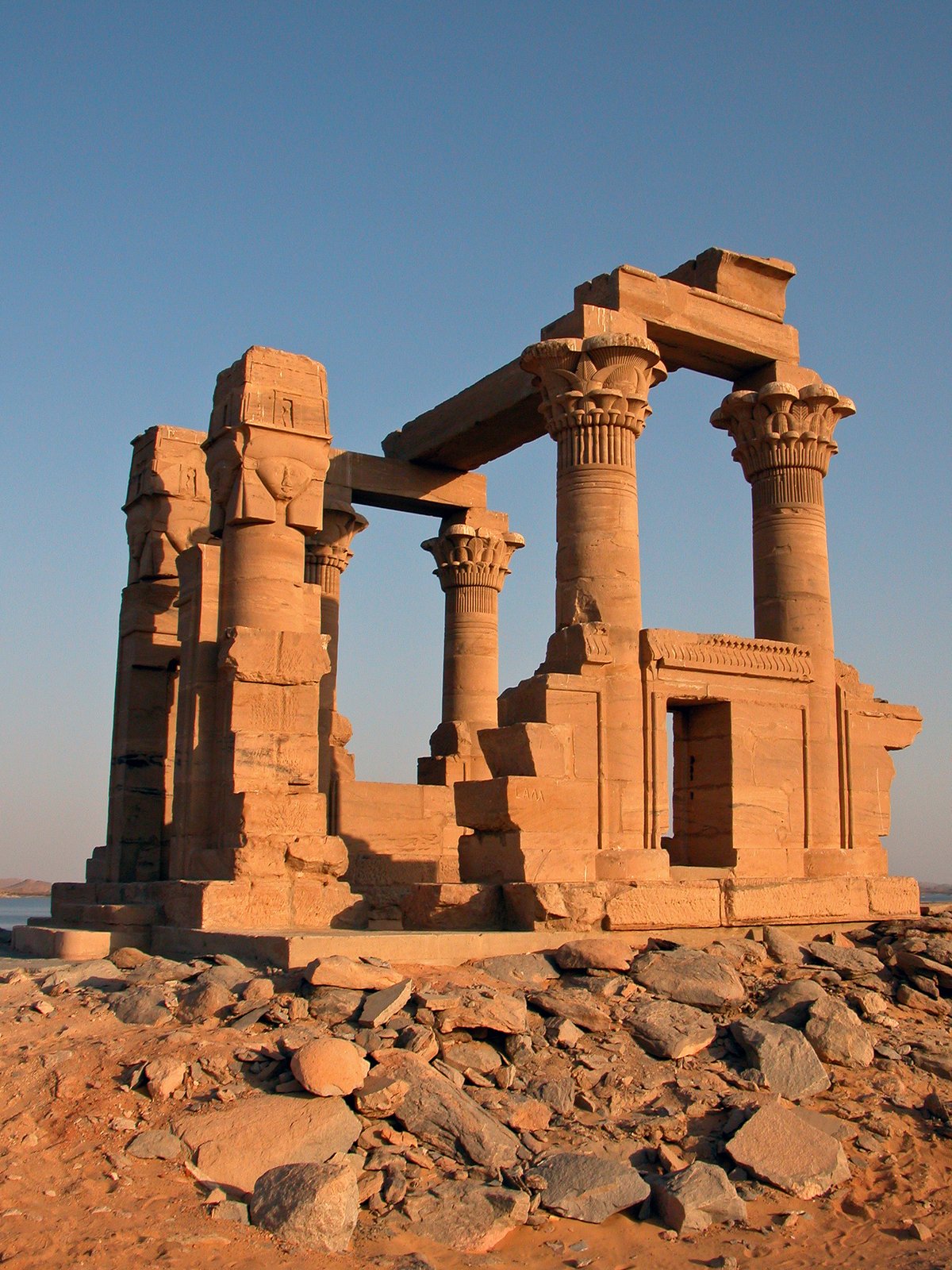
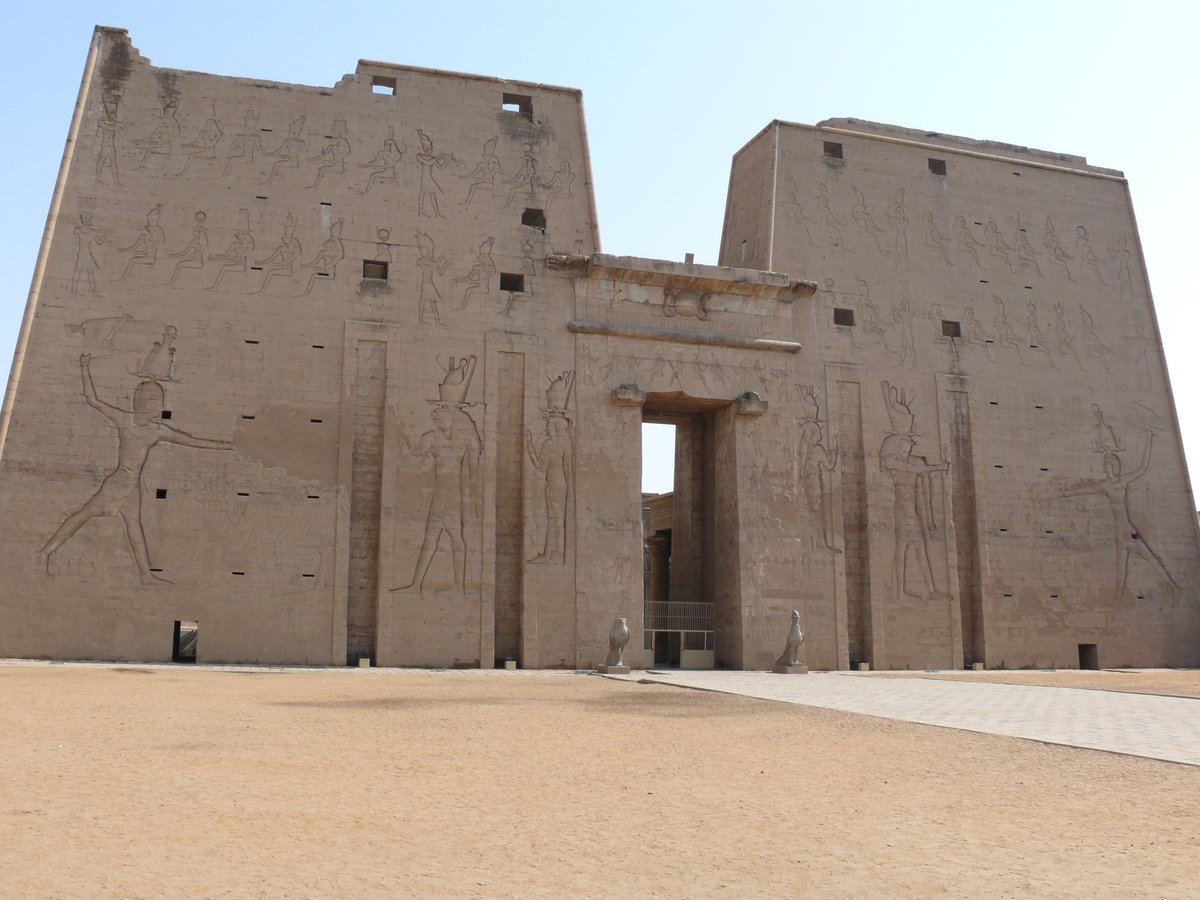
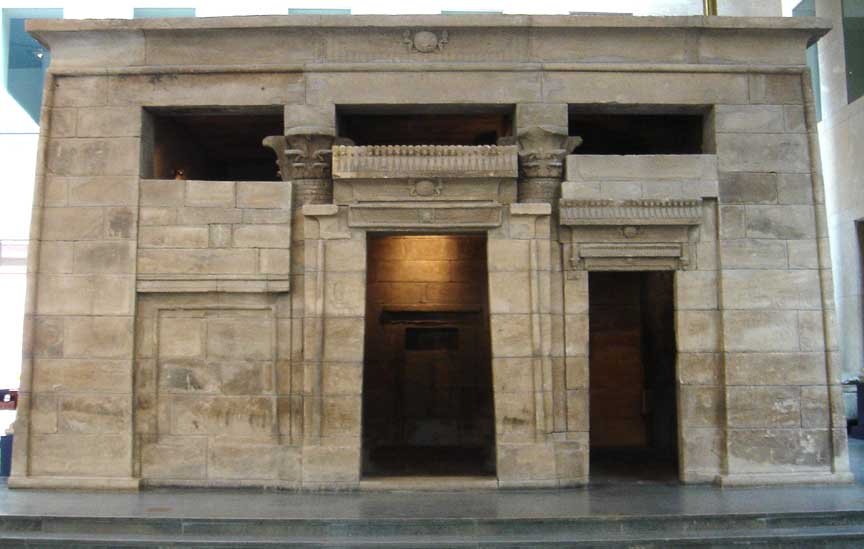
The Temple of Kom Ombo is an unusual double temple in the town of Kom Ombo in Aswan Governorate, Upper Egypt. Constructed during the Ptolemaic dynasty between 180–47 BC, the structure features a unique design where courts, halls, sanctuaries, and rooms are duplicated for two sets of gods. In ancient times, Kom Ombo was called NBU, meaning "Gold". Later, the Greeks and Romans called it OMBOS. In Arabic, "Kom" means mound, so Kom Ombo means "Mound of Gold".
The temple is atypical because everything is perfectly symmetrical along the main axis. The southern half was dedicated to the crocodile god Sobek, the god of fertility and creator of the world with Hathor and Khonsu. Meanwhile, the northern part was dedicated to the falcon god Haroeris, along with Tasenetnofret and Panebtawy. The texts and reliefs refer to cultic liturgies and a specific theology formed by the combination of universalist and local themes.
Much of the temple has been destroyed by the Nile, earthquakes, and later builders who used its stones for other projects. Some of the reliefs inside were defaced by Copts, who once used the temple as a church. All the temple buildings in the southern part of the plateau were cleared of debris and restored by Jacques de Morgan in 1893. Recent discoveries at the site include the head of the bust of Roman Emperor Marcus Aurelius and a sandstone sphinx statue likely dating to the Ptolemaic Dynasty.
Sources: Wikipedia, OpenStreetMap, Wikidata, Wikimedia Commons

Written by Mutabor
Discuss this with the author and others
No comments yet. Be the first to start the conversation.