Sofitel Winter Palace Luxor Hotel (Agatha Christie, Violaine Vanoyeke)

Luxor City, MJWP+MVC, Luxor City, Luxor, Luxor Governorate 1362404, Egypt

Located on the banks of the Nile River, amidst lush tropical gardens and ancient temples, the historic Sofitel Winter Palace Luxor hotel offers unparalleled hospitality in Luxor, Egypt. Combining rich colonial design with the glory of the pharaohs' era, this elegant palace provides unforgettable experiences in a romantic setting. Since 1886, this five-star hotel has been a favorite retreat for luminaries and high-ranking officials and remains a popular choice for the modern political and cultural elite.

The Winter Palace Hotel, also known as the Old Winter Palace Hotel, is a historic 5-star luxury resort hotel from the British colonial era, located on the banks of the Nile River in Luxor, Egypt, south of the Luxor Temple. The hotel has 86 rooms and 6 suites.
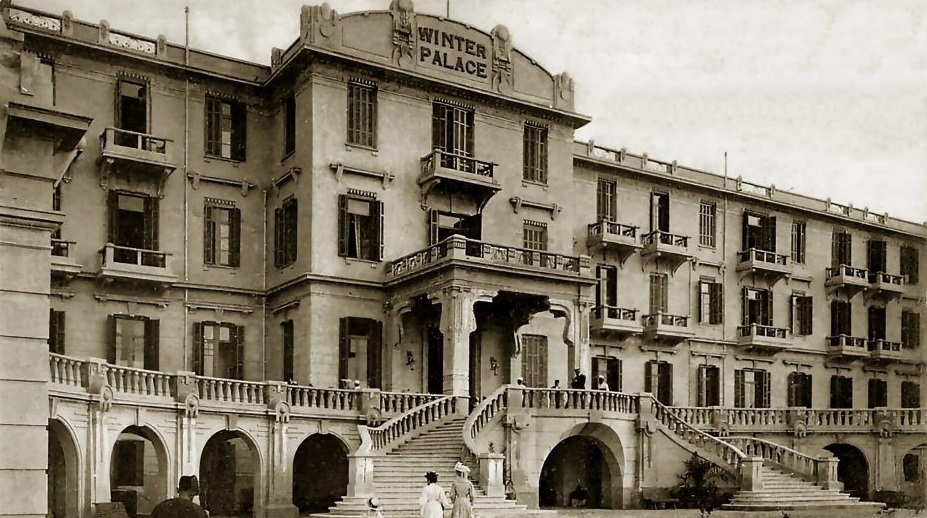

When architect Leon Stinon first began the reconstruction of the Winter Palace on behalf of Charles Baillier and George Nungovich, he used architectural motifs inspired by the Edwardian era to shape its exterior appearance. When King Edward VII ascended the throne after the death of his mother, Queen Victoria, it marked the beginning of an important — though brief — period of dynamic cultural expression in English society. Historians today refer to his reign as the Edwardian era, which lasted from 1901 until the start of World War I. Among the artistic achievements that defined the era was the widespread adoption of new architectural forms. Architects and engineers from the United Kingdom sought to employ various design philosophies reflecting the artistic tastes characteristic of the previous century. Looking back to the Enlightenment era, these construction professionals began borrowing structural aesthetics from Neoclassicism and Georgian architecture, blending them with previously existing Victorian architectural concepts. Thus, most buildings constructed during the Edwardian era featured recognizable structural elements such as timber-framed facades, typically filled with some form of brick or plaster. Occasionally, however, architects filled the frame with a mixture known as “pebble dash,” consisting of lime, sand, and stone. In some cases, the wood placement was so pronounced that the structures resembled those developed during the Tudor period. Panelled doors adorned with stained glass were also common, as were carefully carved wooden verandas. The popular 18th-century multi-pane casement window regained widespread use, allowing natural light to flood many open spaces within the building. Bay windows — another holdover from the Georgian era — were also frequently employed.

The hotel was built by Benjamin Herbst through the Upper Egypt Hotels Co, a company founded in 1905 by Cairo hoteliers Charles Baillier and George Nungovich in cooperation with Thomas Cook and Son (Egypt). It was officially opened on Saturday, January 19, 1907, with a picnic in the Valley of the Kings followed by dinner at the hotel and speeches.

During World War I, the hotel was temporarily closed to paying guests and used as a convalescent hospital for recovering soldiers. A regular guest of the hotel since 1907 was George Herbert, 5th Earl of Carnarvon, better known simply as Lord Carnarvon. He made Egypt his second home after a car accident worsened his health. Discovering that the dry Egyptian winters improved his physical condition, he began spending most of his time in Egypt. Although Lord Carnarvon often traveled around the country, he most frequently stayed at the Winter Palace Hotel in Luxor. The Valley of the Kings captivated his imagination, inspiring the Earl to take up archaeology as a hobby. Unfortunately, Herbert’s poor health and lack of archaeological training prevented him from uncovering anything significant. To assist him in his intellectual pursuits, Lord Carnarvon later hired the ambitious Howard Carter. A native of the United Kingdom like Herbert, Carter moved to Egypt in the 1890s to study the history of Ancient Egypt. He began his career at age 17, initially working as a field assistant and eventually rising to the position of “General Inspector of Monuments of Upper Egypt.” In 1905, Carter resigned from his post to help Lord Carnarvon in his quest to work in the Valley of the Kings.


For many years, Howard Carter and his patron Lord Carnarvon searched the region for any signs of an unexplored tomb. However, over time, evidence began to emerge that the elusive tomb of King Tutankhamun still lay untouched somewhere in the valley. The ancient Egyptian pharaoh, who ruled during the height of the historical New Kingdom, was widely believed to have had his mausoleum lost to time centuries ago. Encouraged, the men sifted through the sand in search of any signs of the tomb. But after many years of endless tunneling, the task began to seem hopeless. The situation worsened when the outbreak of World War I threatened to bring their project to a complete halt. Both Carter and Herbert were nearly ready to end their journey by 1922, deciding to conduct their final excavations near the well-known tomb of Ramesses VI. Working at the base of the tomb, Carter and his field team discovered an unusual cave beneath the rock. Astonished, Carter ordered the team to begin excavating around the cave. When dawn broke the next morning — November 5 — the team uncovered a mysterious staircase leading to a sealed door inscribed with “Tutankhamun.”

Overjoyed, Carter immediately reported this to Lord Carnarvon, and together they began working feverishly to enter the tomb. Clearing the passage, the men passed through a vestibule before encountering the heart of Tutankhamun’s resting place. Upon first entering the Vestibule, Carter, Herbert, and their team ultimately discovered a treasury containing several thousand artifacts. Over the following months, Carter and Herbert continued to explore the four-room tomb, carefully cataloging everything they found for preservation. (All items are currently housed in the Cairo Museum.) Finally, in February 1923, the men reached the last chamber, which was the actual burial chamber of Tutankhamun. Inside, they found the mummified remains of Tutankhamun in a richly decorated golden sarcophagus. Throughout this time, the two men shared their astonishing discoveries with the world from the Winter Palace Hotel. At the height of the excavation, the international press booked many rooms at the hotel just to receive regular updates. Carter even used the on-site bulletin board as an official news feed. Largely thanks to the work of Carter and Herbert, scholars today know much about the culture of ancient Egyptian society.

After the announcement of the discovery, the Winter Palace hosted the international press and foreign guests who followed the story. Carter used the hotel’s bulletin board to periodically share news and information about the find.

In 1975, the complex was expanded with the construction of the New Winter Palace. The annex, classified as a 3-star hotel, was connected to the original building by corridors. It was demolished in 2008.

In 1996, a Pavilion was built in the garden behind the Winter Palace, near the swimming pool — a 4-star annex with 116 rooms. The Pavilion shares many amenities with the Winter Palace, including gardens, pools, tennis courts, terraces, and restaurants.

Currently, the hotel is owned by the Egyptian General Company for Tourism and Hotels ("EGOTH") of Egypt and managed by the French hotel company Accor, where it is part of the main Sofitel division.

The hotel has hosted many famous guests including Georges Clemenceau, Prime Minister of France; Winston Churchill, Prime Minister of the United Kingdom; Aga Khan III, the 48th Imam of the Nizari Ismailis and President of the League of Nations Assembly; Eugénie de Montijo, Empress of France; King Farouk I of Egypt; King Albert I of Belgium; and Elisabeth of Bavaria, Queen of Belgium.

Agatha Christie wrote one of her most famous novels, "Death on the Nile," at the hotel.

Violette Vaneauke wrote many books while living at the hotel. She always stays at the Winter Palace when working in Luxor.

In 2004, it was used as a filming location for the movie "Death on the Nile," an episode of the popular ITV television series "Agatha Christie's Poirot."

Sources:

https://en.wikipedia.org/wiki/Winter_Palace_Hotel

https://www.historichotels.org/hotels-resorts/sofitel-winter-palace-luxor/

Follow us on social media

More stories from World: Hotels Where Great Films Were Shot and Where You Can Stay

The Plaza Hotel, New York (F. Scott Fitzgerald, Truman Capote, and others)

1 Central Park S, New York, NY 10019, USA

The Plaza building was constructed 101 years ago in the very center of New York. The thing is, the best American city doesn’t really have a center: it can be considered both Wall Street and Times Square, even though these places are an hour’s walk apart. Or, quite justifiably, it can be considered the square where Fifth Avenue—groaning under the weight of tourists and city dwellers suddenly struck by a shopping spree—suddenly meets the quiet and somehow existing Central Park within the metropolis.

Park Hyatt Tokyo Hotel (Japan, Tokyo)

3-chōme-7-1 Nishishinjuku, Shinjuku City, Tokyo 160-0023, Japan

This now legendary five-star hotel gained worldwide fame after becoming the setting for Sofia Coppola’s film *Lost in Translation*, where Bill Murray and Scarlett Johansson play out their Tokyo story amid futuristic interiors.

Hotel Le Montreux Palace (Vladimir Nabokov)

Av. Claude-Nobs 2, 1820 Montreux, Switzerland

Отель Fairmont Le Montreux Palace, расположенный среди величественных Альп и на берегу Женевского озера, может похвастаться многовековой традицией исключительного гостеприимства и знаковой архитектурой в стиле Белль Эпок с момента своего основания в 1906 году. Наше выгодное расположение обеспечивает доступ к лучшим достопримечательностям Монтрё, включая знаменитый джазовый фестиваль Монтрё и очаровательный рождественский рынок Монтрё.

Hotel Chelsey, New York (Mark Twain, O. Henry, Diego Rivera with Frida Kahlo, Jean-Paul Sartre, Édith Piaf, William Burroughs, Arthur Clarke, and many others)

204 W 23rd St, New York, NY 10011, USA

In 1905, the Chelsea Hotel opened in the tallest building in Manhattan. In 1912, the hotel housed survivors of the Titanic. Notable guests who stayed in the hotel’s rooms included Mark Twain, O. Henry, Diego Rivera with Frida Kahlo, Jean-Paul Sartre, and Édith Piaf. Due to its proximity to the docks, the hotel’s main clientele after its opening were sailors looking to have fun with girls, and it was here in 1912 that the Titanic survivors were accommodated.

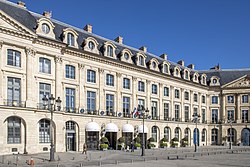
Hotel Ritz, Paris (Oscar Wilde, Marcel Proust, Ernest Hemingway, Theodore Dreiser, Erich Maria Remarque, Agatha Christie, and others)

15 Pl. Vendôme, 75001 Paris, France

Hemingway personally took part in liberating the hotel bar from the Nazis. Proust ordered delivery of his favorite beer from the hotel while already on his deathbed. Sophia Loren called it “the most romantic hotel in the world.” The Paris Ritz is the headquarters and theater for Coco Chanel, Scott and Zelda Fitzgerald, Cole Porter, and Ingrid Bergman, among others.

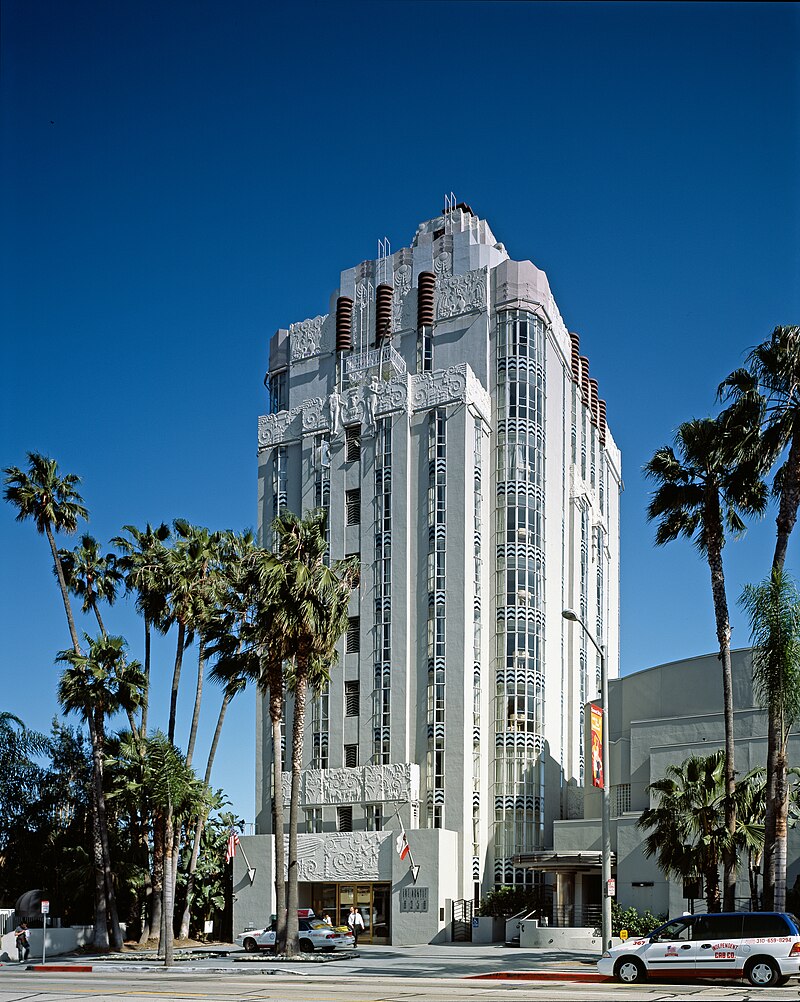
Sunset Tower Hotel, Hollywood (John Wayne, Billy Burke, Greta Garbo, Clark Gable, Marilyn Monroe, Elizabeth Taylor, Frank Sinatra, and others)

8358 Sunset Blvd, West Hollywood, CA 90069, USA

Designed in 1929 by architect Leland A. Bryant, the Sunset Tower (as it was originally called) set the trend from the moment it opened. Its impressive location on the Sunset Strip and elegant Art Deco style, along with its proximity to the famous restaurants and nightclubs of the 1930s and ’40s, contributed to its iconic status. In their guide to Los Angeles architecture, David Gebhard and Robert Winter wrote that "this tower is a first-class example of Zigzag Moderne and as much a Hollywood emblem as the Hollywood sign." It is situated in a prime spot on the Sunset Strip overlooking the city and adorned with plaster friezes depicting plants, animals, dirigibles, legendary creatures, and Adam and Eve.

Hotel Danieli, Venice (Charles Dickens, Honoré de Balzac, Marcel Proust, George Sand, and Alfred de Musset, among others)

Riva degli Schiavoni, 4195, 30122 Venice VE, Italy

The hotel is a popular destination for wealthy travelers and aristocrats, attracted by its luxurious decor, exceptional service, and prime location in the very heart of Venice. Over the years, the hotel has hosted many famous guests, including Richard Wagner, Charles Dickens, and Henry James.

Four Seasons Resort Maui at Wailea Hotel

3900 Wailea Alanui Dr, Kihei, HI 96753, USA

Fans of intricate plots and immersive atmospheres are welcomed by the hospitable Hawaii. The luxurious Four Seasons Resort Maui at Wailea served as the filming location for the first season of HBO’s series *The White Lotus*. According to the script, wealthy tourists spend a week at the elite spa hotel, which ends in tragedy. Vivid visuals, a blend of contemporary themes and satire of those very themes, surprisingly fresh portrayals of clichéd character types and storylines — all of this made the series one of the channel’s and streaming services’ main premieres in 2021.

Sofitel Legend Old Cataract Aswan Hotel, Aswan, Egypt (Agatha Christie)

3VJQ+W2Q, Abtal El Tahrir Street, First Sheyakhah, Aswan 1, Aswan Governorate 1240836, Egypt

Located on the banks of the Nile River in Aswan, Egypt, the Sofitel Legend Old Cataract Aswan hotel is an oasis reminiscent of a legendary dream. The very name of the esteemed Old Cataract Aswan, opened in 1899 in Aswan, Egypt, was inspired by the confluence of the river and the granite wall forming the first Nile cataract. The Sofitel Legend Old Cataract Aswan hotel features 220 luxurious rooms, including 82 stunning suites. One of the greatest architectural features of the hotel is its beautiful Moorish architecture...

Mena House Hotel, Giza, Egypt (Conan)

Kafr Nassar, Al Haram, X4PM+54C, Kafr Nassar, Al Haram, Giza Governorate 3514702, Egypt

A historic hotel, founded in 1886, located outside Cairo, Egypt. It is owned by Legacy Hotels, part of the Talaat Moustafa Group.

The Peninsula Hong Kong Hotel, Hong Kong

22 Salisbury Rd, Tsim Sha Tsui, Hong Kong

The Peninsula Hong Kong is a luxury colonial-style hotel located in Tsim Sha Tsui, Kowloon, Hong Kong. It is the flagship hotel of the Peninsula Hotels group, which is part of the Hong Kong and Shanghai Hotels group. The hotel opened in 1928 and was the first under the Peninsula brand. Expanded in 1994, the hotel combines colonial and modern elements and is notable for its large fleet of Rolls-Royces painted in the distinctive "Peninsula green."

Fairmont Peace Hotel, Shanghai, China (Bernard Shaw, Vicki Baum, Noël Coward)

China, Shanghai City, Huangpu District, No. 330 Beijing East Road Postal Code: 200002

A historic hotel on the waterfront in Shanghai, China, consists of two different buildings. The building originally housed the Cathay Hotel, and today it is the Fairmont Peace Hotel, operated by Fairmont Hotels and Resorts of Canada. The southern building was constructed as the Palace Hotel and today serves as a residence and studio for artists, known as the Swatch Art Peace Hotel. Both buildings face the waterfront but are separated by Nanjing Road.

Hotel Continental Saigon, Saigon, Vietnam

171 Đồng Khởi Street, Bến Nghé, District 1, Ho Chi Minh City, Vietnam

The Continental Hotel is located in District 1, the central area of Ho Chi Minh City, Vietnam. The hotel is situated at the corner of Dong Khoi Street and Lam Son Square, near the Saigon Municipal Theatre. It was built in 1880 during the French colonial period and named after the Continental Hotel in Paris. Over the years, the hotel has undergone renovations while preserving the essence of its original architecture and style. The hotel is owned by the state company Saigon Tourist.

Hotel Metropole, Brussels

Pl. De Brouckère 31, 1000 Brussels, Belgium

Отель Метрополь — это роскошный пятизвездочный отель, расположенный в центре Брюсселя, Бельгия. Он был построен в период с 1872 по 1874 год в эклектичном стиле с элементами неоренессанса и Людовика XVI. Отель открылся в 1895 году и является единственным отелем XIX века, который до сих пор работает в Брюсселе. За эти годы Метрополь использовался в качестве съемочной площадки для известных фильмов.