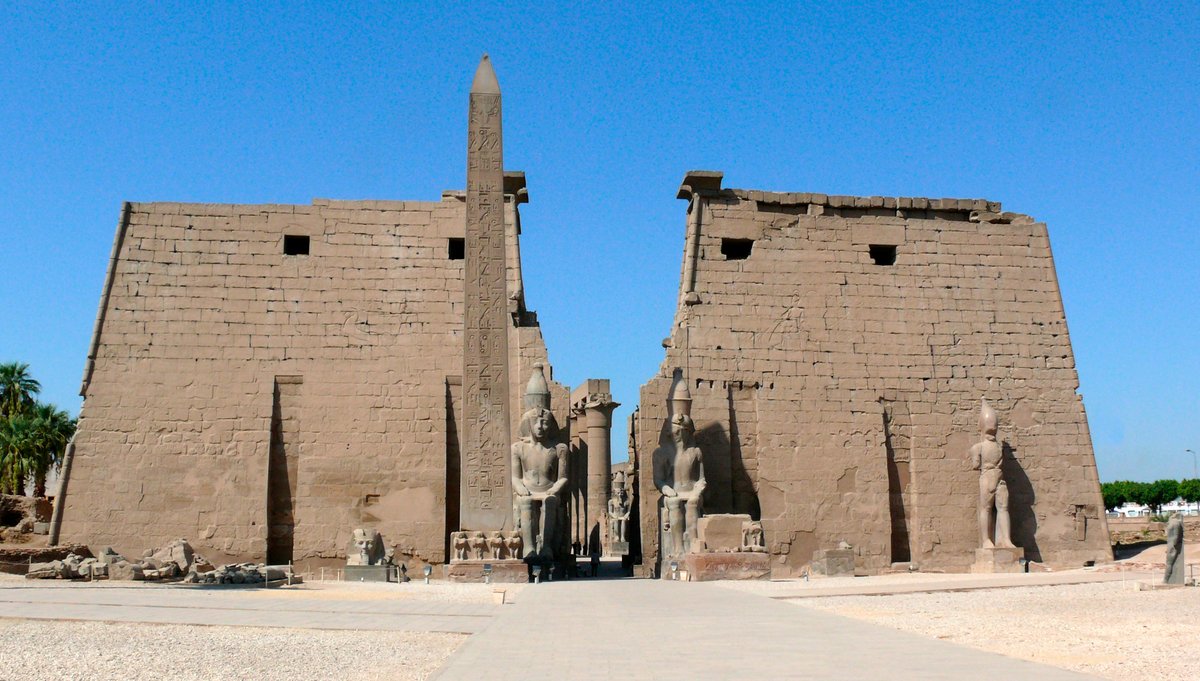

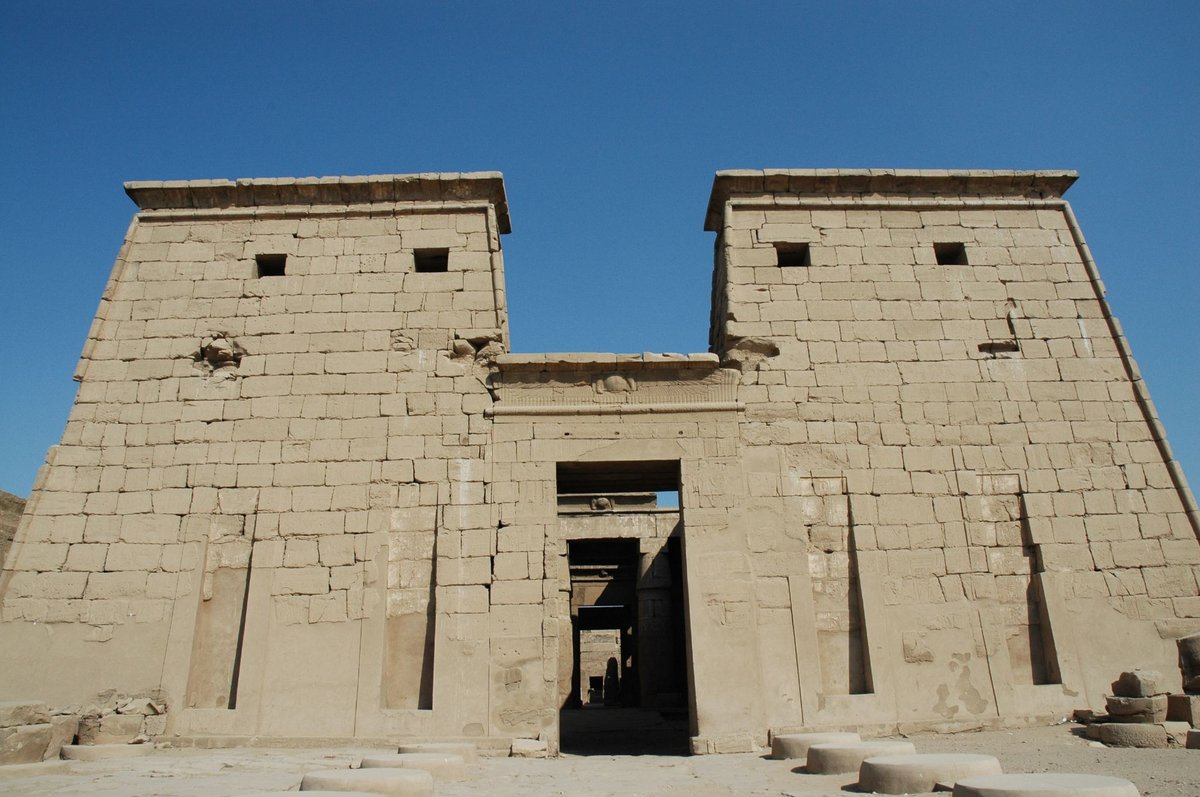
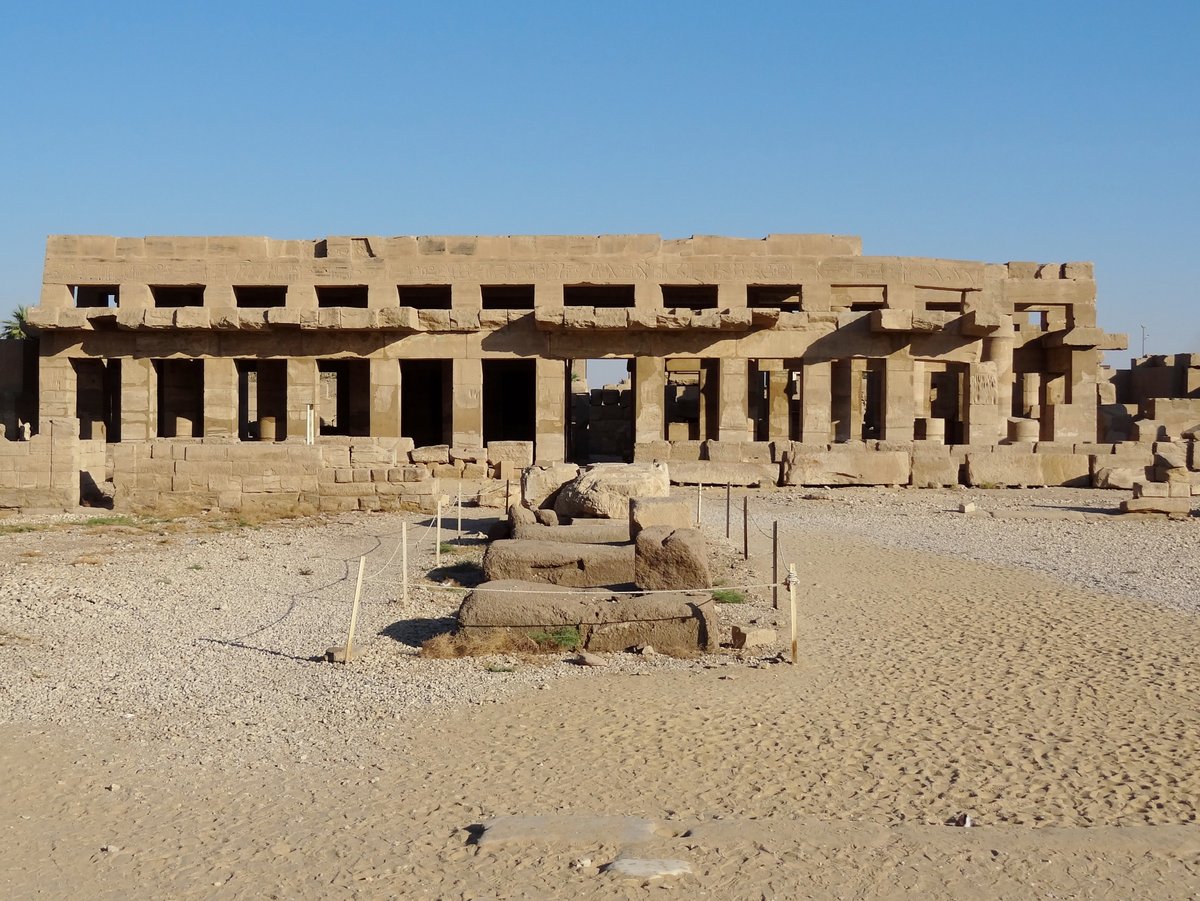
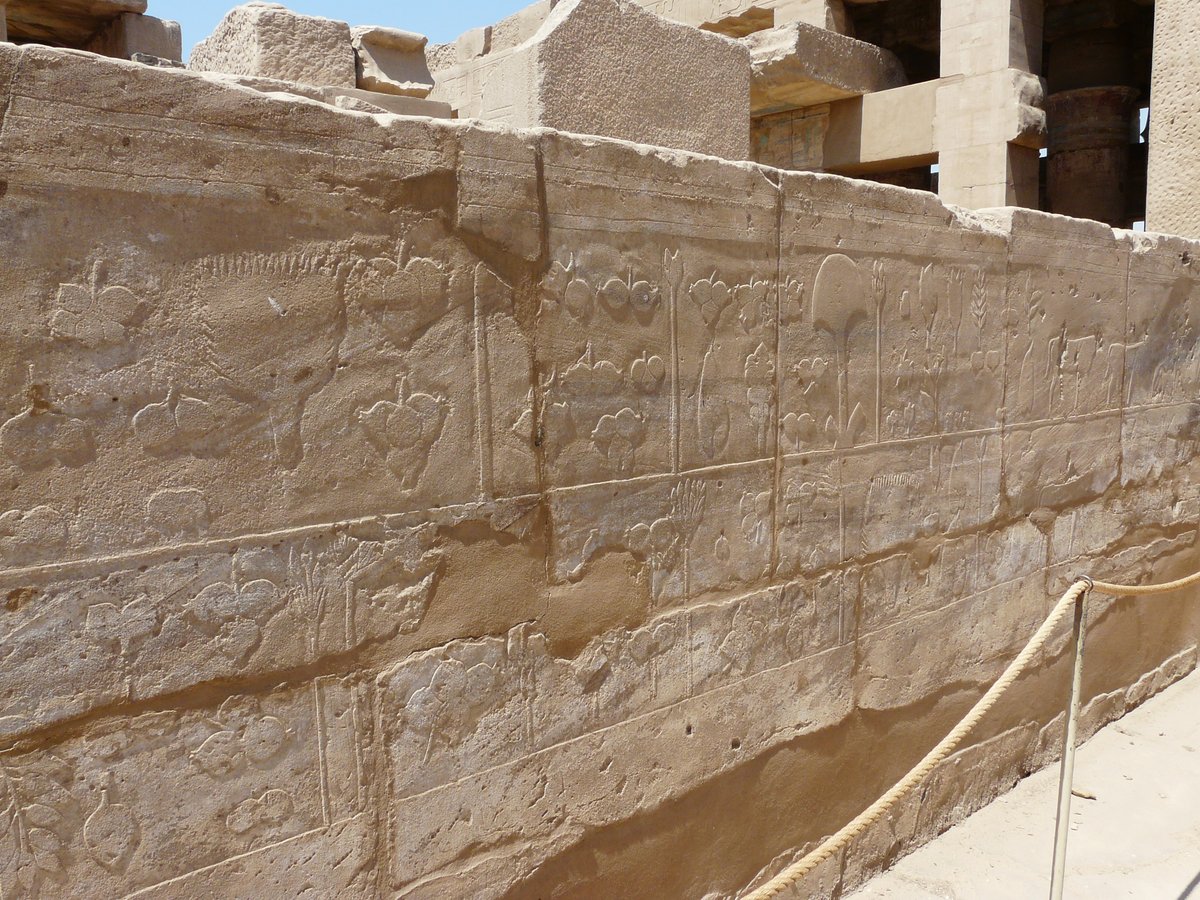
The Luxor Temple (Arabic: معبد الأقصر) is a large Ancient Egyptian temple complex located on the east bank of the Nile River in the city of Luxor (ancient Thebes). Constructed around 1400 BC, it was known in Egyptian as ipet resyt, meaning the southern sanctuary. It was one of the two primary temples on the east bank, the other being Karnak.
Unlike other temples in Thebes, the Luxor Temple is not dedicated to a cult god or a deified version of a pharaoh in death. Instead, it is dedicated to the rejuvenation of kingship; it may have been where many pharaohs were crowned in reality or conceptually. For example, Alexander the Great claimed he was crowned at Luxor, though he may never have traveled south of Memphis near modern Cairo. The temple was built during the New Kingdom and was originally dedicated to the Theban Triad of Amun, Mut, and Khonsu. Modern studies suggest it may specifically be dedicated to the cult of the Royal Ka, as shown by the colossal seated figures of deified Ramesses II.
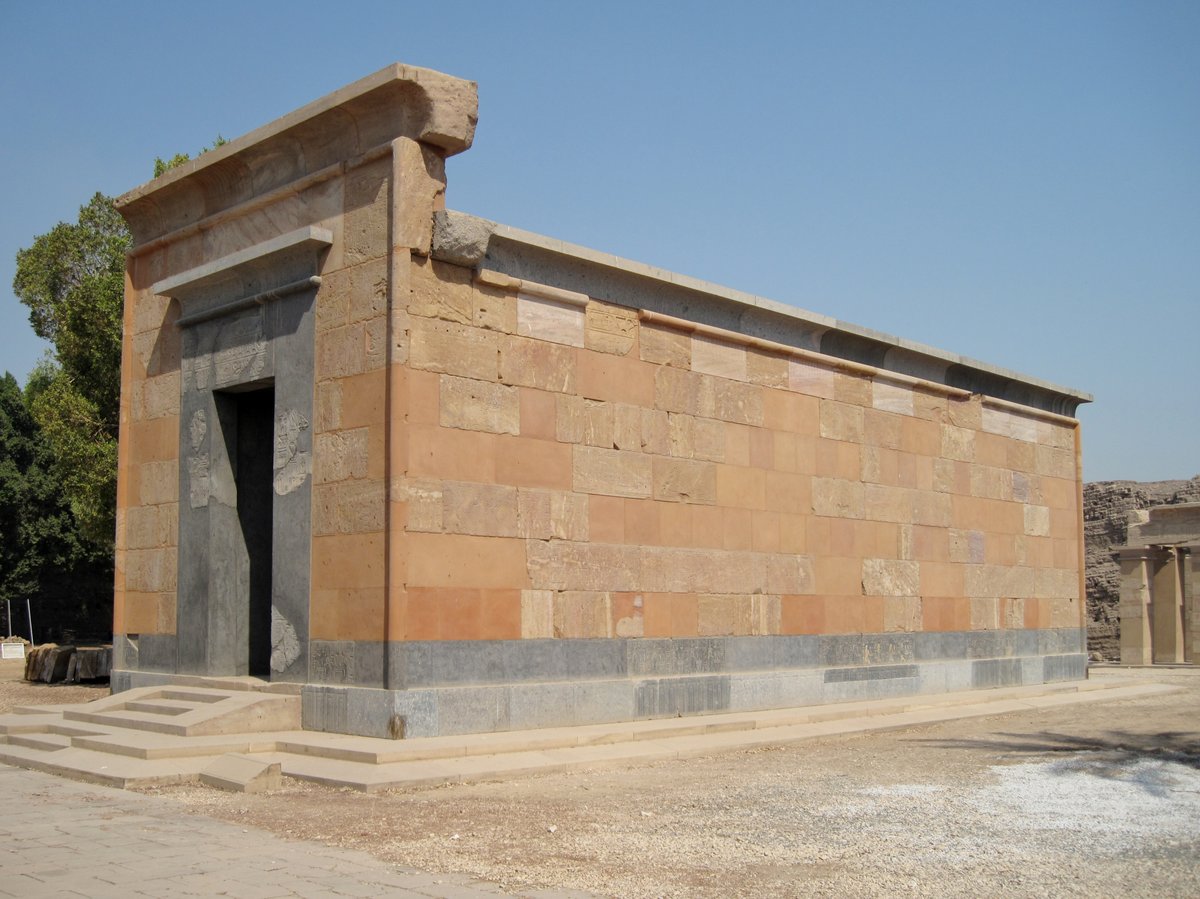
Various rulers contributed to the complex. To the rear are chapels built by Amenhotep III of the 18th Dynasty and Alexander, while other parts were built by Tutankhamun and Ramesses II. During the Roman era, the site served as a legionary fortress and a home for the Roman government. A chapel originally dedicated to the goddess Mut was transformed into a Tetrarchy cult chapel and later into a church. Today, the active Abu Haggag Mosque stands within the temple on the ancient columns, representing more than 3,400 years of continuous religious worship.
The temple was built with Nubian sandstone from the Gebel el-Silsila area. In the Middle Ages, rubble accumulated around the site until it formed an artificial hill some 15 metres high. Excavations began by Professor Gaston Maspero after 1884, uncovering parts of the temple that had been buried for centuries. A nearby avenue, the path of god, once stretched 2.7 kilometres between Luxor and Karnak, lined with human-headed sphinxes and stations for festival barques.
Sources: Wikipedia, OpenStreetMap, Wikidata, Wikimedia Commons

Written by Mutabor
Discuss this with the author and others
No comments yet. Be the first to start the conversation.