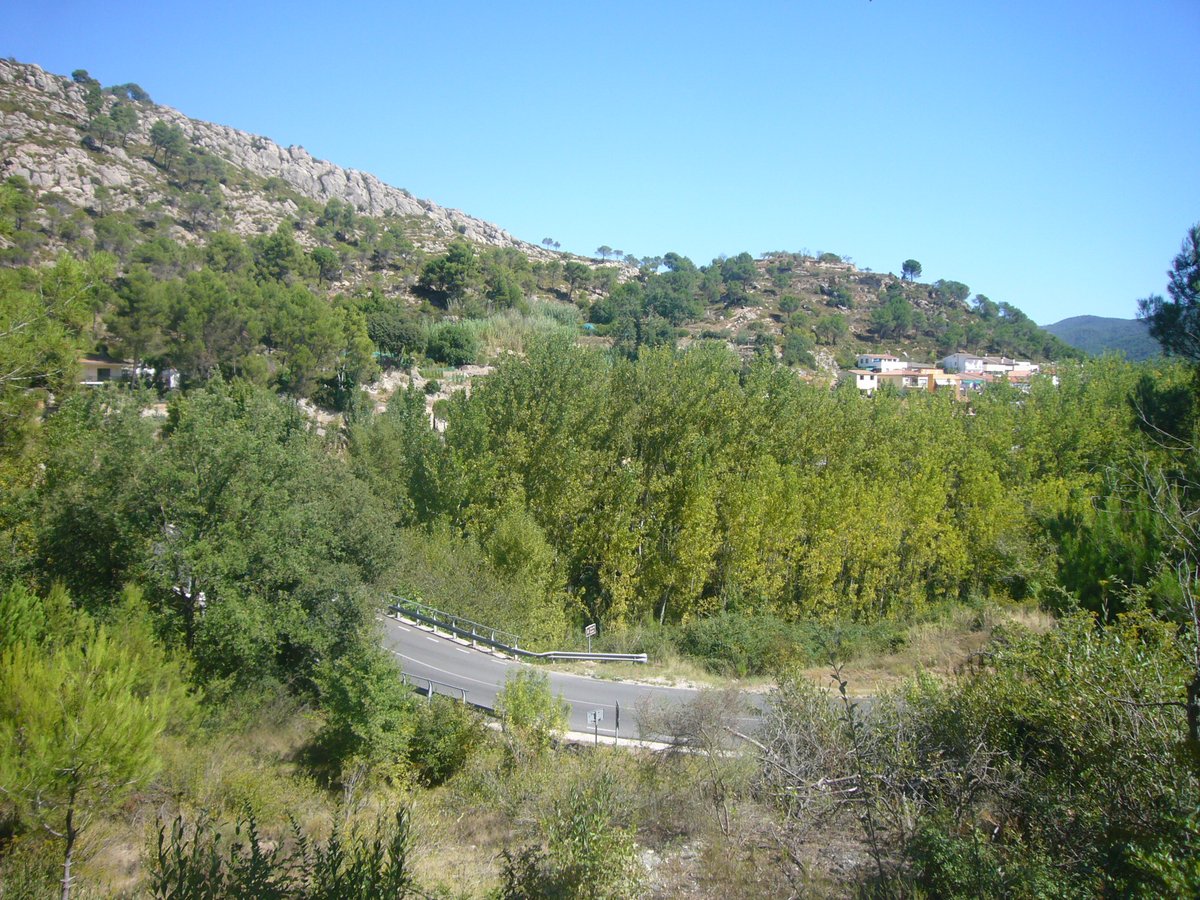

Sant Andreu was a Romanesque church built in the 12th century in La Pobla de Claramunt, Spain. Its location near the barrio de Sant Andreu may have been a strategic choice, as the church was used for burials of foreigners, plague-infected individuals, and those executed by the gallows from 1485 to 1710. The construction of the church began in the 12th century, though the first documentation of its existence dates back to the 13th century. Pere de Claramunt was acknowledged as the possessor of Sant Andreu, el Pujol, and Anoia in 1267.
Between 1463 and 1485, the parish burials took place in Sant Andreu. By 1652, the Pobla had established a vow against the epidemic of the plague, which consisted of a procession and mass at the seven sufraganeous churches of Santa Maria, including Sant Andreu. The church was demolished during the 19th century, but the barrio named Sant Andreu was built on the slope where the destroyed church once stood.
Sources: Wikipedia, OpenStreetMap, Wikidata, Wikimedia Commons
Written by Nik Frost
Discuss this with the author and others
No comments yet. Be the first to start the conversation.