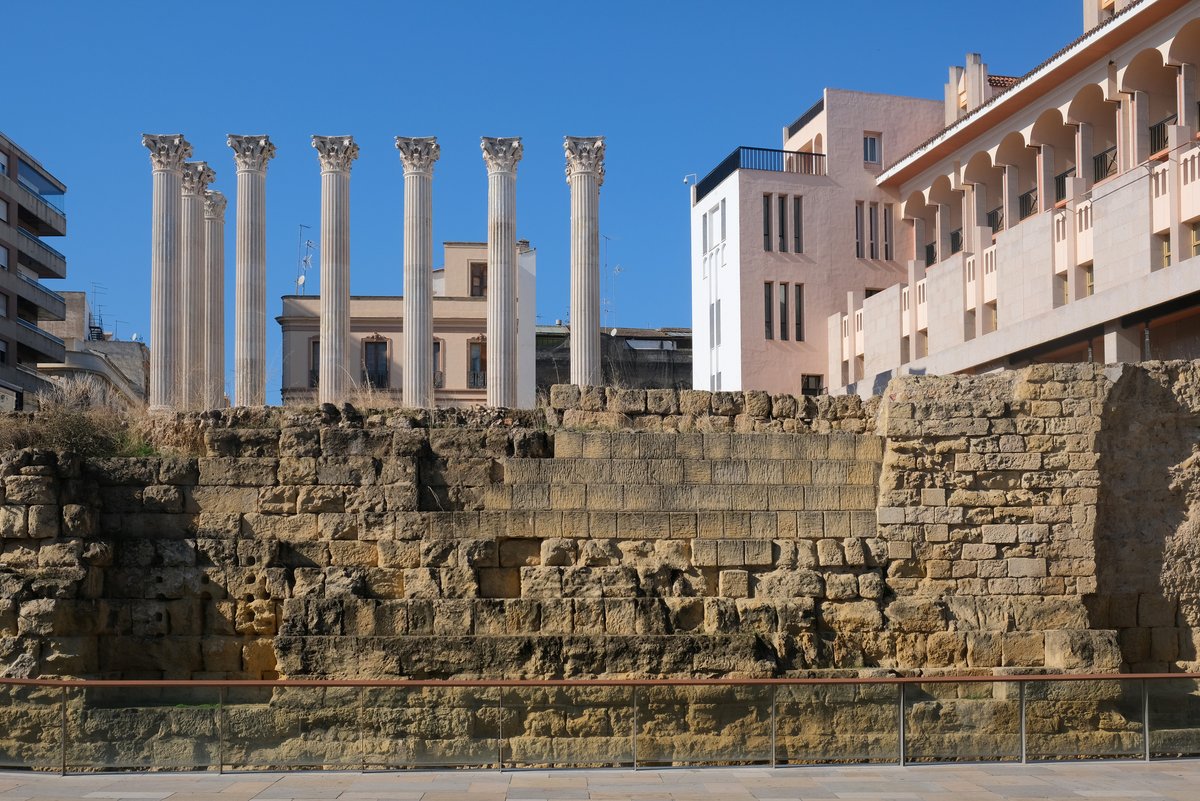

The Roman Temple located in the city of Córdoba, Spain is a testament to the rich history and architectural prowess of the Romans. Discovered in the 1950s, the temple was located at the intersection of Claudio Marcelo and Capitulares streets. While it was not the only temple the city had, it was possibly the most important of all and is the only one known by archaeological excavation. With a history dating back to the reign of Emperor Claudius (41–54 AD) and ending during the reign of Emperor Domitian (81–96 CE), it is presumed that the temple was dedicated to the imperial cult.
However, the temple underwent changes in the 2nd century, coinciding with the relocation of the colonial forum. Studies suggest the presence of an intermediate terrace interconnecting the temple square with the circus area. The construction was carried out by skilled craftsmen, placing the result on par with the most beautiful buildings of the empire.
Materials used in the temple were almost exclusively marble, and the temple was situated on a podium, with six columns on its front façade and ten columns on each side. Currently, the only remains of the building are its foundation, the stairs, the altar, and some column shafts and capitals. A unique aspect of the temple's foundation is the use of antérides for support, a technique recommended by Vitruvius that was not common throughout the Empire. The temple would have been prominently visible from the Via Augusta, the main eastern entrance route. Today, several shafts of its columns can be observed in the Plaza de las Doblas.
Sources: Wikipedia, OpenStreetMap, Wikidata, Wikimedia Commons
Written by Nik Frost
Discuss this with the author and others
No comments yet. Be the first to start the conversation.