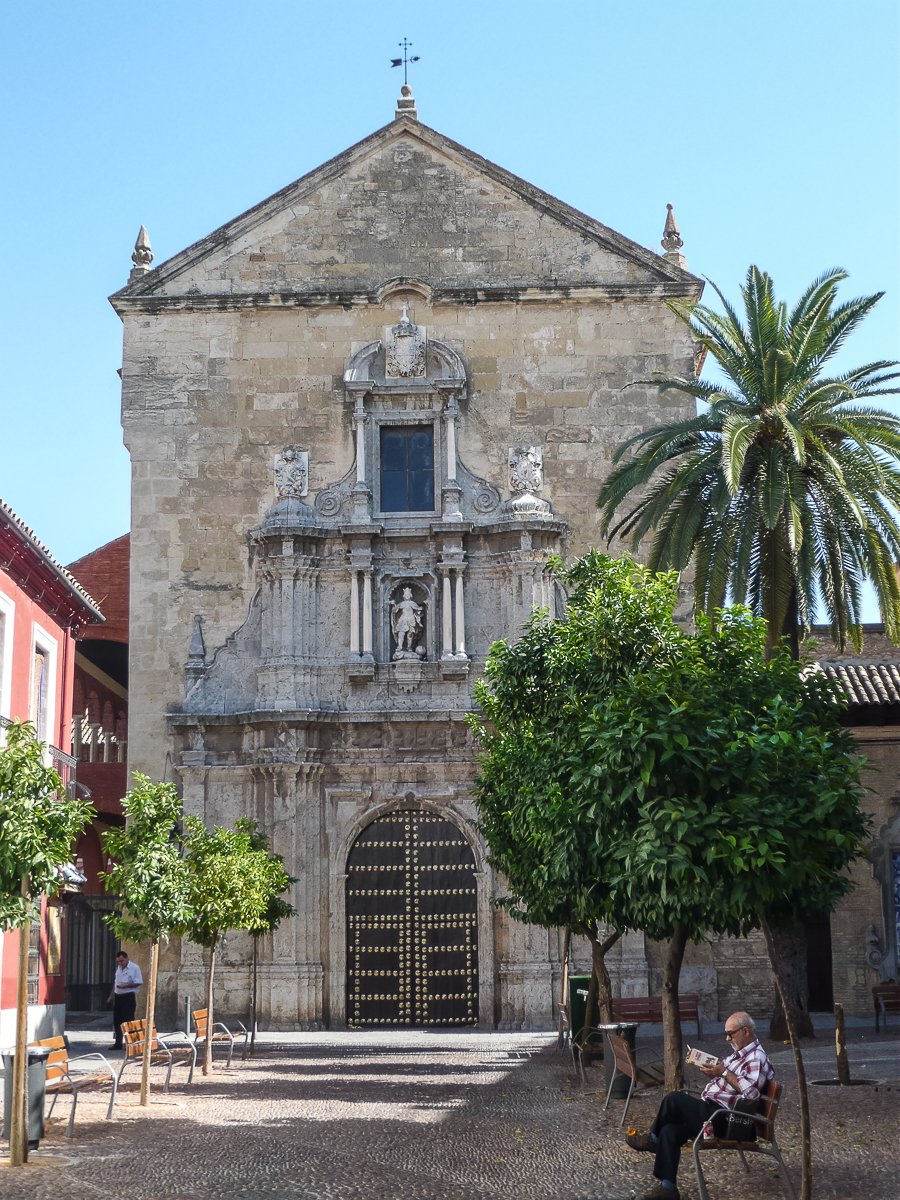

San Pedro el Real, also known as Monasterio de San Pedro el Real, is a Catholic temple in the city of Córdoba, Spain. Founded by King Fernando III in the 13th century, the temple was originally a convent due to its association with the king who conquered the city in 1236. It was declared a cultural heritage monument on March 24, 1982. The 18th-century renovations, however, significantly altered its medieval appearance.
Despite primarily serving as a parish church today, San Pedro el Real once housed a significant collection of paintings by 18th-century Cordoban artists and was home to over 100 friars. The convent was secularized during the Spanish desamortizaciones of the 19th century and turned into a cloth and chair factory.
The claustrum was partially demolished, with materials used for the construction of the café Gran Capitán and a house in Écija. The building was converted into the parrochia of San Francisco y San Eulogio in 1877.
The colonial church of San Nicolás de la Axerquía, which ceased to exist in 1877, is among the archives of Monasterio de San Pedro el Real.
The restoration of the old San Pedro el Real convent complex took place in two phases: from 1990 to 1997 and from 2003 to 2007. The works focused on the dome, the recovery of the claustrum, and the bell tower.
Sources: Wikipedia, OpenStreetMap, Wikidata, Wikimedia Commons
Written by Nik Frost
Discuss this with the author and others
No comments yet. Be the first to start the conversation.