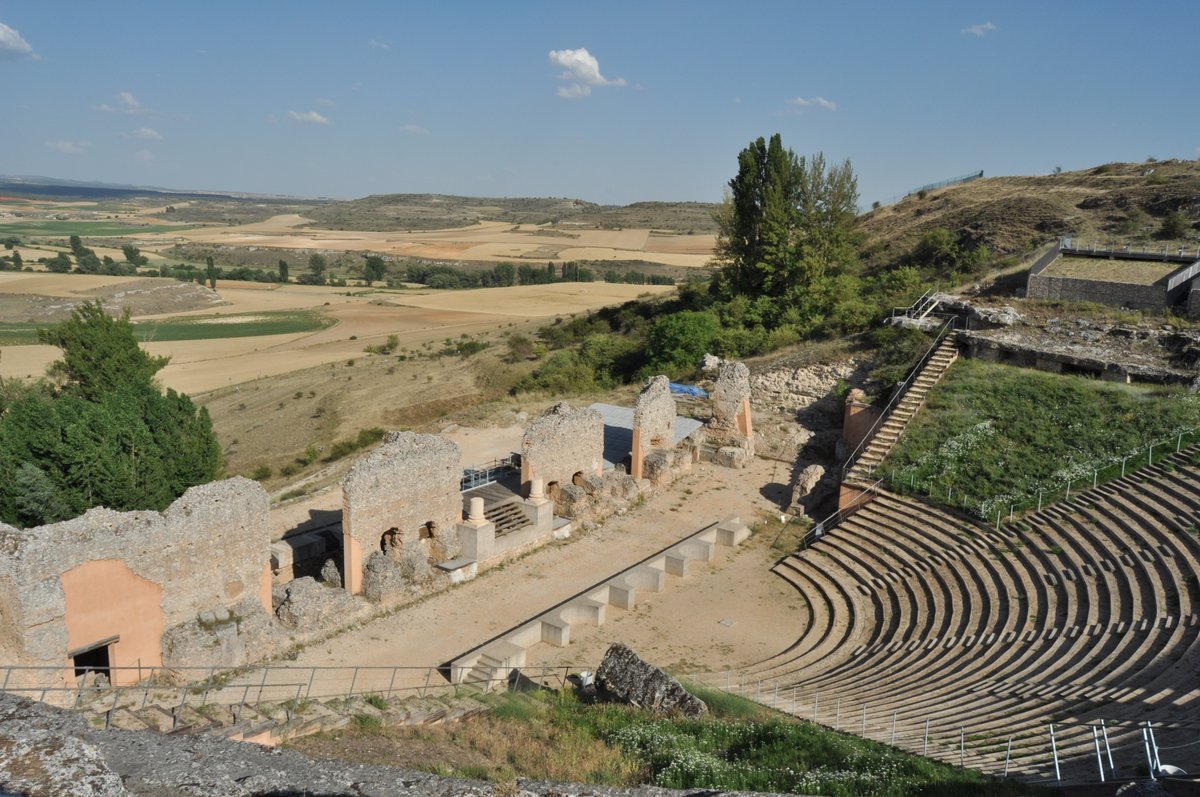

Located at more than 1,000 metres above sea level in the province of Burgos, Clunia was one of the most important Roman cities of the northern half of Hispania. From the 1st century BC, it served as the capital of a conventus iuridici called Conventus Cluniensis and was situated on the road from Caesaraugusta to Asturica Augusta. Built from scratch and not on the site of an earlier town, the city boasted two public baths, a basilica, a forum, a theater, and a large temple dedicated to Jupiter.
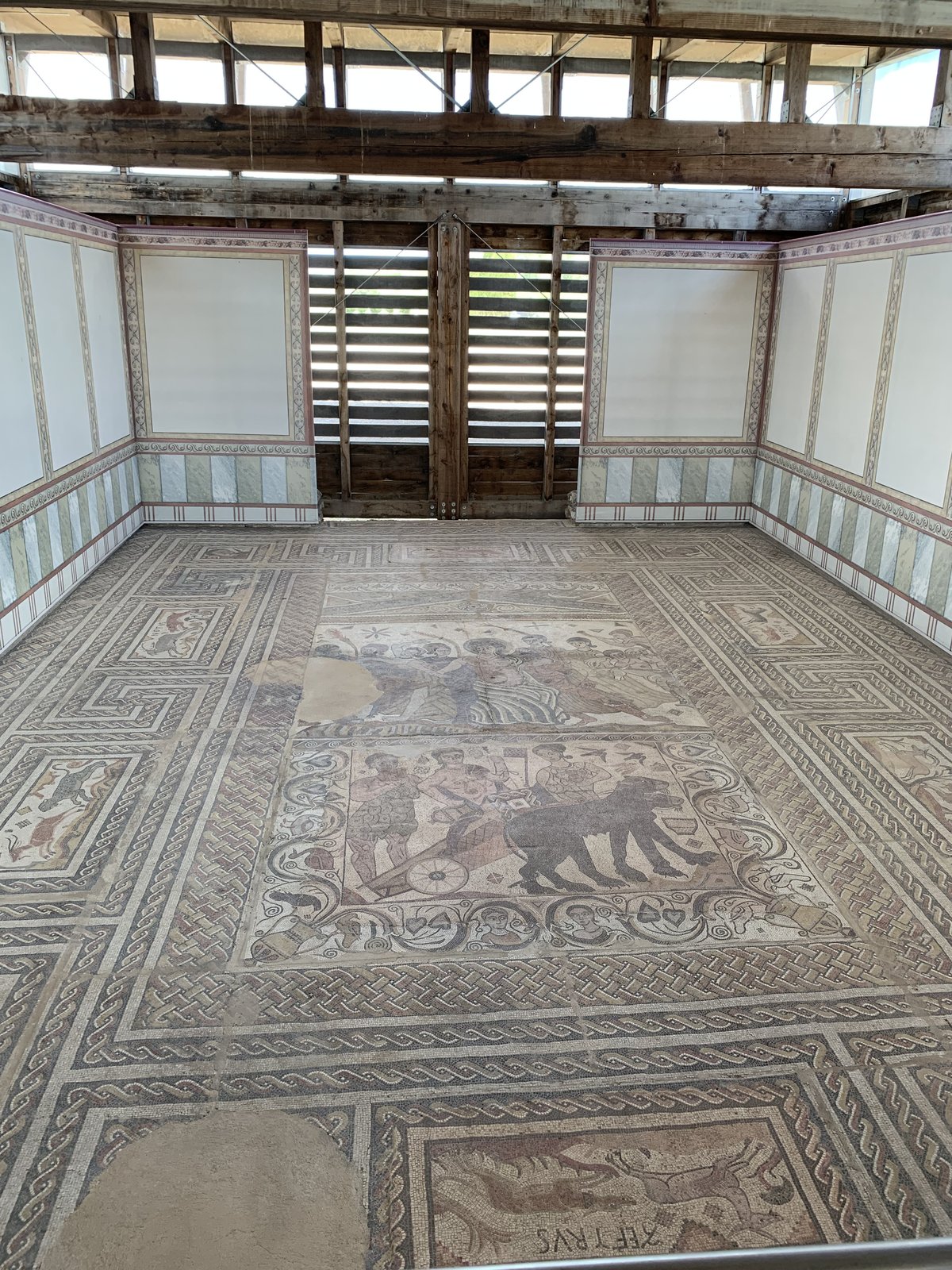
During its maximum apogee, the city is calculated to have had around 30,000 inhabitants. Excavations have revealed destroyed urban areas, a theater excavated into rock, various domus with mosaics, streets, ruins of the buildings of the forum, and a great cloaca. These findings, along with sculptural works like an effigy of Isis and a torso of Dionysus, are preserved at the National Archaeological Museum of Spain and in that of Burgos.
The site also yielded a large quantity of coins, epigraphic ruins, Roman ceramics such as Samian ware, glass and bronze objects. The ruins of the Roman thermae remain very visible, showing a system of heating for different rooms known as the hypocaust, while the forum remains near the theater and the ruins of three domus.
Sources: Wikipedia, OpenStreetMap, Wikidata, Wikimedia Commons
Written by Nik Frost
Discuss this with the author and others
No comments yet. Be the first to start the conversation.