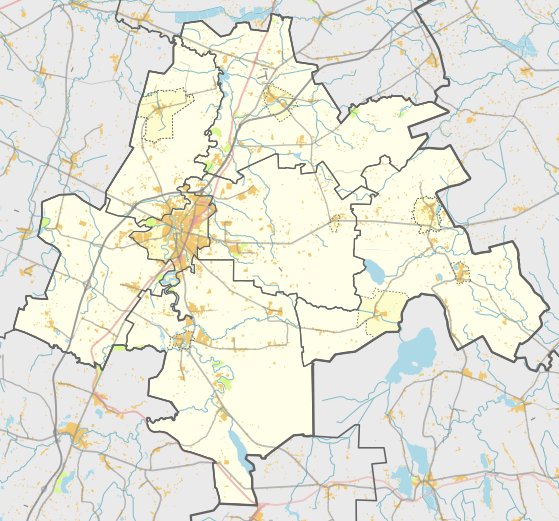
The Liudvinavo piliakalnis is a unique archaeological site (object MC code 22982) located in Marijampole’s municipality territory, near Liudvinava village.
Built by farmers, hunters, and fishermen, it was active in the 1st millennium AD, and today – six centuries later – it is being excavated. Unlike its neighbours, the Produbulė site, the hillfort has not been explored, and with each new layer, the archaeologists are shocked.
Archaeological finds have been confined to the hillfort’s immediate surroundings and its immediate foothills. A 34,400-square-meter area around the hillfort is protected by Lithuania’s cultural heritage law. As of 1964, only the History Institute discovered the hillfort, but today, a team of excavators are working tirelessly to pull the secrets out of the ground.
Excavations at the hillfort began in 1964 and 1968 by the History Institute, with recent excavations continually revealing new details.
The hillfort is located at the confluence of the Sūduona and a small, unnamed stream. The mound, 4-7 meters high, is made of earth and is approximately 9 meters in diameter, 11 meters in length, and 60 meters in diameter and 80 meters in length at its peak. The base of the mound, made of earth, is 10x15 meters in size, while the trench created by the digging, 15x15 meters in size, represents a terrace.
Although the hillfort has been recently explored, findings such as Grublėtos ceramics, the dating of the hillfort to the 1st millennium AD, and the fact that the hillfort was built by local farmers, hunters, and fishermen are relatively well-verified.
Sources: Wikipedia, OpenStreetMap, Wikidata, Wikimedia Commons
Written by Nicolo Ciampini
Discuss this with the author and others
No comments yet. Be the first to start the conversation.