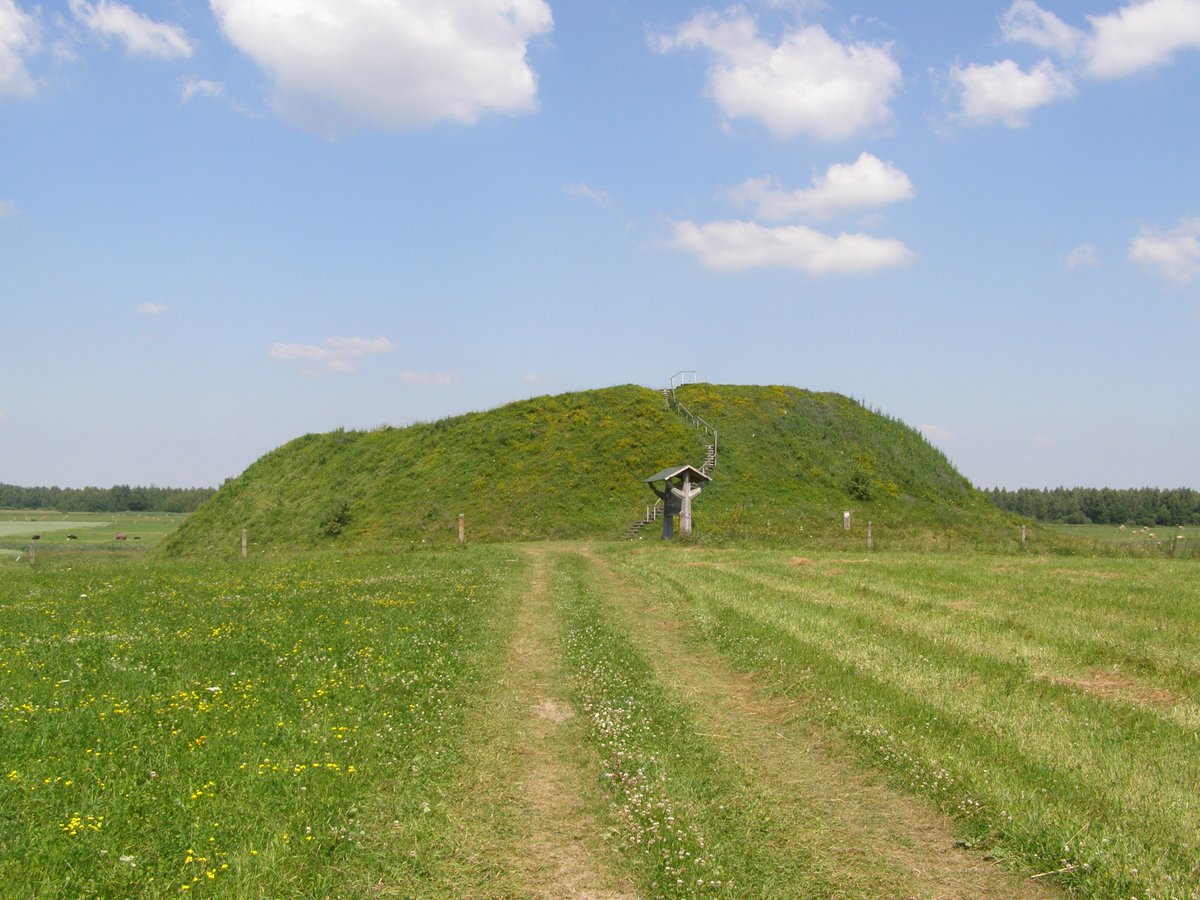

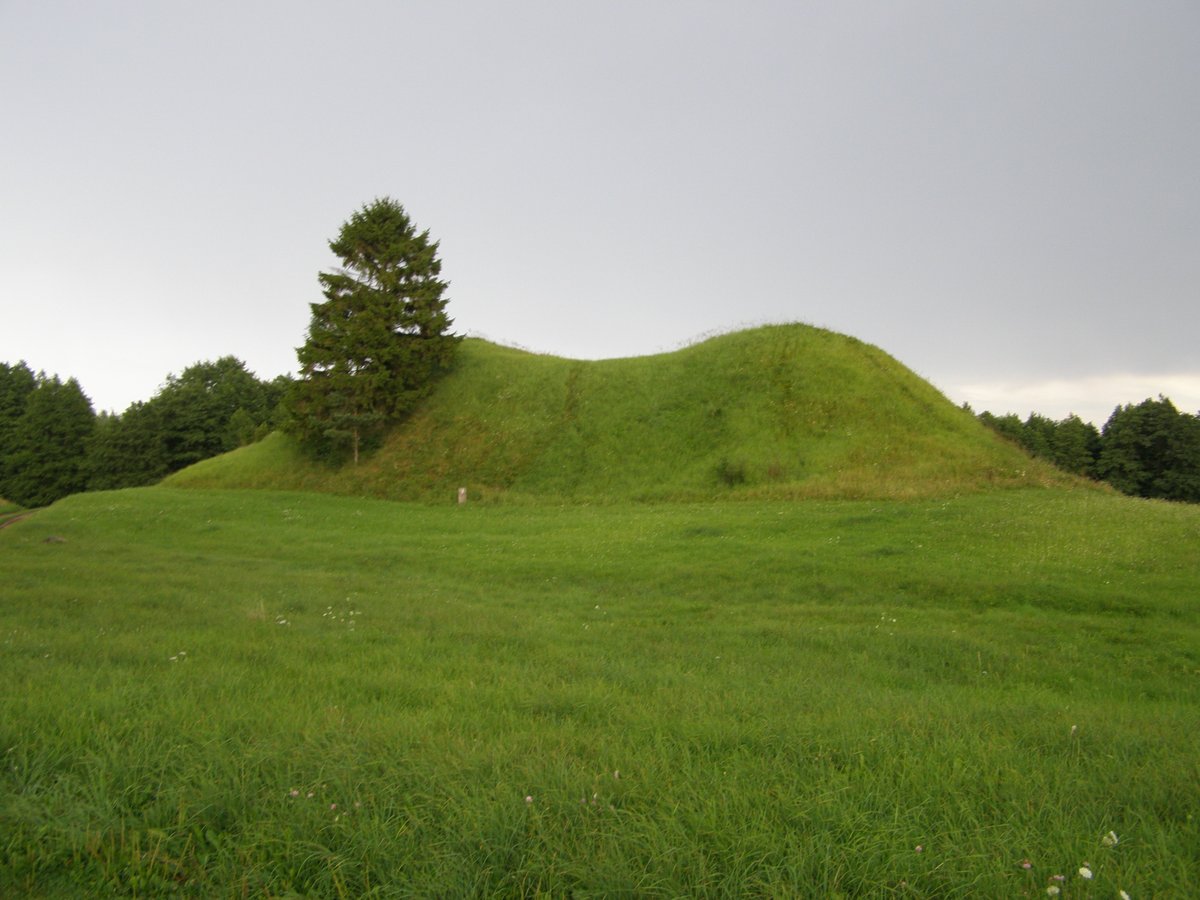
Local legends say that ancient people filled the earth of this mound with caps to hide it from crusaders. The tales also mention a hidden cellar in the middle of the mound where residents supposedly hid their valuables from the crusaders. These stories have drawn the attention of treasure hunters, who have dug a large pit in the middle of the hillfort.
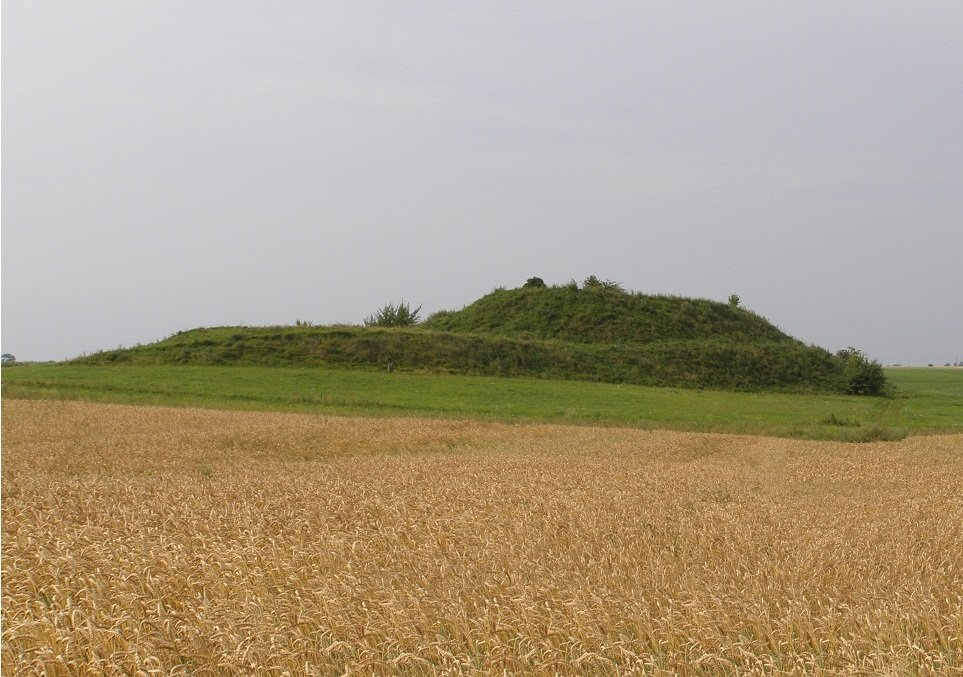
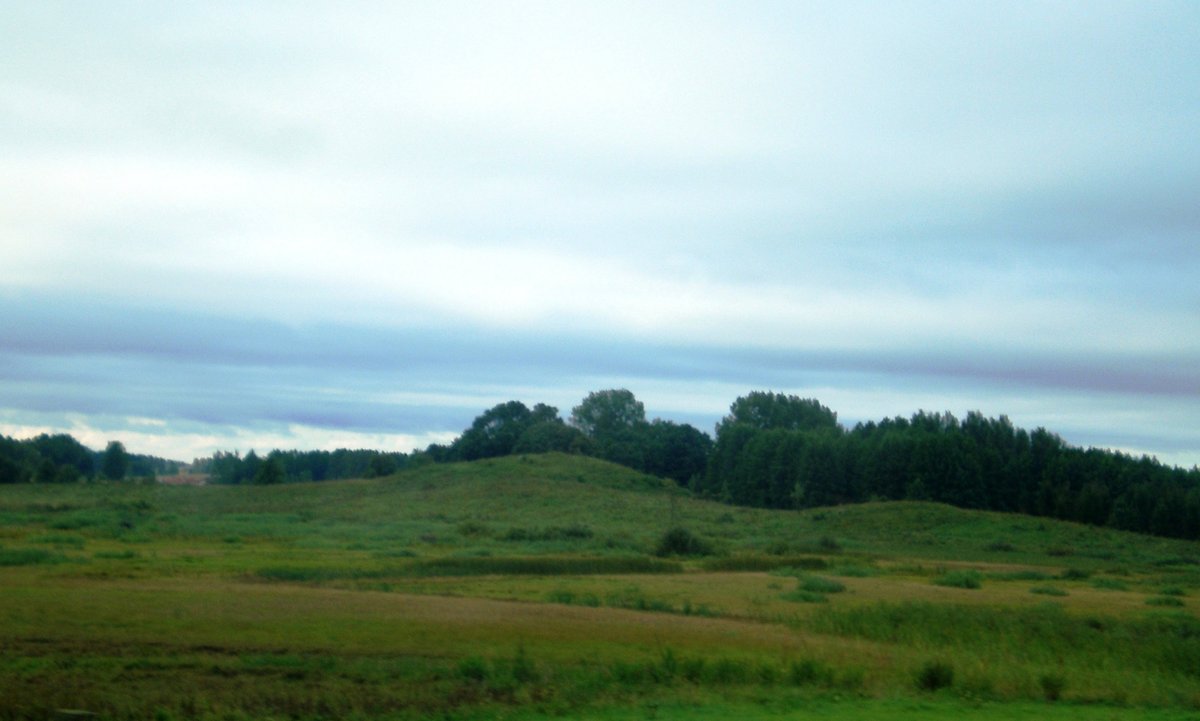
The site is a hillfort known as Kirvakalnis, situated on its own hill bordering the Amalva swamps. The mound features an oval clearing measuring 25 by 18 metres, protected by a rampart that reaches up to 2.5-3 metres high in certain areas. Excavations reveal the clearing was raised at least three times using clay, and the rampart was reinforced with pine branches, sand, and gravel.
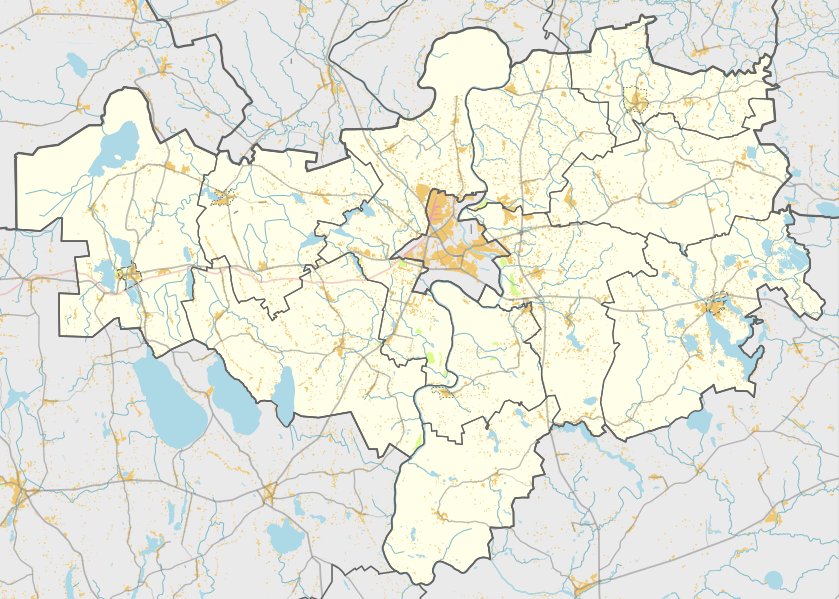
Researchers have uncovered pottery shards, hearths, and iron slag at the site. The complex dates from the end of the first millennium BC through the 13th century. It functions as a fortification with a ditch and a settlement at the base of the hill, which is located in the village of Varnupiai.
You can still visit the 4,000 square metre space today. It is fenced with concrete posts and wire. There is an information board to the south, and if you walk a short distance to the southwest, you will find the mythological stone called Patkavinis.
Sources: Wikipedia, OpenStreetMap, Wikidata, Wikimedia Commons

Written by Nicolo Ciampini
Discuss this with the author and others
No comments yet. Be the first to start the conversation.