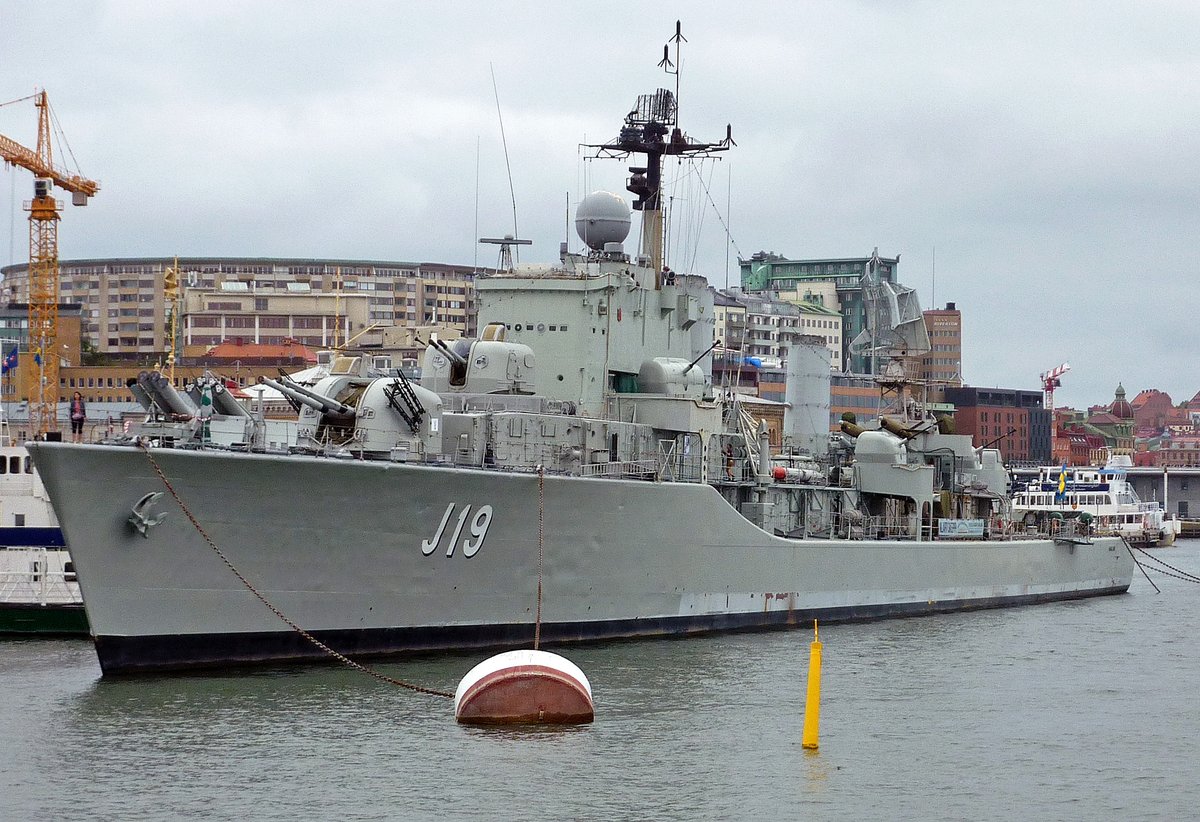

The hull of the HMS Småland provides a masterclass in specialized naval engineering. While many ships of its era opted for aluminum to save weight, the Halland-class was constructed from steel. This was a deliberate choice because aluminum melts at lower temperatures and poses a risk during a shipboard fire. To maintain a manageable weight while ensuring safety, engineers utilized corrugated galvanised iron for the superstructure.
This design serves a deeper purpose beyond fire safety. The superstructure was built so that the crew could access every part of the ship without ever stepping outside. This was a vital requirement for a vessel intended to operate in environments with risks of radioactive contamination. Delivered to the Swedish Navy in 1956, the ship eventually became a leader ship for its destroyer flotilla, representing the largest and most powerful Swedish vessels by the early 1970s.
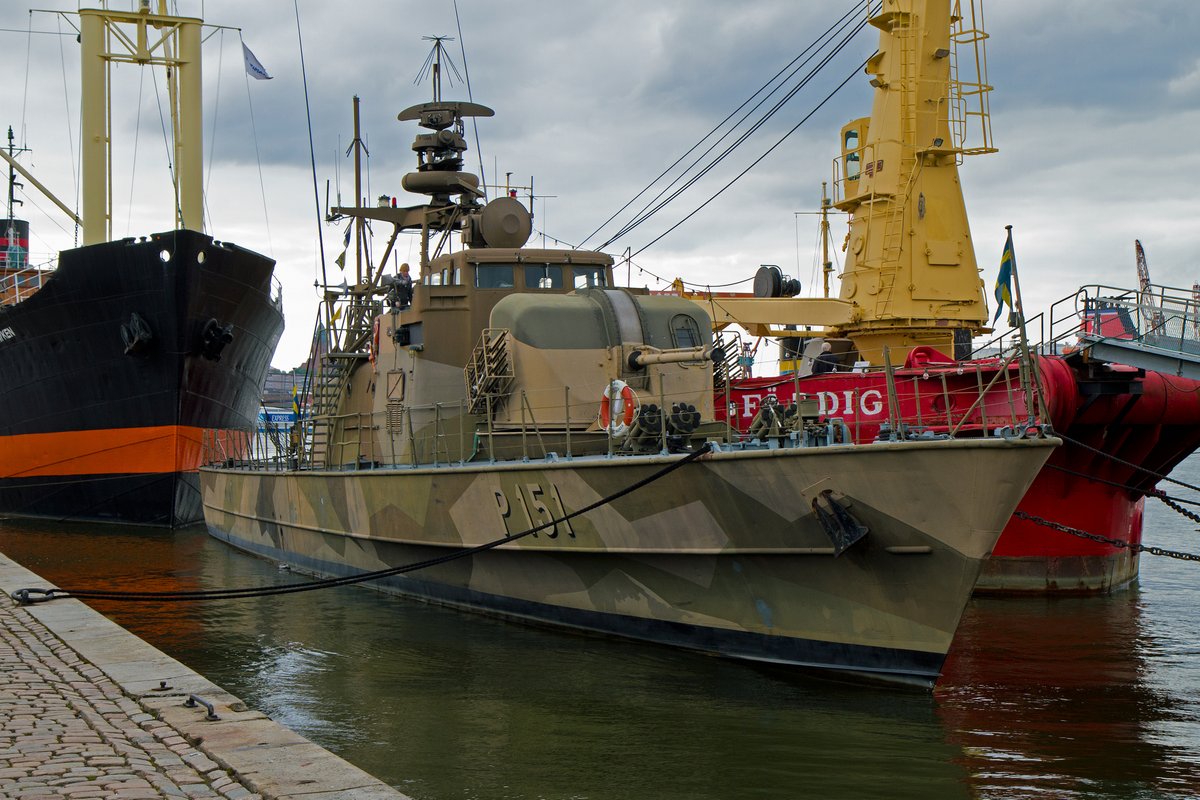
Today, the ship invites you to explore its history as a museum at Maritiman in Gothenburg. It remains the largest vessel on display and the last surviving Swedish destroyer. Visitors can investigate its 121 meter length and 12.6 meter width, while viewing the steam boilers and turbines that once produced 58,000 horsepower.
Sources: Wikipedia, OpenStreetMap, Wikidata, Wikimedia Commons


Written by Nik Frost
Discuss this with the author and others
No comments yet. Be the first to start the conversation.