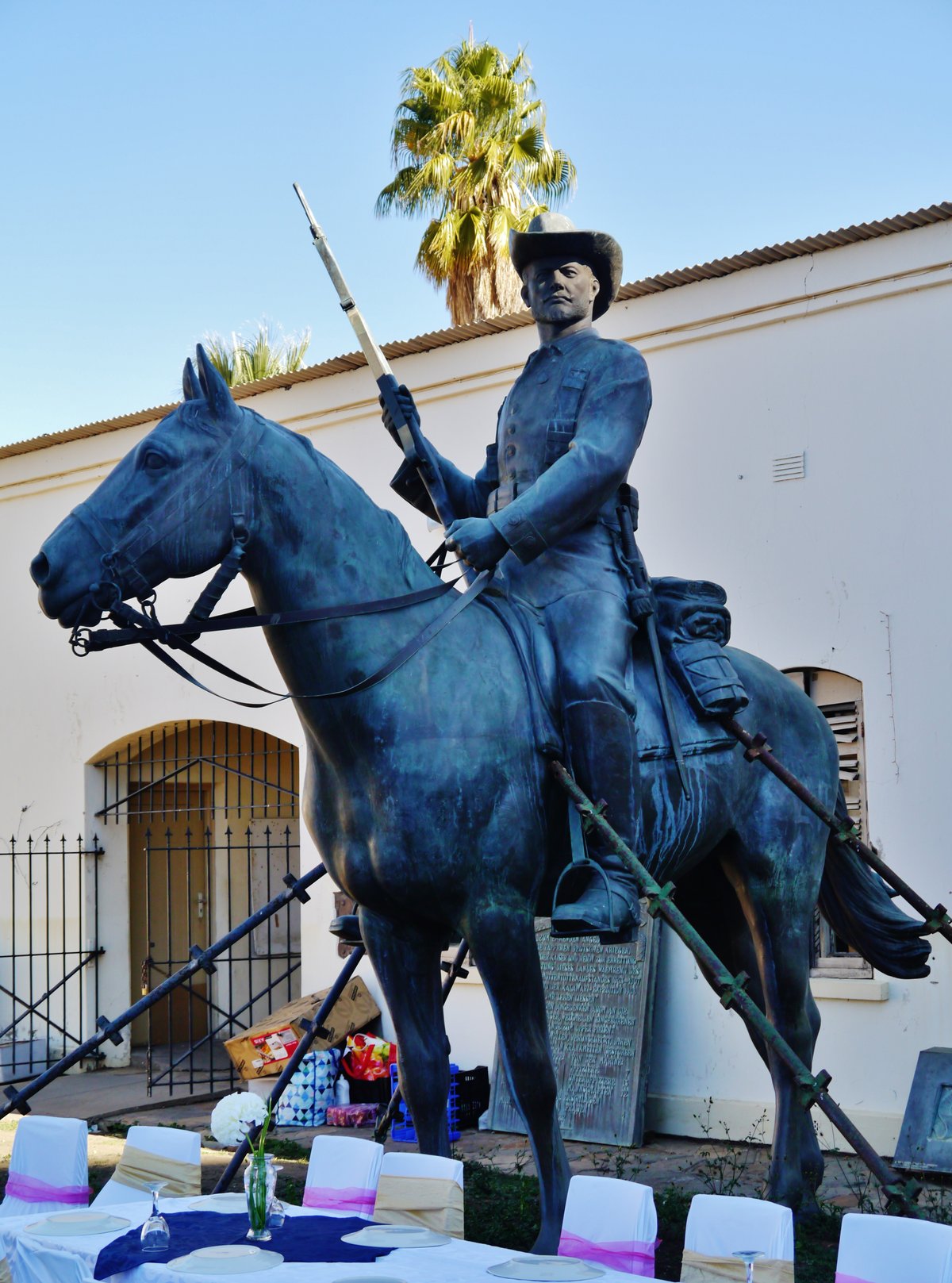

The Equestrian Monument, also known as Reiterdenkmal and Südwester Reiter, was a bronze monument in Windhoek, the capital of Namibia. It was inaugurated on 27 January 1912, the birthday of German emperor Wilhelm II, to honour German soldiers and civilians who died during the Herero and Nama genocide of 1904–1908. The statue was created in Berlin by sculptor Adolf Kürle and shipped to German South West Africa in 1911. It was transported by train to Windhoek after arriving in Swakopmund.
The 4.5-metre-tall equestrian statue stands on a 5-metre-tall plinth consisting of approximately 180 granite rocks from Okahandja. A plaque on the plinth remembers those who died in the Herero and Nama Wars of 1904–1908, as well as in the Kalahari Expedition in 1908. Beyond memorialising the dead, the monument was intended as a symbol of victory and a claim to the rightful possession of South West African land. It served as a brand for German rule and was used for propaganda during the Third Reich, appearing in books and movies. In 1969, it was declared a national monument by the South African administration.
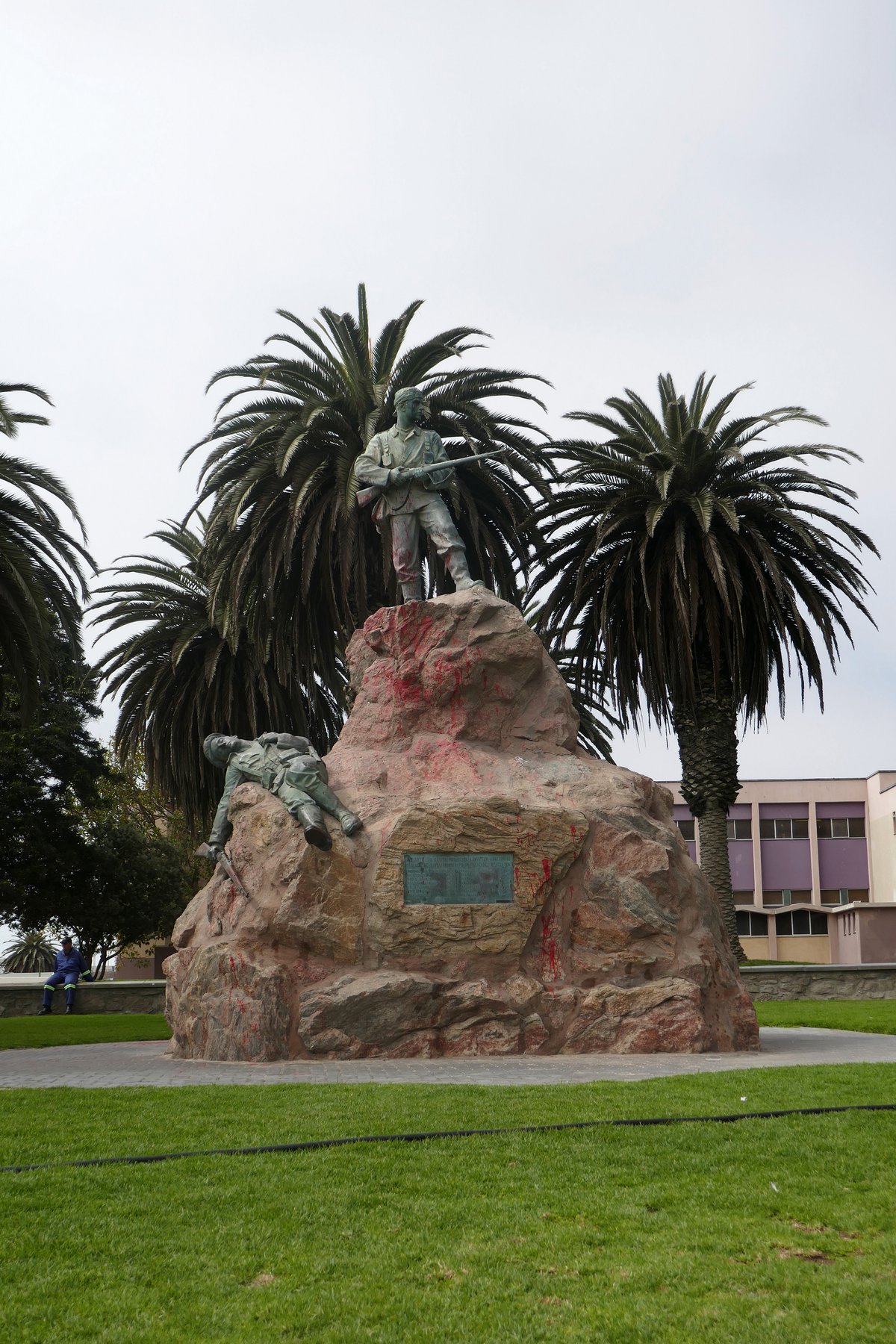
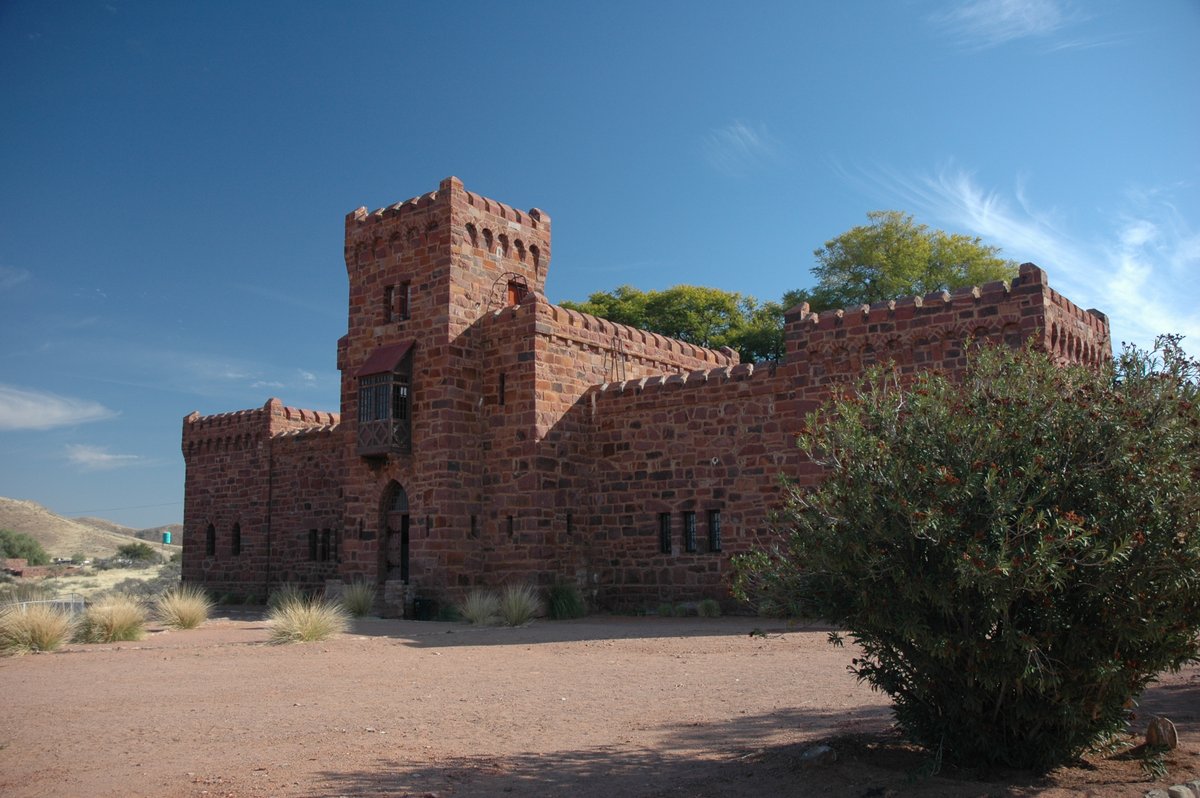
Public controversy over the monument's association with German colonial rule persisted for decades. In 1959, Herero activists covered the rider's head with a linen bag and decorated the statue with flowers. In 2008, 51 wooden crosses were erected around the statue and a Namibian flag was inserted into the rider's rifle barrel. In 2009, construction of a museum began, and the monument was wrapped, disassembled, and stored in a secret location to avoid vandals. In 2010, it was re-erected in front of the Alte Feste.
In December 2013, the National Heritage Council advertised a suggested deproclamation as a National Monument, giving the public 60 days to register objections. On 25 December 2013, the area in front of the Alte Feste was cordoned off, and the statue was lifted off its plinth in the evening. It was transported into the yard of the Alte Feste for storage, where the bronze statue remains today.
Sources: Wikipedia, OpenStreetMap, Wikidata, Wikimedia Commons
Written by Mutabor
Discuss this with the author and others
No comments yet. Be the first to start the conversation.